
Saturday, October 31, 2009
October News & Views Published Below

Friday, October 23, 2009
100 Dirtiest Sites to Avoid for Safety's Sake
Web users could be putting themselves at risk by surfing to some sites that contain more than 18,000 different security threats each, says Symantec.
The security vendor has compiled a list of this year's 100 "Dirtiest Websites." Just by visiting these sites, Web users could see their PCs infected with viruses or even have their sensitive personal data stolen by cyber criminals, even if they don't download or click on anything in particular.
Symantec said the average number of threats per malicious site is 23. However, all of the websites that made the top 100 list have on average 18,000 per site, with 40 percent having over 20,000 security threats. The company also said that three quarters of the sites have been distributing malware for over six months.
As expected just under half of the websites offered adult content, but what is more surprising is that other 52 websites covered a random selection of topics such as deer hunting, catering, figure skating, legal services and electronics.
"There has been exponential growth in the number of online threats that are constantly evolving as cybercriminals look for new ways to target your money, identity or assets. In 2008, most new infections occurred while people were surfing the web," said Marian Merritt, Symantec's internet safety advocate.
The security vendor has compiled a list of this year's 100 "Dirtiest Websites." Just by visiting these sites, Web users could see their PCs infected with viruses or even have their sensitive personal data stolen by cyber criminals, even if they don't download or click on anything in particular.
Symantec said the average number of threats per malicious site is 23. However, all of the websites that made the top 100 list have on average 18,000 per site, with 40 percent having over 20,000 security threats. The company also said that three quarters of the sites have been distributing malware for over six months.
As expected just under half of the websites offered adult content, but what is more surprising is that other 52 websites covered a random selection of topics such as deer hunting, catering, figure skating, legal services and electronics.
"There has been exponential growth in the number of online threats that are constantly evolving as cybercriminals look for new ways to target your money, identity or assets. In 2008, most new infections occurred while people were surfing the web," said Marian Merritt, Symantec's internet safety advocate.
Thursday, October 22, 2009
Wife's First Hunting Trip
My sweet husband invited me to go hunting with him this year.
I couldn't believe it...the first time ever! I never thought he'd be
willing to share his 'guy time' with me. And being the thoughtful
man that he is, he even gave me an opening day present. He
calls it 'The First Timers Lucky Hat'. I'm so fortunate to be married
to him. I have attached a picture of me in my lucky hat.

I couldn't believe it...the first time ever! I never thought he'd be
willing to share his 'guy time' with me. And being the thoughtful
man that he is, he even gave me an opening day present. He
calls it 'The First Timers Lucky Hat'. I'm so fortunate to be married
to him. I have attached a picture of me in my lucky hat.

Wednesday, October 21, 2009
Take a look at something technologically entertaining
ServerQuest II game
Let's take a look at something technologically entertaining. Do you remember playing the vintage computers games King's Quest or Leisure Suit Larry? If so, you should enjoy Microsoft TechNet's ServerQuest II game. It emulates the same sort of pixilated graphics (Figure C) and cheesy humor as those classics, but it's aimed at IT professionals and computer specialists.
In the game, which is created with Silverlight and runs in your browser, you play an IT pro (either Matt or Alicia) whose objective is to keep the network running smoothly while encountering a host of technical problems that are presented as games and puzzles, ranging from the absurd to things you might encounter in the real life of an IT pro. As you work through the tasks, you'll learn about and use Microsoft technologies to solve problems, encounter hidden Easter Eggs, earn geek points, and get to post your high scores for others to compete against.
The game is really very humorous -- and you might even learn some interesting troubleshooting techniques as you play.
Click here: http://www.microsoft.com/click/serverquest/
75 interesting credit union name changes in 2009
Callahan & Associates, the credit union industry’s leading analytics firm and publishers of CreditUnions.com, have just released their 2010 Credit Union Directory. Comparing this year’s directory against last year’s, The Financial Brand has noted 75 substantive name changes.
From this year’s new names:
http://thefinancialbrand.com/2009/10/21/2009-cu-name-changes/
From this year’s new names:
- 11 credit unions included the word “Community”: Arlington Community, Champion Community, Community, Community Driven, Memberfocus Commmunity, My Community, NMTW Community, Prestige Community, Total Community, Valley One Community and Vue Community.
- 7 reduced their names to acronyms: CEFCU, CSE, MaPS, MCT, ME/CU, NMTW and USE.
- 7 are coined names: Altana, Aventa, Cinfed, Genisys, Meritrust, TruStone and Vue Community.
- 3 use the number “one”: Alabama One, Metro 1 and Valley One Community.
- 3 credit unions ditched the word “First” in their name, while one put it in: University First.
- 2 credit unions used alphanumeric constructions: Med5 and Metro 1.
http://thefinancialbrand.com/2009/10/21/2009-cu-name-changes/
Tuesday, October 20, 2009
Email is Social, and it’s not Going Anywhere
When consumers want to share something from the Internet with their friends or family, such as a video, link or article, what methods do they use? While social media is gaining ground on email, the latter still dominates as a sharing tool.
"Is _______ going to put an end to email?" It’s a question we ask every few years when a new technology comes along. RSS sparked the last wave of discussions and, of course, now it’s social. Will social media affect email? Definitely. Will it kill the medium? Far from it.
Email is the original opt-in tactic, while social and mobile are newcomers. And email works in tandem with most other tactics to increase engagement, deliver relevant content and build contact databases.
Dispelling the Myth that Social Media is going to Abolish Email
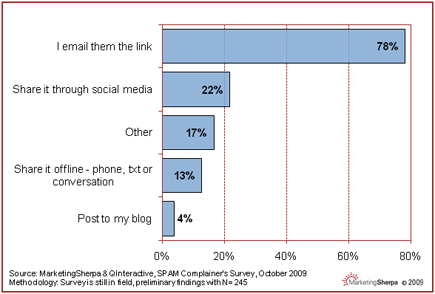
In the chart above, we take one view of how email is used to share information, because this activity is so central to social media sites. Email is dominant, even in this regard.
When we look at media use over the last 15 years, we see a pattern of aggregation and adoption rather than replacement. Some media suffer in the exchange, but none are eliminated entirely. More commonly, their uses become more refined.
For example, we may find that Twitter and Facebook gradually reduce our use of email to convey quick messages and content to social groups, but it’s far less likely that social media will replace email for commercial transactions, receipts and the like.
Email is the original opt-in tactic, while social and mobile are newcomers. And email works in tandem with most other tactics to increase engagement, deliver relevant content and build contact databases.
Dispelling the Myth that Social Media is going to Abolish Email
In the chart above, we take one view of how email is used to share information, because this activity is so central to social media sites. Email is dominant, even in this regard.
When we look at media use over the last 15 years, we see a pattern of aggregation and adoption rather than replacement. Some media suffer in the exchange, but none are eliminated entirely. More commonly, their uses become more refined.
For example, we may find that Twitter and Facebook gradually reduce our use of email to convey quick messages and content to social groups, but it’s far less likely that social media will replace email for commercial transactions, receipts and the like.
Pa. man charged with defrauding 3 CUs in ponzi scheme
A Pennsylvania man has been charged with operating a $2 million ponzi scheme that defrauded three credit unions, according to the Pennsylvania attorney general's office.
Eugene D. Miley, 58, is accused of selling fictitious certificates of deposit (CDs) to Moonlight CU, Worthington; VANtage Trust CU, Wilkes-Barre; and Stanwood Area CU, New Stanton. Miley allegedly served as a financial broker for the credit unions, offering to locate and purchase various high interest rate CDs. Miley used the money he received from the credit unions for his personal use. He also generated fake statements about the purchase, interest rates and redemption information for the CDs.
"Miley claimed to be helping his clients earn a good return on their investments, but this was simply an illusion," said Attorney General Tom Corbett in a statement. "As with other ponzi schemes, the money received from new clients was used to pay off older investors, or siphoned off for personal use, until the flow of money stopped--causing the operation to collapse and leaving victims with nothing more than empty promises."
Miley is accused of selling $2.08 million in certificates between 2006 and 2008. He sold $1.3 million to Moonlight CU; $594,000 to VANtage Trust CU; and $99,000 to Stanwood Area CU, according to the attorney general's office.
Miley has been taken into custody and will appear for a preliminary hearing Nov. 20.
He will be charged with one count of securities fraud for creating a scheme to defraud, a second degree felony punishable by up to 10 years in prison and a $1 million fine; and one count of securities fraud for the sale of unregistered securities, a third-degree felony punishable by up to seven years in prison and a $250,000 fine.
Miley also will be charged with three counts each of theft by deception and theft by failure to make required disposition of funds--all third degree felonies, punishable by up to seven years in prison and $15,000 fines.
Miley is not licensed to operate as a financial investment company, financial adviser or financial products dealer. The funds for his fraudulent investments were funneled through PNC Bank accounts belonging to him and his business. The transactions were conducted using a PNC Bank branch in Cranberry Township, Pa., Corbett said.
Eugene D. Miley, 58, is accused of selling fictitious certificates of deposit (CDs) to Moonlight CU, Worthington; VANtage Trust CU, Wilkes-Barre; and Stanwood Area CU, New Stanton. Miley allegedly served as a financial broker for the credit unions, offering to locate and purchase various high interest rate CDs. Miley used the money he received from the credit unions for his personal use. He also generated fake statements about the purchase, interest rates and redemption information for the CDs.
"Miley claimed to be helping his clients earn a good return on their investments, but this was simply an illusion," said Attorney General Tom Corbett in a statement. "As with other ponzi schemes, the money received from new clients was used to pay off older investors, or siphoned off for personal use, until the flow of money stopped--causing the operation to collapse and leaving victims with nothing more than empty promises."
Miley is accused of selling $2.08 million in certificates between 2006 and 2008. He sold $1.3 million to Moonlight CU; $594,000 to VANtage Trust CU; and $99,000 to Stanwood Area CU, according to the attorney general's office.
Miley has been taken into custody and will appear for a preliminary hearing Nov. 20.
He will be charged with one count of securities fraud for creating a scheme to defraud, a second degree felony punishable by up to 10 years in prison and a $1 million fine; and one count of securities fraud for the sale of unregistered securities, a third-degree felony punishable by up to seven years in prison and a $250,000 fine.
Miley also will be charged with three counts each of theft by deception and theft by failure to make required disposition of funds--all third degree felonies, punishable by up to seven years in prison and $15,000 fines.
Miley is not licensed to operate as a financial investment company, financial adviser or financial products dealer. The funds for his fraudulent investments were funneled through PNC Bank accounts belonging to him and his business. The transactions were conducted using a PNC Bank branch in Cranberry Township, Pa., Corbett said.
Monday, October 12, 2009
Dade County FCU Deploys Anti-Fraud Tools
A Web-based case management solution is now being used by Dade County Federal Credit Union to help the $480 million institution do its part in the fight against financial crime in Miami.
DCFCU is using the Aithent Case Management Solution to link all its fraud and compliance processes across its internal systems, enhancing both case management and the ability to produce compliant regulatory reports, the credit union said.
The credit union said benefits include easy access to information, reducing the need for redundant data entry and easing the burden on IT staff.
Aithent is a New York-based provider of information management solutions to financial, government and health care organizations.
DCFCU is using the Aithent Case Management Solution to link all its fraud and compliance processes across its internal systems, enhancing both case management and the ability to produce compliant regulatory reports, the credit union said.
The credit union said benefits include easy access to information, reducing the need for redundant data entry and easing the burden on IT staff.
Aithent is a New York-based provider of information management solutions to financial, government and health care organizations.
..

Friday, October 9, 2009
FBI Phish Phry reels in 53 scam suspects
The Federal Bureau of Investigation (FBI) began arresting 53 individuals in the U.S. Wednesday on charges of conducting a vast financial fraud based on phishing or tricking Internet users into revealing their bank account information at two of the nation's largest banks--Bank of America and Wells Fargo.
Operation Phish Phry netted arrests in Southern California, Nevada and North Carolina, said the FBI. In addition, 47 co-conspirators in Egypt are being charged by authorities there.
This is the largest number of defendants ever charged in a cybercrime case, said the FBI in a press release. The group allegedly stole at least $2 million from 2007 through September 2009 from hundreds and perhaps thousands of the banks' customers.
Indictments in a U.S. District Court in Los Angeles accuse three California residents of masterminding the U.S. portion of the scam--Kenneth Joseph Lucas, 25; a friend, Jonathan Preston Clarke; and Nichole Michelle Merzi, Lucas' former girlfriend. They directed associates to recruit "runners" to set up bank accounts to receive funds stolen from the compromised accounts.
The online component of the scam initiated in Egypt, where defendants sent mass e-mail messages that appeared to come from the banks, said the FBI. Recipients who clicked on a link in the messages were sent to a fake website identical or similar to the banks' sites, where they were asked to enter information such as their account numbers, passwords, Social Security numbers and drivers' license numbers.
The U.S. group would transfer funds into their own accounts and remit money back to accomplices in Egypt.
Each of the 53 defendants named in the indictment is charged with conspiracy to commit bank fraud and wire fraud, which carries a maximum penalty of 20 years in prison. Various defendants also are charged with bank fraud; aggravated identity theft; conspiracy to commit computer fraud, specifically unauthorized access to protected computers in connection with fraudulent bank transfers; and domestic and international money laundering.
Some analysts said the arrests won't have much impact on the number of online banking scams that have hit businesses, including credit unions. Many other groups are involved in similar fraudulent phish schemes, they said (The New York Times Oct. 8).
Thursday, October 8, 2009
Vantage CU uses Twitter for account transfers
BRIDGETON, Mo. (10/7/09)--Vantage CU, Bridgeton, Mo., launched a new banking solution, tweetMyMoney, which allows members to conduct financial transactions within their credit union accounts through social networking site Twitter.
Released Sept. 28, tweetMyMoney is free to Vantage members. It allows them to monitor their account balances, deposits, withdrawals, holds and cleared checks. Members also can transfer funds within their accounts. The program can be accessed from a computer or mobile phone.
About 70 members have enrolled. They access the program by enrolling in Vantage's online banking program and setting up a Twitter account. Members also must sign up to "follow" Vantage on Twitter. tweetMyMoney works through Twitter's Direct Message function--which allows users to send messages to each other privately. In this case, members send messages to Vantage.
The program "utilizes a set of codes that you send via direct message to the credit union and get information back," Eric Acree, executive vice president of operations, told News Now.
(Read the rest of the story at: http://www.cuna.org/newsnow/09/system100709-7.html?ref=hed)
Released Sept. 28, tweetMyMoney is free to Vantage members. It allows them to monitor their account balances, deposits, withdrawals, holds and cleared checks. Members also can transfer funds within their accounts. The program can be accessed from a computer or mobile phone.
About 70 members have enrolled. They access the program by enrolling in Vantage's online banking program and setting up a Twitter account. Members also must sign up to "follow" Vantage on Twitter. tweetMyMoney works through Twitter's Direct Message function--which allows users to send messages to each other privately. In this case, members send messages to Vantage.
The program "utilizes a set of codes that you send via direct message to the credit union and get information back," Eric Acree, executive vice president of operations, told News Now.
(Read the rest of the story at: http://www.cuna.org/newsnow/09/system100709-7.html?ref=hed)
Tuesday, October 6, 2009
Scams hit four CUs
MADISON, Wis. (10/6/09)--Several recent scams have targeted four credit unions in various regions of the U.S.
The following scams have been reported:
Suffolk FCU, Medford, N.Y., and Island FCU, Hauppauge, N.Y., debit card holders were targets of scam text or voice messages, which tell members their debit card numbers have been deactivated, police said. The victims were instructed to call a phone number to provide account and personal identification numbers to reactivate their accounts. Police reminded the public that credit unions do not contact members by mail, phone or Internet to request account information (Newsday Oct. 3).
Shoreline CU, Two Rivers, Wis., reports that a website--www.SurveyLot.com--is mailing fraudulent cashier's checks to Internet visitors nationwide, according to Sharon Tome, Shoreline chief operating officer. The checks are written for $3,975.20 and contain the routing number for the credit union and an account number--now closed--of a Shoreline member. The credit union has returned roughly $30,000 worth of checks that tried to clear through the account, Tome said. No Shoreline members have been victimized by the scam, she added. Shoreline officials are alerting other financial institutions that the checks are fraudulent (Herald Times Reporter Oct. 1).
Paducah (Ky.) FCU, has received dozens of calls from members who received a suspicious text message that said in part: "This is an automated message from Paducah FCU. Your ATM card has been suspended. To reactivate, call URGENT at 1-866-571-7629." When the number was dialed, the caller heard an automated message requesting the caller's bank account number. The telephone number has been disconnected, and the credit union is not aware of any members who were victimized by the scam (INFED Oct. 1).
The following scams have been reported:
Suffolk FCU, Medford, N.Y., and Island FCU, Hauppauge, N.Y., debit card holders were targets of scam text or voice messages, which tell members their debit card numbers have been deactivated, police said. The victims were instructed to call a phone number to provide account and personal identification numbers to reactivate their accounts. Police reminded the public that credit unions do not contact members by mail, phone or Internet to request account information (Newsday Oct. 3).
Shoreline CU, Two Rivers, Wis., reports that a website--www.SurveyLot.com--is mailing fraudulent cashier's checks to Internet visitors nationwide, according to Sharon Tome, Shoreline chief operating officer. The checks are written for $3,975.20 and contain the routing number for the credit union and an account number--now closed--of a Shoreline member. The credit union has returned roughly $30,000 worth of checks that tried to clear through the account, Tome said. No Shoreline members have been victimized by the scam, she added. Shoreline officials are alerting other financial institutions that the checks are fraudulent (Herald Times Reporter Oct. 1).
Paducah (Ky.) FCU, has received dozens of calls from members who received a suspicious text message that said in part: "This is an automated message from Paducah FCU. Your ATM card has been suspended. To reactivate, call URGENT at 1-866-571-7629." When the number was dialed, the caller heard an automated message requesting the caller's bank account number. The telephone number has been disconnected, and the credit union is not aware of any members who were victimized by the scam (INFED Oct. 1).
Thursday, October 1, 2009
CU Tech Conference Highlights the Fall Season; Coming November 9-12, 2009
CU InfoTech '09 is an innovative, comprehensive conference on credit union IT issues, products and strategies. CU InfoTech is in its 15th year and is the only conference totally dedicated to technology issues. Communicating with other credit unions is more important today than never before. No webinar or written communication can replace face-to-face technology networking.
Register by Oct. 9 and save $50 per registration.
http://cuconferences.com/tech09/TECH09_Agenda.htm
Register by Oct. 9 and save $50 per registration.
http://cuconferences.com/tech09/TECH09_Agenda.htm
September News & Views Published Below

CU SECURITY & TECHNOLOGY News - Providing a brief summary of news and information related to security and technology issues for credit unions - Plus some interesting and fun web sites . . .
Wednesday, September 30, 2009
Bank sends email to wrong Gmail account: Who's at fault?
We all know that sinking feeling in the pit of your stomach. You’ve just done something (cut a wire, deleted a file, clicked the wrong button, etc.) and immediately realized it was a mistake. An employee at Rocky Mountain Bank likely felt this sensation when they sent confidential account information to the wrong Gmail account.
Account information sent to wrong Gmail address
According to various news reports and the court filing, a customer of Rocky Mountain Bank in Wyoming asked a bank employee to email loan statements to a third-party representative. Unfortunately, the bank employee sent the information to the wrong Gmail address. To make matters worse, the data file attached to the erroneously-sent email contained confidential information on 1,325 accounts of other customers. The file included names, addresses, tax identification numbers, and loan information.
After discovering the mistake, Rocky Mountain Bank personnel tried to recall the email, without success. They also sent a follow-up message to the recipient, instructing them to delete the message and attachment without opening it and requesting that he or she contact the bank to discuss their actions. The bank also contacted Google to determine if the account was active or dormant, and what could be done to prevent the data from being disclosed.
Google declined to provide any information about the Gmail account in question without a court order. Rocky Mountain Bank filed suit to force the disclosure of account information and asked the Court to seal the case. On September 18, 2009, a federal judge denied the bank’s request to seal the case.
(For the rest of the story: http://blogs.techrepublic.com.com/itdojo/?p=1031&tag=nl.e099.dl090930&tag=nl.e099 )
Account information sent to wrong Gmail address
According to various news reports and the court filing, a customer of Rocky Mountain Bank in Wyoming asked a bank employee to email loan statements to a third-party representative. Unfortunately, the bank employee sent the information to the wrong Gmail address. To make matters worse, the data file attached to the erroneously-sent email contained confidential information on 1,325 accounts of other customers. The file included names, addresses, tax identification numbers, and loan information.
After discovering the mistake, Rocky Mountain Bank personnel tried to recall the email, without success. They also sent a follow-up message to the recipient, instructing them to delete the message and attachment without opening it and requesting that he or she contact the bank to discuss their actions. The bank also contacted Google to determine if the account was active or dormant, and what could be done to prevent the data from being disclosed.
Google declined to provide any information about the Gmail account in question without a court order. Rocky Mountain Bank filed suit to force the disclosure of account information and asked the Court to seal the case. On September 18, 2009, a federal judge denied the bank’s request to seal the case.
(For the rest of the story: http://blogs.techrepublic.com.com/itdojo/?p=1031&tag=nl.e099.dl090930&tag=nl.e099 )
Wednesday, September 23, 2009
Red Bluff woman prevails in bank protest
Ann Minch's YouTube revolt against Bank of America was victorious. Minch was contacted Friday by a Bank of America executive, who made her a deal.
The bank executive verbally agreed to cut her rate from 30 percent to 12.99 percent, where it was in January before it was increased, Minch said.
Upset that the bank had raised her interest rate, the 46-year-old Red Bluff resident vented her outrage Sept. 8 on YouTube, vowing to stop making payments on the card. The video has received more than 230,000 Web hits.
Minch broke news of the deal Saturday on YouTube in a video titled "Debtors Update: Bank of America Responds!!!" The six-minute clip had generated about 1,000 views by Monday afternoon.
Minch said she was contacted by Bank of America's Jeff Crawford, who asked why she produced the first video. "He was very polite," Minch said on YouTube. "He didn't make any demands about pulling down the YouTube video."
Initially, Crawford offered to drop the rate to 16.99 percent. But he reconsidered after Minch told him Bank of America has been allowed to borrow money virtually interest-free from the federal government.
(Read the rest of the story at: http://www.redding.com/news/2009/sep/22/red-bluff-woman-prevails-in-bank-protest/)
The bank executive verbally agreed to cut her rate from 30 percent to 12.99 percent, where it was in January before it was increased, Minch said.
Upset that the bank had raised her interest rate, the 46-year-old Red Bluff resident vented her outrage Sept. 8 on YouTube, vowing to stop making payments on the card. The video has received more than 230,000 Web hits.
Minch broke news of the deal Saturday on YouTube in a video titled "Debtors Update: Bank of America Responds!!!" The six-minute clip had generated about 1,000 views by Monday afternoon.
Minch said she was contacted by Bank of America's Jeff Crawford, who asked why she produced the first video. "He was very polite," Minch said on YouTube. "He didn't make any demands about pulling down the YouTube video."
Initially, Crawford offered to drop the rate to 16.99 percent. But he reconsidered after Minch told him Bank of America has been allowed to borrow money virtually interest-free from the federal government.
(Read the rest of the story at: http://www.redding.com/news/2009/sep/22/red-bluff-woman-prevails-in-bank-protest/)
GPS Could Lead to Home Invasion
A couple of weeks ago someone had their car broken into while they were at a football game. Their car was parked on the green which was adjacent to the football stadium and specially allotted to football fans. Things stolen from the car included a garage door remote control, some money and a GPS which had been prominently mounted on the dashboard.
 When the victims got home, they found that their house had been ransacked and just about everything worth anything had been stolen.The thieves had used the GPS to guide them to the house. They then used the garage remote control to open the garage door and gain entry to the house.
The thieves knew the owners were at the football game, they knew what time the game was scheduled to finish and so they knew how much time they had to clean out the house. It would appear that they had brought a truck to empty the house of its contents.
Something to consider if you have a GPS - don't put your home address in it. Put a nearby address (like a store or gas station) so you can still find your way home if you need to, but no one else would know where you live if your GP S were stolen.
 When the victims got home, they found that their house had been ransacked and just about everything worth anything had been stolen.The thieves had used the GPS to guide them to the house. They then used the garage remote control to open the garage door and gain entry to the house.
The thieves knew the owners were at the football game, they knew what time the game was scheduled to finish and so they knew how much time they had to clean out the house. It would appear that they had brought a truck to empty the house of its contents.
Something to consider if you have a GPS - don't put your home address in it. Put a nearby address (like a store or gas station) so you can still find your way home if you need to, but no one else would know where you live if your GP S were stolen.
Tuesday, September 22, 2009
FBI report: Most bank robbers get away with it
The FBI's annual report on bank robberies shows that the feds recovered only a small portion of stolen loot and identified just 40 percent of the perpetrators in the 6,700 bank heists last year.
Of the $61.6 million in cash stolen, only about 19 percent - $8.9 million - was recovered.
Although the report does not reveal the arrest rate, it does show that just 3,342 of the 8,393 crooks known to be involved in the robberies were identified. Of those identified, 43 percent were determined to be narcotics users and 19 percent had previously been convicted of a bank-related crime.
The South saw the most robberies - 2,100 - followed by the West, with 1,857.
Banks in metropolitan areas claimed the highest number of heists - 3,388 - with small cities or towns following, with 2,189.
In all, bank-related crime in 2008 was slightly below that reported in 2007. [Read story at Scripps Howard News/by Lisa Hoffman].
Of the $61.6 million in cash stolen, only about 19 percent - $8.9 million - was recovered.
Although the report does not reveal the arrest rate, it does show that just 3,342 of the 8,393 crooks known to be involved in the robberies were identified. Of those identified, 43 percent were determined to be narcotics users and 19 percent had previously been convicted of a bank-related crime.
The South saw the most robberies - 2,100 - followed by the West, with 1,857.
Banks in metropolitan areas claimed the highest number of heists - 3,388 - with small cities or towns following, with 2,189.
In all, bank-related crime in 2008 was slightly below that reported in 2007. [Read story at Scripps Howard News/by Lisa Hoffman].
Monday, September 21, 2009

Thursday, September 17, 2009
How do I use Prey to help recover a stolen laptop?
Laptops are stolen all of the time. And recovering a stolen laptop is made very difficult when steps have not been taken to help this task get accomplished. Prey is an open source application, available for Windows, Mac, and Linux, that can help you out when your laptop is stolen. Prey takes an ingenious approach to laptop recovery; because once it is installed, it will send timed reports to a configured email address containing information describing its whereabouts.
The information collected includes:

The information collected includes:
> Status of the computer
> List of running programs and active connections
> Detailed network and WI-FI report
> Screenshot of running desktop
> A picture of the thief (if the stolen laptop is equipped with a Webcam)
Of course you are probably thinking this is a lot of information to be sending out, especially since, with this setup, your laptop will be sending out this information even when the laptop isn’t stolen. Ah, but the creators have thought of that as well.
You can configure Prey to only send out the information if it finds a certain Web URL that you created in the event of the laptop being stolen. We’ll address that in a bit. First, let’s look at how to get the program and install it.
Read more about Prey at: http://blogs.techrepublic.com.com/window-on-windows/?p=1543&tag=nl.e064
Wednesday, September 16, 2009
Internet Criminals Stepping Up Attacks
Internet criminals are stepping up their targeting of small- and mid-sized companies because they have less sophisticated security than larger companies, a Federal official told the publication.
 About 87% of data breaches could be thwarted with simple-to-intermediate preventive measures, said a Department of Homeland Security official.
 Cybercrime has cost the nation nearly $8 billion, U.S. Sen. Susan Collins (R-Maine), ranking member of the Senate Homeland Security and Governmental Affairs Committee, told the committee.
Data relating to more than 130 million credit and debit cards have been stolen from corporations, the publication said.
Friday, September 11, 2009
Open Solutions Takes Two-Factor to Teller Line
Open Solutions Inc. is now offering users of its flagship core technology systems a two-factor authentication system for use at the teller line.
 Using the Veri-Fast solution, members swipe their ATM/debit card, enter their PIN number and once verified, the software instantly retrieves the relationship profile.
The company said that in addition to reducing fraud, Veri-Fast boosts service and efficiencies by automating the retrieval of accountholder files and eliminating teller keystrokes.
Veri-Fast is being offered to financial institutions that run on The Complete Credit Union and The Complete Banking Solution core applications and can be customized to integrate with other core platforms, the company said.
Using the Veri-Fast solution, members swipe their ATM/debit card, enter their PIN number and once verified, the software instantly retrieves the relationship profile.The company said that in addition to reducing fraud, Veri-Fast boosts service and efficiencies by automating the retrieval of accountholder files and eliminating teller keystrokes.
Veri-Fast is being offered to financial institutions that run on The Complete Credit Union and The Complete Banking Solution core applications and can be customized to integrate with other core platforms, the company said.
Wednesday, September 9, 2009
FCU Embezzler Went More Than Four Years Without Discovery
Melissa Laliberte, former bookkeeper and convicted embezzler for the now defunct Meriden Franco American Federal Credit Union, went more than four years before anyone realized the extent of her theft.
According to court documents and NCUA records, Laliberte embezzled almost $744,000 from the credit union between January 2004 and July of 2008, when the NCUA closed the institution. At the time of the its closure, Meriden Franco-American had almost $338,000 in assets, suggesting that Lalibert had embezzled more than twice the credit union's assets.
According to court papers filed in the case, Lalibert diverted member's cash deposits for her own use, made checks out payable to herself or her own creditors and made direct cash withdrawals from the CU. She also failed to note withdrawals from her own accounts and those of her husband and presented false reports to the CU's board of directors, according to the documents.
The legal filings also revealed that, as the extent of the embezzlement grew, Lalibert succeeded in convincing five other CUs to invest a total of $400,000 in certificates of deposit with the CU. This infusion of cash enabled her to keep the embezzlement going past the time it would have otherwise been discovered, the documents said.
Saturday, September 5, 2009
Friday, September 4, 2009
Coming: Wearable Device That Enables Interactions With The World of Data
How can your credit union compete with this technology? It will have to some day and that some day may not be that far away. This is a mind boggling video that litterally puts information at the fingertips of the consumer. See a demo here and share your thoughts by commenting.
Pranav Mistry is the genius behind Sixth Sense, a wearable device that enables new interactions between the real world and the world of data.
http://www.ted.com/talks/pattie_maes_demos_the_sixth_sense.html
Pranav Mistry is the genius behind Sixth Sense, a wearable device that enables new interactions between the real world and the world of data.
http://www.ted.com/talks/pattie_maes_demos_the_sixth_sense.html
Wednesday, September 2, 2009
100 Years of Inspiration - 26 Films That Changed the World of Visual Effects
A quick and interesting view of films with outstanding visual effects.
http://www.flixxy.com/movies-visual-effects.htm
http://www.flixxy.com/movies-visual-effects.htm
August News & Views Published Below

CU SECURITY & TECHNOLOGY News - Providing a brief summary of news and information related to security and technology issues for credit unions - Plus some interesting and fun web sites . . .
Tuesday, September 1, 2009
CU Tech Conference Highlights the Fall Season; Coming November 9-12, 2009
CU InfoTech '09 is an innovative, comprehensive conference on credit union IT issues, products and strategies. CU InfoTech is in its 15th year and is the only conference totally dedicated to technology issues. Communicating with other credit unions is more important today than never before. No webinar or written communication can replace face-to-face technology networking.
(Click on photo to enlarge)
 You can learn how to enjoy operational efficiency and profitability in the pre-conference workshop on Monday, November 9. Then join in the conference program on Tuesday and Wednesday which includes:
For a brochure on the entire program, click here: http://cuconferences.com/tech09/09%20InfoTech%20FINAL.pdf
(Click on photo to enlarge)
You can learn how to enjoy operational efficiency and profitability in the pre-conference workshop on Monday, November 9. Then join in the conference program on Tuesday and Wednesday which includes:> Future Technology and Your Credit Union
> Next Generation Risks> Leveraging Technology and Attracting New Members
> Reinventing Information Technology
> An inside Look at Mobile Banking
> Identity Theft and Where We're At Today
> Web Application Firewalls
> The Art and Science of LoanAcquisition
The legendary Riveria Resort & Spa in Palm Springs, CA creates an inspiring atmosphere for CU InfoTech '09. Click on the above photo for a great look at the Riveria.For a brochure on the entire program, click here: http://cuconferences.com/tech09/09%20InfoTech%20FINAL.pdf
Wednesday, August 26, 2009
NCUA Warns of Phony Fraud Alert
The NCUA is urging federally insured credit unions to be on the lookout for a bogus Letter to Credit Unions accompanied by two compact discs.
 The letter, which purports to be a fraud alert, has so far been received by one federal credit union. It is numbered “09-FCU-09” and deals with phishing scams.
The agency urges people not to run the compact discs because it could corrupt security.
Credit unions receiving this package or a similar package should contact your NCUA Regional Office or the NCUA Fraud Hotline at 1-800-827-9650.
The letter, which purports to be a fraud alert, has so far been received by one federal credit union. It is numbered “09-FCU-09” and deals with phishing scams.The agency urges people not to run the compact discs because it could corrupt security.
Credit unions receiving this package or a similar package should contact your NCUA Regional Office or the NCUA Fraud Hotline at 1-800-827-9650.
Monday, August 24, 2009
Credit Unions Receive Fraud Buster Awards
The Financial Services Centers Cooperative Inc. (FSCC) shared branching network announced last week 30 of its client credit unions will receive awards for stopping more than $930,000 in fraud activity during first and second quarters of 2009.
Recipients of the Fraud Buster Awards are recognized for protecting their credit unions, their members and members of other credit unions from fraud. Credit unions stopped fraud at every touch point in the system, said FSCC.
"The award recipients demonstrated their commitment and diligence in preventing fraud for members nationwide. It is not just their members who would be impacted, but also members of other credit unions," said Sarah Canepa Bang, FSCC president/CEO.
Financial institutions and businesses lose more than $48 billion annually from fraudulent activities, according to the Federal Trade Commission.
"Fraud is one of the most expensive security challenges facing credit unions today. And as a (credit union service organization), it is our duty to provide tools that support prevention and training for credit unions," added Bang.
FSCC's Operation Advisory Committee of stockholder credit unions reviews activity and looks at ways to prevent and detect fraud through rule changes, products and services. The committee organized the awards program in 2000.
In eight years, credit unions have stopped more than $7.4 million in attempted fraud, said FSCC.
Recipients of the Fraud Buster Awards are recognized for protecting their credit unions, their members and members of other credit unions from fraud. Credit unions stopped fraud at every touch point in the system, said FSCC.
"The award recipients demonstrated their commitment and diligence in preventing fraud for members nationwide. It is not just their members who would be impacted, but also members of other credit unions," said Sarah Canepa Bang, FSCC president/CEO.
Financial institutions and businesses lose more than $48 billion annually from fraudulent activities, according to the Federal Trade Commission.
"Fraud is one of the most expensive security challenges facing credit unions today. And as a (credit union service organization), it is our duty to provide tools that support prevention and training for credit unions," added Bang.
FSCC's Operation Advisory Committee of stockholder credit unions reviews activity and looks at ways to prevent and detect fraud through rule changes, products and services. The committee organized the awards program in 2000.
In eight years, credit unions have stopped more than $7.4 million in attempted fraud, said FSCC.
Wednesday, August 19, 2009
It's OK to Write Passwords on Post-it Notes . . . Providing! The Perfect 4-Character Password

My kids love going to the Web, and they keep track of their passwords by writing them on Post-it notes.
I noticed their password was "MickeyMinnieGoofyPluto" and asked why it was so long."Because," my son explained, "they say it has to have at least four characters."
I noticed their password was "MickeyMinnieGoofyPluto" and asked why it was so long."Because," my son explained, "they say it has to have at least four characters."
Tuesday, August 18, 2009
Stopwatch Measures How Long It Takes to Load a Web Page
Would you like to know how long it takes to load your credit union's webpage? This program will measure the time for you. Enter the URL to be measured and watch the top of the window.
 The StopWatch can only measure websites that can be displayed in a frame. Some websites use javascript to break out of frames. This is not a StopWatch bug.
Click here to check your credit unions website: http://www.numion.com/Stopwatch/index.html
The StopWatch can only measure websites that can be displayed in a frame. Some websites use javascript to break out of frames. This is not a StopWatch bug.Click here to check your credit unions website: http://www.numion.com/Stopwatch/index.html
Monday, August 17, 2009
Man gives teller ID before robbing Credit Union
A 34-year-old man is in custody after authorities say he gave a teller his account number and showed her his picture ID before robbing an Anchorage credit union.
The FBI says Jarell Paul Arnold of Anchorage is being held on federal bank robbery charges.
The FBI alleges Arnold walked into an Alaska USA Federal Credit Union branch Friday and inquired about the balance on his account. The teller asked for his name, account number and ID.
Authorities say he complied, and then handed over a receipt with a note on the back that said he had a gun and demanded money. The FBI says he got away with about $600. Authorities arrested Arnold on Monday. Duh!
Court records say Arnold was sentenced to 57 months in prison for bank robbery in 2004.
The FBI says Jarell Paul Arnold of Anchorage is being held on federal bank robbery charges.
The FBI alleges Arnold walked into an Alaska USA Federal Credit Union branch Friday and inquired about the balance on his account. The teller asked for his name, account number and ID.
Authorities say he complied, and then handed over a receipt with a note on the back that said he had a gun and demanded money. The FBI says he got away with about $600. Authorities arrested Arnold on Monday. Duh!
Court records say Arnold was sentenced to 57 months in prison for bank robbery in 2004.
ATM Problems: Mouse Rolls in the Dough
An ATM deployer in Oregon discovered recently that a mouse was responsible for some of the losses it had experienced at its machine.
According to press reports, an employee at the Gem Stop Chevron in La Grande was surprised to find a mouse inside the ATM, happily nesting on a bed of shredded $20 bills.
 The ATM continued to function despite the mouse, employees said. The mouse had chewed up two bills and damaged another 14 to make his nest, but the deployer reinserted all the money that wasn't extensively damaged.
The deployer released the mouse and employees could not answer questions about how the mouse got inside the machine.
According to press reports, an employee at the Gem Stop Chevron in La Grande was surprised to find a mouse inside the ATM, happily nesting on a bed of shredded $20 bills.
The ATM continued to function despite the mouse, employees said. The mouse had chewed up two bills and damaged another 14 to make his nest, but the deployer reinserted all the money that wasn't extensively damaged.The deployer released the mouse and employees could not answer questions about how the mouse got inside the machine.
Sunday, August 16, 2009
Scammers try to horn in on 'clunkers' program
CUNA - http://www.cuna.org/newsnow/09/system081309-8.html?ref=hed
WASHINGTON (8/14/09)--The Credit Union National Association (CUNA) is warning credit unions to educate their members about scammers seeking to take advantage of the recently renewed Cash for Clunkers program. The Better Business Bureau (BBB) has reported that identity thieves are using the program to skim sensitive information from consumers.
The National Highway Traffic Safety Administration, prior to the passage of the Cash for Clunkers legislation earlier this year, reported websites that were soliciting for the names, addresses and Social Security numbers of potential customers, said BBB.
Consumers also reportedly have been solicited by companies that offer to help fill out the paperwork needed to receive vouchers to take part in the program.
The BBB has informed potential program participants that they do not need to register or receive a voucher to participate in the Cash for Clunkers program. Also, auto dealerships, not individuals, are responsible for filling out any paperwork associated with the program.
The program, which gives car buyers up to $4,500 for trading in older, gas-guzzling vehicles for more fuel-efficient cars, was responsible for an estimated 250,000 new car sales in July.
The BBB recommends that interested participants consult the official government site for the program, cars.gov, to answer any questions they may have.
WASHINGTON (8/14/09)--The Credit Union National Association (CUNA) is warning credit unions to educate their members about scammers seeking to take advantage of the recently renewed Cash for Clunkers program. The Better Business Bureau (BBB) has reported that identity thieves are using the program to skim sensitive information from consumers.
The National Highway Traffic Safety Administration, prior to the passage of the Cash for Clunkers legislation earlier this year, reported websites that were soliciting for the names, addresses and Social Security numbers of potential customers, said BBB.
Consumers also reportedly have been solicited by companies that offer to help fill out the paperwork needed to receive vouchers to take part in the program.
The BBB has informed potential program participants that they do not need to register or receive a voucher to participate in the Cash for Clunkers program. Also, auto dealerships, not individuals, are responsible for filling out any paperwork associated with the program.
The program, which gives car buyers up to $4,500 for trading in older, gas-guzzling vehicles for more fuel-efficient cars, was responsible for an estimated 250,000 new car sales in July.
The BBB recommends that interested participants consult the official government site for the program, cars.gov, to answer any questions they may have.
Thursday, August 6, 2009
When it Comes to Business: Common Sense VS. Nonsense
“It’s unwise to pay too much, but it’s worse to pay too little. When you pay too much, you lose a little money – that is all. When you pay to little, you sometimes lose everything, because the thing you bought was incapable of doing the thing it was bought to do. The common law of business balance prohibits paying a little and getting a lot – it can’t be done. If you deal with the lowest bidder, it is well to add something for the risk you run, and if you do that you will have enough to pay for something better.”
… John Ruskin (1819-1900)
… John Ruskin (1819-1900)
Wednesday, August 5, 2009
Fraud report: Call center fraud is evolving
CUNA: http://www.cuna.org/newsnow/09/system080409-7.html?ref=hed
Cybercriminals are infiltrating the call center, with scams evolving into a new criminal professional call service that can spoof any number in the U.S. and offer cash out in multiple languages.
 According to RSA Anti-Fraud Command Center's monthly Online Fraud Report for June, the service enables phone numbers to be customized depending on the state where the account holder resides. It also enables fraudsters to accept incoming calls, posing as the genuine account holder.
"Service providers in the underground have evolved phone fraud services into a singular location to provide other fraudsters with the ability to conduct phone channel fraud to any destination and in any language," the report said.
The service helps the cybercriminals to increase their profits while significantly lowering the risk of exposure, said RSA.
Other findings for June:
> More than 13,000 phishing attacks were identified, a 10% increase from May and the highest in 11 months;
> Attacks against credit union brands remained constant--at 18%, the same as in May. After peaking at 38% of attacks in February, attacks against credit unions dropped to 22% in March and 14% in April.
> Attacks against regional bank brands increased 60% while national brand attacks dropped more than 50%; and
> Fast-flux attacks, the denial of service using sophisticated networks of computers called botnets, increased by 5% to make up 56% of the hosting methods of attacks. Hijacked websites accounted for 26% of the attack methods.
Cybercriminals are infiltrating the call center, with scams evolving into a new criminal professional call service that can spoof any number in the U.S. and offer cash out in multiple languages.
According to RSA Anti-Fraud Command Center's monthly Online Fraud Report for June, the service enables phone numbers to be customized depending on the state where the account holder resides. It also enables fraudsters to accept incoming calls, posing as the genuine account holder."Service providers in the underground have evolved phone fraud services into a singular location to provide other fraudsters with the ability to conduct phone channel fraud to any destination and in any language," the report said.
The service helps the cybercriminals to increase their profits while significantly lowering the risk of exposure, said RSA.
Other findings for June:
> More than 13,000 phishing attacks were identified, a 10% increase from May and the highest in 11 months;
> Attacks against credit union brands remained constant--at 18%, the same as in May. After peaking at 38% of attacks in February, attacks against credit unions dropped to 22% in March and 14% in April.
> Attacks against regional bank brands increased 60% while national brand attacks dropped more than 50%; and
> Fast-flux attacks, the denial of service using sophisticated networks of computers called botnets, increased by 5% to make up 56% of the hosting methods of attacks. Hijacked websites accounted for 26% of the attack methods.
Sunday, August 2, 2009
July News & Views Published Below
 CU SECURITY & TECHNOLOGY News - Providing a brief summary of news and information related to security and technology issues for credit unions - Plus some interesting and fun web sites . . .
Thursday, July 30, 2009
CUSO Preps XCalibur Testing for October Using Biometric ID
Employees and board members at three credit unions will be among the first to test the XCalibur card, a biometric card that can function as a single debit, gift and loyalty card.
The XCalibur card was created by CUSO XCard Systems LLC with assistance from IBM Global Engineering Solutions. One of the features that sets it apart from typical debit and credit cards is a biometric touch sensor that authenticates the user before activation. The card can then only be activated by the user or an authorized user, according to XCard. Certain key functions allow the user to pick which account they want to use for a particular transaction, according to the CUSO.
In October, 50 cards will tested, said Vic Pantea, president/CEO of Member Gateways LLC, a product development CUSO that has been involved in the card’s pilot. A simultaneous testing for Visa and MasterCard standards will also take place. From these tests, any final revisions will be made and the card device will enter final production.
CU*Answers is providing card processing and core system testing and Beyond Marketing LLC will market the card. Kent Displays Inc. created the screen display and Seidenfaden Design came up with the prototype sleeve. Prevas Engineering has also played a role in the overall development.
Employees and board members at three credit unions will be among the first to test the XCalibur card, a biometric card that can function as a single debit, gift and loyalty card.
The XCalibur card was created by CUSO XCard Systems LLC with assistance from IBM Global Engineering Solutions. One of the features that sets it apart from typical debit and credit cards is a biometric touch sensor that authenticates the user before activation. The card can then only be activated by the user or an authorized user, according to XCard. Certain key functions allow the user to pick which account they want to use for a particular transaction, according to the CUSO.
In October, 50 cards will tested, said Vic Pantea, president/CEO of Member Gateways LLC, a product development CUSO that has been involved in the card’s pilot. A simultaneous testing for Visa and MasterCard standards will also take place. From these tests, any final revisions will be made and the card device will enter final production.
CU*Answers is providing card processing and core system testing and Beyond Marketing LLC will market the card. Kent Displays Inc. created the screen display and Seidenfaden Design came up with the prototype sleeve. Prevas Engineering has also played a role in the overall development.
The XCalibur card was created by CUSO XCard Systems LLC with assistance from IBM Global Engineering Solutions. One of the features that sets it apart from typical debit and credit cards is a biometric touch sensor that authenticates the user before activation. The card can then only be activated by the user or an authorized user, according to XCard. Certain key functions allow the user to pick which account they want to use for a particular transaction, according to the CUSO.
In October, 50 cards will tested, said Vic Pantea, president/CEO of Member Gateways LLC, a product development CUSO that has been involved in the card’s pilot. A simultaneous testing for Visa and MasterCard standards will also take place. From these tests, any final revisions will be made and the card device will enter final production.
CU*Answers is providing card processing and core system testing and Beyond Marketing LLC will market the card. Kent Displays Inc. created the screen display and Seidenfaden Design came up with the prototype sleeve. Prevas Engineering has also played a role in the overall development.
Employees and board members at three credit unions will be among the first to test the XCalibur card, a biometric card that can function as a single debit, gift and loyalty card.
The XCalibur card was created by CUSO XCard Systems LLC with assistance from IBM Global Engineering Solutions. One of the features that sets it apart from typical debit and credit cards is a biometric touch sensor that authenticates the user before activation. The card can then only be activated by the user or an authorized user, according to XCard. Certain key functions allow the user to pick which account they want to use for a particular transaction, according to the CUSO.
In October, 50 cards will tested, said Vic Pantea, president/CEO of Member Gateways LLC, a product development CUSO that has been involved in the card’s pilot. A simultaneous testing for Visa and MasterCard standards will also take place. From these tests, any final revisions will be made and the card device will enter final production.
CU*Answers is providing card processing and core system testing and Beyond Marketing LLC will market the card. Kent Displays Inc. created the screen display and Seidenfaden Design came up with the prototype sleeve. Prevas Engineering has also played a role in the overall development.
Wednesday, July 29, 2009
You Said What? 43 Things Actually Said in Job Interviews
"I'm not wanted in this state." "How many young women work here?" "I didn't steal it; I just borrowed it." "You touch somebody and they call it sexual harassment!" "I've never heard such a stupid question."
Believe it or not, the above statements weren't overheard in bars or random conversations -- they were said in job interviews.
Maybe you were nervous, you thought the employer would appreciate your honesty, or maybe you just have no boundaries. Whatever the reason, you can be certain that you shouldn't tell an interviewer that it's probably best if he doesn't do a background check on you. (And yes, the hiring manager remembered you said that.)
 We asked hiring managers to share the craziest things they've heard from applicants in an interview. Some are laugh-out-loud hysterical, others are jaw-dropping -- the majority are both. They will relieve anyone who has ever said something unfortunate at a job interview -- and simply amuse the rest of you.
Hiring managers shared these 43 memorable interview responses:
Why did you leave your last job?"I have a problem with authority." - Carrie Rocha, chief operating officer, HousingLink
Tell us about a problem you had with a co-worker and how you resolved it"The resolution was we were both fired." - Jason Shindler, CEO, Curvine Web Solutions
What kind of computer software have you used?"Computers? Are those the black boxes that sit on the floor next to the desks? My boss has one of those. He uses it. I don't have one. He just gives me my schedule and I follow it." - Greg Szymanski, director of human resources, Geonerco Management Inc.
What are your hobbies and interests?"[He said] 'Well, as you can see, I'm a young, virile man and I'm single -- if you ladies know what I'm saying.' Then he looked at one of the fair-haired board members and said, 'I particularly like blondes.'" - Petri R.J. Darby, president, darbyDarnit Public Relations
Why should we hire you?"I would be a great asset to the events team because I party all the time." - Bill McGowan, founder, Clarity Media Group
Do you have any questions?"Cross-dressing isn't a problem is it?" - Barry Maher, Barry Maher & Associates
"If you were a fruit, what fruit would you be?" - Megan Garnett, Articulate Leadership Team, Articulate Communications Inc.
"What do you want me to do if I cannot walk to work if it's raining? Can you pick me up?" - Christine Pechstein, career coach
"I was a chamber of commerce executive once hiring a secretary. [The candidate asked] 'What does a chamber of commerce do?'" - Mary Kurek, Mary Kurek Inc. Visibility Consulting
Hey, there's a lot more of these at: http://tinyurl.com/lmhfdt or
http://bit.ly/1h7uhM
Believe it or not, the above statements weren't overheard in bars or random conversations -- they were said in job interviews.
Maybe you were nervous, you thought the employer would appreciate your honesty, or maybe you just have no boundaries. Whatever the reason, you can be certain that you shouldn't tell an interviewer that it's probably best if he doesn't do a background check on you. (And yes, the hiring manager remembered you said that.)
 We asked hiring managers to share the craziest things they've heard from applicants in an interview. Some are laugh-out-loud hysterical, others are jaw-dropping -- the majority are both. They will relieve anyone who has ever said something unfortunate at a job interview -- and simply amuse the rest of you.
Hiring managers shared these 43 memorable interview responses:
Why did you leave your last job?"I have a problem with authority." - Carrie Rocha, chief operating officer, HousingLink
Tell us about a problem you had with a co-worker and how you resolved it"The resolution was we were both fired." - Jason Shindler, CEO, Curvine Web Solutions
What kind of computer software have you used?"Computers? Are those the black boxes that sit on the floor next to the desks? My boss has one of those. He uses it. I don't have one. He just gives me my schedule and I follow it." - Greg Szymanski, director of human resources, Geonerco Management Inc.
What are your hobbies and interests?"[He said] 'Well, as you can see, I'm a young, virile man and I'm single -- if you ladies know what I'm saying.' Then he looked at one of the fair-haired board members and said, 'I particularly like blondes.'" - Petri R.J. Darby, president, darbyDarnit Public Relations
Why should we hire you?"I would be a great asset to the events team because I party all the time." - Bill McGowan, founder, Clarity Media Group
Do you have any questions?"Cross-dressing isn't a problem is it?" - Barry Maher, Barry Maher & Associates
"If you were a fruit, what fruit would you be?" - Megan Garnett, Articulate Leadership Team, Articulate Communications Inc.
"What do you want me to do if I cannot walk to work if it's raining? Can you pick me up?" - Christine Pechstein, career coach
"I was a chamber of commerce executive once hiring a secretary. [The candidate asked] 'What does a chamber of commerce do?'" - Mary Kurek, Mary Kurek Inc. Visibility Consulting
Hey, there's a lot more of these at: http://tinyurl.com/lmhfdt or
http://bit.ly/1h7uhM
CU robber goes to confession, returns money
A man who robbed a branch of Patelco CU turned at least part of the money he stole over to a catholic priest after taking part in confession at a church last week.
 Police do not know the name of the man who went to a Walnut Creek, Calif., church Sunday night and told the priest during confession that he had robbed the Walnut Creek branch of Patelco CU Thursday afternoon. He left the church after giving the priest $1,200 he said he had robbed from the credit union (Contra Costa Times July 28).
After the man left, the priest called the police.
"I don't know if that was the entire amount or a percentage of the amount," Shelly James, Walnut Creek police lieutenant, told the newspaper. "He said he felt remorse."
After handing the Patelco teller a note Thursday, the man claimed he had a gun. Police will arrest the robber when he is found.
 Police do not know the name of the man who went to a Walnut Creek, Calif., church Sunday night and told the priest during confession that he had robbed the Walnut Creek branch of Patelco CU Thursday afternoon. He left the church after giving the priest $1,200 he said he had robbed from the credit union (Contra Costa Times July 28).
After the man left, the priest called the police.
"I don't know if that was the entire amount or a percentage of the amount," Shelly James, Walnut Creek police lieutenant, told the newspaper. "He said he felt remorse."
After handing the Patelco teller a note Thursday, the man claimed he had a gun. Police will arrest the robber when he is found.
Tuesday, July 28, 2009
Fraudulent checks circulating with CU's name
Fraudulent checks bearing the Meadville (Pa.) Area FCU name and a distorted logo are being mailed to various individuals nationwide.
The check is made payable to the individual in the amount of $2,950.00 with a date of July 9. The item is printed on burgundy check stock and at first glance may appear valid. However, a closer look reveals that MidAtlantic is misspelled and other items are placed in the wrong locations on the face of the check.
The checks are accompanied by a letter from Greenwater Mystery Shopping. The recipient is asked to complete certain tasks within 48 hours. A request to call its office is listed first. Then, the recipient is asked to go to a local Sears or Wal-Mart and send a money gram to someone in Canada.
Meadville Area FCU is gathering evidence to assist the U.S. Postal Investigators in their pursuit of the perpetrators. Anyone with relevant information should contact the credit union.
Saturday, July 25, 2009
Delta Begins In-Flight Wi-Fi Rollout (and It's Free Until Next Year)
Delta said it was coming before 2009, and it's looking like it's actually managed to pull it off. The struggling airline is indicating that most of its most commonly used shuttle craft between New York, Boston, and Washington D.C. are currently being upgraded to offer in-flight Wi-Fi -- and it'll even be free until the end of the year.
 The service, provided by Aircell, will be $9.95 on flights less than three hours and $12.95 for anything longer. These short flights will all fit into the former category, just the beginning of the system-wide roll-out that Delta wants to put in place next year.
However, that expansion will be dealt an early blow next year as Delta replaces many of those shuttle flights with contract carriers that don't offer such fancy features. In other words, we're still not quite to the point where mid-air surfing is standard fare, but we're getting close.
 The service, provided by Aircell, will be $9.95 on flights less than three hours and $12.95 for anything longer. These short flights will all fit into the former category, just the beginning of the system-wide roll-out that Delta wants to put in place next year.
However, that expansion will be dealt an early blow next year as Delta replaces many of those shuttle flights with contract carriers that don't offer such fancy features. In other words, we're still not quite to the point where mid-air surfing is standard fare, but we're getting close.
Thursday, July 23, 2009
More Advertisers Turning to Internet, Relying Less On Printing
The majority (92%) of advertisers are using Internet advertising in their media campaigns followed by print advertising at 88 percent, according to a new LinkedIn Research Network/Harris Poll.
 At the same time, less than half are using radio advertising (46%), television advertising (46%) and mobile advertising (39%). The Harris poll found there is a regional difference as advertisers in the South are more likely to use radio advertising (57%) and television advertising (56%) while those in the West are least likely to use both (39% each).
Among those advertisers who are using each of these types of media, there is a difference in the level of usage since last year. Three-quarters of those who use Internet advertising (74%) say they are incorporating it more often while 69 percent of those who use mobile advertising are using it more often compared to a year ago.
Unsurprisingly, the largest drop is with print advertising as half (49%) of those who use it are using it less often compared to a year ago while 41 percent are using it the same amount.
Of those who use Internet advertising just 14 percent say they use it in a standalone campaign, while 54 percent say the use it in an integrated campaign with other media and 33 percent use Internet advertising in both types of campaigns equally.
 At the same time, less than half are using radio advertising (46%), television advertising (46%) and mobile advertising (39%). The Harris poll found there is a regional difference as advertisers in the South are more likely to use radio advertising (57%) and television advertising (56%) while those in the West are least likely to use both (39% each).
Among those advertisers who are using each of these types of media, there is a difference in the level of usage since last year. Three-quarters of those who use Internet advertising (74%) say they are incorporating it more often while 69 percent of those who use mobile advertising are using it more often compared to a year ago.
Unsurprisingly, the largest drop is with print advertising as half (49%) of those who use it are using it less often compared to a year ago while 41 percent are using it the same amount.
Of those who use Internet advertising just 14 percent say they use it in a standalone campaign, while 54 percent say the use it in an integrated campaign with other media and 33 percent use Internet advertising in both types of campaigns equally.
Sunday, July 19, 2009
The potential of biometrics to solve a multitude of problems has never been greater
Biometric solutions have secured borders, facilities, and inventory; they have increased operational safety and efficiency and have enhanced customer satisfaction. Importantly, biometrics has done so in many cases without adding complexity for the end user.
Successful biometrics applications have generated a great deal of well-deserved attention – and yet, many biometrics applications continue to disappoint. All too frequently, biometric applications perform poorly in the real world application environment.
Additionally, many biometric solutions have been ineffective, difficult to deploy, and simply too expensive to operate.
Read "Planning for success" at: http://www.global-identification.com/index.php?id=1290
Successful biometrics applications have generated a great deal of well-deserved attention – and yet, many biometrics applications continue to disappoint. All too frequently, biometric applications perform poorly in the real world application environment.
Additionally, many biometric solutions have been ineffective, difficult to deploy, and simply too expensive to operate.
Read "Planning for success" at: http://www.global-identification.com/index.php?id=1290
Thursday, July 16, 2009
India to issue all 1.2 billion citizens with biometric ID cards
The Indian government has announced that it is to issue all of its 1.2 billion citizens with biometric identity cards.
The Government has said that the first cards will be issued within 18 months. The operation will be run by the Unique Identification Authority, a new government department created specifically for the task of assigning every living Indian an exclusive number and gathering and electronically storing their personal details.
It is hoped that the operation, which is expected to cost at least £3 billion, will fight corruption but it could also be used to identify illegal immigrants and tackle terrorism.
Is biometric identification coming to the U.S.? It already has. Have you applied for a passport lately? Hundreds of credit unions are using biometric identification. Learn more about biometric ID at the CU InfoTECH Conference set for November 9-11, 2009 in Palm Springs, CA.
Click here for a conference brochure:
http://cuconferences.com/tech09/09%20InfoTech%20FINAL.pdf
The Government has said that the first cards will be issued within 18 months. The operation
will be run by the Unique Identification Authority, a new government department created specifically for the task of assigning every living Indian an exclusive number and gathering and electronically storing their personal details.It is hoped that the operation, which is expected to cost at least £3 billion, will fight corruption but it could also be used to identify illegal immigrants and tackle terrorism.
Is biometric identification coming to the U.S.? It already has. Have you applied for a passport lately? Hundreds of credit unions are using biometric identification. Learn more about biometric ID at the CU InfoTECH Conference set for November 9-11, 2009 in Palm Springs, CA.
Click here for a conference brochure:
http://cuconferences.com/tech09/09%20InfoTech%20FINAL.pdf
Fiserv Survey Cites Online Banking, Bill Pay Growth
About 80% of American households that have Internet access now use it for online banking, while nearly as many use bill pay.
 That’s according to Fiserv Inc.’s ninth-annual consumer billing and payment trends survey, conducted by The Marketing Workshop and Harris Interactive.
The survey’s results were released this week and reflect the habits of the 88.2 million American households that have Internet access, the Brookfield, Wis., company said.
It found that 69.7 million households now use online banking–primarily for balances, histories and transfers–and that 64.4 million pay at least one bill online through their financial institution’s Web site or that of a biller. That’s more than 2 million more households than reported the same last year, Fiserv said.
A video detailing findings from the survey is at www.fiserv.com/trends.htm.
 That’s according to Fiserv Inc.’s ninth-annual consumer billing and payment trends survey, conducted by The Marketing Workshop and Harris Interactive.
The survey’s results were released this week and reflect the habits of the 88.2 million American households that have Internet access, the Brookfield, Wis., company said.
It found that 69.7 million households now use online banking–primarily for balances, histories and transfers–and that 64.4 million pay at least one bill online through their financial institution’s Web site or that of a biller. That’s more than 2 million more households than reported the same last year, Fiserv said.
A video detailing findings from the survey is at www.fiserv.com/trends.htm.
Wednesday, July 15, 2009
CUs Filing More Reports of Suspicious Activities
Credit unions filed 9% more Suspicious Activity Reports last year, according to data released by the Treasury Department.
Last year there were 57,179 such reports, compared with 52,432 in 2007. At all depository institutions, there were 732,563 reports last year, compared with 649,176 in 2007.
Since 1996, when the information began being gathered in its present form, there have been 227,865 suspicious activity reports filed by credit unions, 48% were filed in 2007 and 2008.The data is compiled by the Financial Crimes Enforcement Network, a division of the Treasury Department.
Credit unions filed 9% more Suspicious Activity Reports last year, according to data released by the Treasury Department.Last year there were 57,179 such reports, compared with 52,432 in 2007. At all depository institutions, there were 732,563 reports last year, compared with 649,176 in 2007.Since 1996, when the information began being gathered in its present form, there have been 227,865 suspicious activity reports filed by credit unions, 48% were filed in 2007 and 2008.
The data is compiled by the Financial Crimes Enforcement Network, a division of the Treasury Department.
Last year there were 57,179 such reports, compared with 52,432 in 2007. At all depository institutions, there were 732,563 reports last year, compared with 649,176 in 2007.
Since 1996, when the information began being gathered in its present form, there have been 227,865 suspicious activity reports filed by credit unions, 48% were filed in 2007 and 2008.The data is compiled by the Financial Crimes Enforcement Network, a division of the Treasury Department.
Credit unions filed 9% more Suspicious Activity Reports last year, according to data released by the Treasury Department.Last year there were 57,179 such reports, compared with 52,432 in 2007. At all depository institutions, there were 732,563 reports last year, compared with 649,176 in 2007.Since 1996, when the information began being gathered in its present form, there have been 227,865 suspicious activity reports filed by credit unions, 48% were filed in 2007 and 2008.
The data is compiled by the Financial Crimes Enforcement Network, a division of the Treasury Department.
Report: Text message scams increasing
Internet criminals are increasingly operating like successful businesses, borrowing the best strategies from legitimate companies and collaborating in partnerships with each other to make a profit off their illegal activities, says a new security report.
Cisco's 2009 Midyear Security Report covers a range of threats, including a significant increase in text message scams--the "new frontier for fraud irresistible to criminals," who hope that consumers savvy enough not to fall for e-mail phishing scams may still be gullible through their mobile phone.
 The research notes that recently smaller financial institutions have been the focus of many text message scams "likely because customers tend to have higher levels of trust and familiarity with local banks." It cites three examples--all from credit unions (First Community CU, Jamestown, N.D.; Buffalo Metropolitan FCU, Buffalo, N.Y., and BCT FCU, Binghamton, N.Y.).
Among the threats the report cites:
Botnets--Networks of compromised computers used to launch an attack, botnets are being increasingly rented out as a service by their owners to fellow criminals to deliver spam and malicious software.
Spam--A major vehicle for spreading worms and malware and clogging Internet traffic, spam encompasses everything from legitimate sales pitches to malicious websites. More than 180 billion spam messages are sent each day-- about 90% of the world's e-mail traffic.
Worms--Credit unions interested in using social networking need to be aware that the rise of social networking has made it easier to launch worm attacks. People who social network are more likely to click links and download content they believe were sent by people they know.
Spamdexing--Packing a website with keywords or search terms so search engines will display the site more prominently, spamdexing also can send malware disguised as legitimate software. Consumers who trust the rankings on major search engines may download a fake package.
Text message scams--Since the beginning of the year at least two or three new campaigns have surfaced every week on handheld mobile devices such as cell phones. More than 4.1 billion mobile phone subscriptions worldwide mean a criminal can cast a wide net and walk away with a hefty profit, even if the attack yields only a small fraction of victims.
Insiders--With the global recession causing loss of jobs, insider threats are an increasing concern for businesses. Insiders who commit fraud can be contractors or other third parties as well as current or former employees.
The reported noted three trends to watch:
1. Spam will return to record high levels;
2. Legitimate websites will see more attacks; and
3. Social networking attacks will continue;
Cisco's 2009 Midyear Security Report covers a range of threats, including a significant increase in text message scams--the "new frontier for fraud irresistible to criminals," who hope that consumers savvy enough not to fall for e-mail phishing scams may still be gullible through their mobile phone.
 The research notes that recently smaller financial institutions have been the focus of many text message scams "likely because customers tend to have higher levels of trust and familiarity with local banks." It cites three examples--all from credit unions (First Community CU, Jamestown, N.D.; Buffalo Metropolitan FCU, Buffalo, N.Y., and BCT FCU, Binghamton, N.Y.).
Among the threats the report cites:
Botnets--Networks of compromised computers used to launch an attack, botnets are being increasingly rented out as a service by their owners to fellow criminals to deliver spam and malicious software.
Spam--A major vehicle for spreading worms and malware and clogging Internet traffic, spam encompasses everything from legitimate sales pitches to malicious websites. More than 180 billion spam messages are sent each day-- about 90% of the world's e-mail traffic.
Worms--Credit unions interested in using social networking need to be aware that the rise of social networking has made it easier to launch worm attacks. People who social network are more likely to click links and download content they believe were sent by people they know.
Spamdexing--Packing a website with keywords or search terms so search engines will display the site more prominently, spamdexing also can send malware disguised as legitimate software. Consumers who trust the rankings on major search engines may download a fake package.
Text message scams--Since the beginning of the year at least two or three new campaigns have surfaced every week on handheld mobile devices such as cell phones. More than 4.1 billion mobile phone subscriptions worldwide mean a criminal can cast a wide net and walk away with a hefty profit, even if the attack yields only a small fraction of victims.
Insiders--With the global recession causing loss of jobs, insider threats are an increasing concern for businesses. Insiders who commit fraud can be contractors or other third parties as well as current or former employees.
The reported noted three trends to watch:
1. Spam will return to record high levels;
2. Legitimate websites will see more attacks; and
3. Social networking attacks will continue;
Tuesday, July 14, 2009
Quebec Police Warn Against Attractive People at ATMs
Police in the Canadian province of Quebec are warning Canadians and U.S. residents to be cautious about attractive people standing close to them at ATMs.
 According to the police, fraudsters on both sides of the border are working in teams of two, one of whom is usually a very attractive person, to steal card data from unsuspecting ATM users. In the scam, the attractive partner in the criminal team distracts cardholders as they enter their personal identification numbers so they won't notice them being copied.
A device is also often attached to the ATM to collect the card number and other data when users swipe their ATM cards.Police urged ATM users on both sides of the Canada/US border to exercise caution about using an ATM while other people are close by.
Police in the Canadian province of Quebec are warning Canadians and U.S. residents to be cautious about attractive people standing close to them at ATMs.
According to the police, fraudsters on both sides of the border are working in teams of two, one of whom is usually a very attractive person, to steal card data from unsuspecting ATM users. In the scam, the attractive partner in the criminal team distracts cardholders as they enter their personal identification numbers so they won't notice them being copied.
A device is also often attached to the ATM to collect the card number and other data when users swipe their ATM cards.Police urged ATM users on both sides of the Canada/US border to exercise caution about using an ATM while other people are close by.
 According to the police, fraudsters on both sides of the border are working in teams of two, one of whom is usually a very attractive person, to steal card data from unsuspecting ATM users. In the scam, the attractive partner in the criminal team distracts cardholders as they enter their personal identification numbers so they won't notice them being copied.
A device is also often attached to the ATM to collect the card number and other data when users swipe their ATM cards.Police urged ATM users on both sides of the Canada/US border to exercise caution about using an ATM while other people are close by.
Police in the Canadian province of Quebec are warning Canadians and U.S. residents to be cautious about attractive people standing close to them at ATMs.
According to the police, fraudsters on both sides of the border are working in teams of two, one of whom is usually a very attractive person, to steal card data from unsuspecting ATM users. In the scam, the attractive partner in the criminal team distracts cardholders as they enter their personal identification numbers so they won't notice them being copied.
A device is also often attached to the ATM to collect the card number and other data when users swipe their ATM cards.Police urged ATM users on both sides of the Canada/US border to exercise caution about using an ATM while other people are close by.
Thursday, July 2, 2009

Wednesday, July 1, 2009

Hacker pleads guilty to stealing 2M card numbers
A hacker pleaded guilty in Pittsburgh to charges of hacking into computer systems belonging to other hackers and financial institutions--including a credit union. The hacker, Max Ray Vision, stole two million credit card numbers and ran up charges of more than $86 million.
The breach affected Visa, MasterCard, American Express and Discover cardholders, according to the Pittsburgh Tribune-Review (June 29). Vision also hacked Pentagon FCU, Alexandria, Va.
Thousands of financial institutions suffered losses due to the breach, Luke Dembosky, assistant U.S. attorney, told the newspaper.
Vision pleaded guilty to two counts of wire fraud. He faces up to 60 years in prison and will be sentenced Oct. 20, the newspaper said.
Vision and a partner, Christopher Aragon, created CardersMarket.com to sell and use stolen credit card information, the newspaper said. The website had 4,500 members worldwide at its peak. Aragon and Vision participated in hacking activities from 2005 until their arrests in 2007.
The breach affected Visa, MasterCard, American Express and Discover cardholders, according to the Pittsburgh Tribune-Review (June 29). Vision also hacked Pentagon FCU, Alexandria, Va.
Thousands of financial institutions suffered losses due to the breach, Luke Dembosky, assistant U.S. attorney, told the newspaper.
Vision pleaded guilty to two counts of wire fraud. He faces up to 60 years in prison and will be sentenced Oct. 20, the newspaper said.
Vision and a partner, Christopher Aragon, created CardersMarket.com to sell and use stolen credit card information, the newspaper said. The website had 4,500 members worldwide at its peak. Aragon and Vision participated in hacking activities from 2005 until their arrests in 2007.
Tuesday, June 30, 2009
June News & Views Published Below

CU SECURITY & TECHNOLOGY News - Providing a brief summary of news and information related to security and technology issues for credit unions - Plus some interesting and fun web sites . . .
Need A Speaker For Your Next Conference?
Rory Rowland as Mr. Bean . . . .
Bringing your conference program to life. Call for information, references, smiles and education. Check out the video at: http://www.youtube.com/watch?v=InWRkiag4yg
Rory Rowland
14401 Covington Rd.
Independence, MO 64055
816-478-3249
roryrowland@yahoo.com
(No, that's Mr. Bean, above. Rory is below. Click on photos to enlarge.)

Bringing your conference program to life. Call for information, references,
 smiles and education. Check out the video at: http://www.youtube.com/watch?v=InWRkiag4yg
Rory Rowland
14401 Covington Rd.
Independence, MO 64055
816-478-3249
roryrowland@yahoo.com
(No, that's Mr. Bean, above. Rory is below. Click on photos to enlarge.)

Monday, June 29, 2009
Several CUs report more scams
Credit unions in Maine and Texas reported that recent scams have targeted their members.
The scams have involved:
> Brewer (Maine) FCU, which is warning its members about attempts to fleece their accounts. Scam artists are sending checks to credit union members for items bought on Craigslist and other Internet sites that are "in excess of the purchase price with a request to return the excess," said a Brewer FCU press release. Or, scammers send checks to members and ask that the checks be cashed for the scammers. "Inevitably these checks are returned either for insufficient funds or because they are fraudulent altogether," the $39.1 million-asset credit union said (Bangor Daily News June 23).
> The $6.2 million-asset, Sugar Land (Texas) Employees FCU, whose members have been targeted by text messages sent by scammers posing as the credit union. The messages claim that members' debit cards had to be deactivated for security reasons, and that members should call an 800 number and give out personal information to reactivate their cards, according to the Texas attorney general's office (The Fort Worth Star-Telegram June 21).
> New Dimensions FCU, Waterville, Maine, which is advising members to ignore pre-recorded phone calls that tells members--for instance--that their Visa card has been restricted for supermarket use only, and that they must call a specific phone number to contact Visa security and a press "1" to speak to someone. The $5.8 million-asset credit union and local police are advising members that the calls are a scam and to ignore them.
The scams have involved:
> Brewer (Maine) FCU, which is warning its members about attempts to fleece their accounts. Scam artists are sending checks to credit union members for items bought on Craigslist and other Internet sites that are "in excess of the purchase price with a request to return the excess," said a Brewer FCU press release. Or, scammers send checks to members and ask that the checks be cashed for the scammers. "Inevitably these checks are returned either for insufficient funds or because they are fraudulent altogether," the $39.1 million-asset credit union said (Bangor Daily News June 23).
> The $6.2 million-asset, Sugar Land (Texas) Employees FCU, whose members have been targeted by text messages sent by scammers posing as the credit union. The messages claim that members' debit cards had to be deactivated for security reasons, and that members should call an 800 number and give out personal information to reactivate their cards, according to the Texas attorney general's office (The Fort Worth Star-Telegram June 21).
> New Dimensions FCU, Waterville, Maine, which is advising members to ignore pre-recorded phone calls that tells members--for instance--that their Visa card has been restricted for supermarket use only, and that they must call a specific phone number to contact Visa security and a press "1" to speak to someone. The $5.8 million-asset credit union and local police are advising members that the calls are a scam and to ignore them.
Sunday, June 28, 2009
2009 CU Security Conference Photos
The 2009 Credit Union InfoSECURITY Conference brought together dozens of experts in the field of security for credit unions. Lake Las Vegas provided a unique setting for a unique conference. Attendees enjoyed free lodging in condominiums, Power Point handouts on USB drives and a program ending networking pool party.
Here are a few photos taken at the conference.
Here are a few photos taken at the conference.
..


Below (and above) is what you saw when you walked out of the conference meeting room. (Click to enlarge photos)


Friday, June 26, 2009
Cell phone in the toilet bowl? Here’s how to fix it
Your cell phone, pager or iPod has fallen into the toilet bowl, swimming pool or kitchen sink full of water. You fish it out. After you've washed your hands -- depending on the circumstance -- what can you do?
Here's five techniques for restoring the gadget to life. Here's a short description (don't try this without reading his entire post):
1. Remove the battery -- immediately. Then take off the battery cover and other compartments, he says.
2. Submerge the device in a container filled with the alcohol for five minutes.
3. Let the device dry for an hour or so. "The alcohol will evaporate very quickly but be sure it's really dry," "FiscalGeek" says.
4. If that doesn't work after several tries, move on to the other options:
5. Store the phone overnight in a sealed bag of dry rice. The rice acts as a desiccant. (We'll save you the trouble of looking that up. It means "a drying agent.")
Use a Dri-Z-Air dehumidifier.
Finally, maybe a hair blower will work.
It's worth a try to salvage the phone or other gadget. Otherwise, you're left with his final suggestion:
Smash it with a hammer and buy a new device. This one works every time.
Tuesday, June 23, 2009
Top 10 Worst People in Anyone's Life
Top 10: Worst Names for the Special Service People in Your Life:
Of all the people you count on weekly to help you get through life, here are the top ten worst choices by area of relationship and/or service:
10. Your hotel innkeeper is Norman Bates.
9. Your limo driver is Evel Knievel.
8. Your primary care physician is Dr. Edward Scissorhands.
7. Your international travel agent is Mr. Phineas T. Fogg.
6. Your personal tailor is Bozo the Clown.
5. Your personal trainer is Ozzy Osbourne.
4. Your barber is Sweeney Todd.
3. Your spiritual advisor is Charles Manson.
2. Your investment manager is Charles Ponzi.
1. And finally .... or fatally .... and on a much more personal note, your "significant other" is either Ann Coulter, Nancy Pelosi, Nancy Grace, Rush Limbaugh, Larry King, Al Franken, Lizzie Borden, Bill O'Reilly, Hillary Clinton, Jerry Springer, Barney Frank, Madonna, or Rosie O'Donnell.
Of all the people you count on weekly to help you get through life, here are the top ten worst choices by area of relationship and/or service:
10. Your hotel innkeeper is Norman Bates.
9. Your limo driver is Evel Knievel.
8. Your primary care physician is Dr. Edward Scissorhands.
7. Your international travel agent is Mr. Phineas T. Fogg.
6. Your personal tailor is Bozo the Clown.
5. Your personal trainer is Ozzy Osbourne.
4. Your barber is Sweeney Todd.
3. Your spiritual advisor is Charles Manson.
2. Your investment manager is Charles Ponzi.
1. And finally .... or fatally .... and on a much more personal note, your "significant other" is either Ann Coulter, Nancy Pelosi, Nancy Grace, Rush Limbaugh, Larry King, Al Franken, Lizzie Borden, Bill O'Reilly, Hillary Clinton, Jerry Springer, Barney Frank, Madonna, or Rosie O'Donnell.
Friday, June 19, 2009
How good is Microsoft's free antivirus software?
Microsoft has officially unveiled its long-awaited consumer antivirus offering. Formerly code-named “Morro,” it’s now been christened Microsoft Security Essentials, and it will enter public beta testing next week. If you have a licensed copy of Windows XP (Service Pack 2 or above), Windows Vista, or Windows 7, you’ll be able to download and install the software at no additional charge. No subscription is required for ongoing definition updates, either. The final release is scheduled for this fall.
The public beta will be limited to 75,000 downloads, Microsoft says, and the targets are global. The initial beta release is limited to the United States, Israel (where a core development team is based), and Brazil. Next month, the beta will open up for users in China. It’s no coincidence that Microsoft is rolling out early in Brazil and China, which are large-scale vectors of malware infections because of the sheer number of Windows users running without antivirus protection. According to Microsoft, barriers to adoption of paid security software are especially high in developing markets, where internet access is slower and credit cards are unavailable to a large percentage of the population.
The MSE download is impressively lightweight. The x64 copy I installed on Windows 7 was 3.8 MB in size; x86 copies are 4.8 MB for Vista/Windows 7 and 7.7 MB for Windows XP. Installation (including the most recent definition updates) took less than four minutes and, as promised, the initial setup didn’t require any personal information or registration. After I accepted the license agreement, the software informed me that it needed to update its virus definitions and then proceeded to get the most recent updates on its own.
You can bet that the beta release will be seriously tested by independent labs and especially by Microsoft’s for-profit competitors in the coming weeks. If it has any weaknesses, expect to see them heavily publicized. Meanwhile, I’m sufficiently impressed by MSE in operation to give it a more in-depth workout on multiple systems here.
The public beta will be limited to 75,000 downloads, Microsoft says, and the targets are global. The initial beta release is limited to the United States, Israel (where a core development team is based), and Brazil. Next month, the beta will open up for users in China. It’s no coincidence that Microsoft is rolling out early in Brazil and China, which are large-scale vectors of malware infections because of the sheer number of Windows users running without antivirus protection. According to Microsoft, barriers to adoption of paid security software are especially high in developing markets, where internet access is slower and credit cards are unavailable to a large percentage of the population.
The MSE download is impressively lightweight. The x64 copy I installed on Windows 7 was 3.8 MB in size; x86 copies are 4.8 MB for Vista/Windows 7 and 7.7 MB for Windows XP. Installation (including the most recent definition updates) took less than four minutes and, as promised, the initial setup didn’t require any personal information or registration. After I accepted the license agreement, the software informed me that it needed to update its virus definitions and then proceeded to get the most recent updates on its own.
You can bet that the beta release will be seriously tested by independent labs and especially by Microsoft’s for-profit competitors in the coming weeks. If it has any weaknesses, expect to see them heavily publicized. Meanwhile, I’m sufficiently impressed by MSE in operation to give it a more in-depth workout on multiple systems here.
ATM fraud ring arrests made, stole from Florida CUs
Police in Jacksonsville, Fla., recently made three arrests in a complex ATM fraud ring involving more than 100 people. The ring defrauded a number of Florida credit unions.
Ophel Day, Tony Fudge and Jacob Dunn were arrested for depositing bad checks into ATMs and then making withdrawals or purchases before the checks bounced, according to federal investigators (WJXT Jacksonville June 17).

The fraud has cost local credit unions from $300,000 to $500,000, police said. Affected credit unions include Jacksonville-based Vystar CU and Mulberry, Fla.-based Community First CU.
More arrests will be made, Paul Elliot of the Secret Service said
The scam begins when account holders sell their ATM cards and personal identification numbers for up to $500 to a "recruiter" in the ring, authorities said. The recruiter then passes the information on to the scam's ringleader. Individuals giving up their card then report the card as stolen.
Recruiters deposit checks that are counterfeit, stolen or from closed accounts into ATMs. The active accounts allow a percentage of the money deposited to be immediately withdrawn, with subsequent withdrawals and purchases from businesses conducted before the check is returned, authorities said.
Account holders often report that their cards are stolen or lost after the thefts occur. Many are reimbursed for losses they claim--which results in a double whammy to the financial institutions involved, authorities added.
Ophel Day, Tony Fudge and Jacob Dunn were arrested for depositing bad checks into ATMs and then making withdrawals or purchases before the checks bounced, according to federal investigators (WJXT Jacksonville June 17).

The fraud has cost local credit unions from $300,000 to $500,000, police said. Affected credit unions include Jacksonville-based Vystar CU and Mulberry, Fla.-based Community First CU.
More arrests will be made, Paul Elliot of the Secret Service said
The scam begins when account holders sell their ATM cards and personal identification numbers for up to $500 to a "recruiter" in the ring, authorities said. The recruiter then passes the information on to the scam's ringleader. Individuals giving up their card then report the card as stolen.
Recruiters deposit checks that are counterfeit, stolen or from closed accounts into ATMs. The active accounts allow a percentage of the money deposited to be immediately withdrawn, with subsequent withdrawals and purchases from businesses conducted before the check is returned, authorities said.
Account holders often report that their cards are stolen or lost after the thefts occur. Many are reimbursed for losses they claim--which results in a double whammy to the financial institutions involved, authorities added.
Newest report shows fraud trends
The recently released May 2009 Online Fraud report from RSA Security Inc.'s Anti-Fraud Command Center provides information for credit unions and others about the latest fraud trends and forecasts for the next 12 to 18 months.
These include:
> Muling--the evolution of recruitment scams directed towards unsuspecting individuals to aid in the monetization of stolen goods;
> Evolving supply chains, including fraud-as-a-service, which helps online criminals commit fraud;
> Significant increase in attacks against the enterprise;
Evolution in crimeware and attack vectors including: a rise in use of the latest crimeware delivery method; fast-flux botnets (a network of compromised computers); improvements in both Trojan functionality and infrastructure; and consolidation of "traditional" phishing and malware attacks.
The number of phishing attacks in April dropped 7% from March attacks, the report said.
In the next 12 to 18 months, RSA said it expects to see an increase in enterprise fraud in which online criminals can gain access to sensitive corporate data such as intellectual property and business plans.
To stay ahead of the fraudsters, RSA recommends that companies deploy a layered approach to security, which has three core elements:
> Understand the threat landscape--Organizations must understand the threats that are targeting their business and the relative risks they pose. By doing so, organizations can mitigate the risks of online fraud or even prevent it from occurring at all.
> Use multi-factor authentication to protect the login--Username and password authentication is not enough to protect access to sensitive data today. Multi-factor authentication--including two-factor and risk-based authentication--are critical to preventing unauthorized access to a user's sensitive and personal data.
Monitor transactions and activities that occur post-login--Going beyond authentication solutions that can challenge users to assure their identity login, organizations should consider implementing a transaction-monitoring solution that analyzes and challenges high-risk transactions after login has occurred. Transaction monitoring can help identify suspicious post-login activities and mark them for further review.
These include:
> Muling--the evolution of recruitment scams directed towards unsuspecting individuals to aid in the monetization of stolen goods;
> Evolving supply chains, including fraud-as-a-service, which helps online criminals commit fraud;
> Significant increase in attacks against the enterprise;
Evolution in crimeware and attack vectors including: a rise in use of the latest crimeware delivery method; fast-flux botnets (a network of compromised computers); improvements in both Trojan functionality and infrastructure; and consolidation of "traditional" phishing and malware attacks.
The number of phishing attacks in April dropped 7% from March attacks, the report said.
In the next 12 to 18 months, RSA said it expects to see an increase in enterprise fraud in which online criminals can gain access to sensitive corporate data such as intellectual property and business plans.
To stay ahead of the fraudsters, RSA recommends that companies deploy a layered approach to security, which has three core elements:
> Understand the threat landscape--Organizations must understand the threats that are targeting their business and the relative risks they pose. By doing so, organizations can mitigate the risks of online fraud or even prevent it from occurring at all.
> Use multi-factor authentication to protect the login--Username and password authentication is not enough to protect access to sensitive data today. Multi-factor authentication--including two-factor and risk-based authentication--are critical to preventing unauthorized access to a user's sensitive and personal data.
Monitor transactions and activities that occur post-login--Going beyond authentication solutions that can challenge users to assure their identity login, organizations should consider implementing a transaction-monitoring solution that analyzes and challenges high-risk transactions after login has occurred. Transaction monitoring can help identify suspicious post-login activities and mark them for further review.
Friday, June 12, 2009
Reach a human when you call customer service
This is an amazing concept: A Web site called gethuman.com ("get human")gives instructions for avoiding the interminable voice menus used by companies and government agencies -- and reaching a real customer-service person. We're bookmarking this baby. If the company you need to contact isn't listed, a tips page tells you how to find the  phone number and gives some suggestions for reaching a person, like punching the zero on your phone repeatedly, mumbling when the machine tells you to speak, or asking for "account collections," which generally is quick to answer the phone.
"When you do finally find a human, ask them how to connect directly the next time (in case your call gets disconnected, etc.), and be sure to tell us so we can then list their number here," the site says.
The site, founded by consumer advocate Paul English, provides a message board and also rates companies' customer-service phone system performance against the gethuman standards. We don't need to tell you that the F's vastly outnumber the A's.
There's also a translation guide for what the voice menu really means. "Your call is important to us" means this, according to gethuman.com: "You are not important enough for us to have a human answer your call, but we think you are stupid enough to feel good when we say you are important."
Funny Money: Why Banks Want to be Our Friend
Redneck Bank is still alive and kicking. They're offering checking accounts of various types and they're the buzz of the finance news  world for their tongue-in-cheek approach to banking.
(Click on photo to enlarge)
You can see their website here, complete with braying donkey, outhouse for "personal bidness" and lots and lots of Flash animation tutorials and info. (Note: they're not a "bank", per se, they're an extension of Bank of the Wichitas).
Click here to visit: http://www.redneckbank.com/
 world for their tongue-in-cheek approach to banking.
(Click on photo to enlarge)
You can see their website here, complete with braying donkey, outhouse for "personal bidness" and lots and lots of Flash animation tutorials and info. (Note: they're not a "bank", per se, they're an extension of Bank of the Wichitas).
Click here to visit: http://www.redneckbank.com/
Feds Hunting for $120 Million of CU Funds Missing From U.S. Mortgage
Michael McGrath, the founder and owner of U.S. Mortgage and its CU National Corp., is scheduled to plead guilty in federal court to bank fraud and conspiracy charges in what is growing into one of the biggest financial scandals ever to hit credit unions.
Customer Service Hall of Shame
MSN Money's 3rd annual survey finds which companies, despite tough times, still put customers first -- and which ones seem intent on walking all over them.
MSN Money released its third annual Customer Service Hall of Shame survey results. The results revealed that financial intuitions and telecommunication services keep slipping in the minds of consumers when it comes to customer service and nine out of the 10 companies that made it to this year’s shame list are repeat offenders!
Once again, the coveted number one worst customer service spot was reserved for AOL. The rest of the shame awards go to:
#2 Comcast
#3 Sprint
#4 Capital One
#5 Time Warner Cable
#6 HSBC
#7 Qwest
#8 Abercrombie and Fitch
#9 Bank of America
#10 Citigroup
On the bright side, some companies are satisfying consumers, especially low-cost entertainment and bulk food companies that provide great value in this economic climate. The number one Hall of Fame spot is awarded to USAA and the second to Trader Joe’s.
To check out the entire Hall of Shame list, visit:
http://articles.moneycentral.msn.com/SmartSpending/ConsumerActionGuide/HowCompaniesWereRanked.aspx
MSN Money released its third annual Customer Service Hall of Shame survey results. The results revealed that financial intuitions and telecommunication services keep slipping in the minds of consumers when it comes to customer service and nine out of the 10 companies that made it to this year’s shame list are repeat offenders!
Once again, the coveted number one worst customer service spot was reserved for AOL. The rest of the shame awards go to:
#2 Comcast
#3 Sprint
#4 Capital One
#5 Time Warner Cable
#6 HSBC
#7 Qwest
#8 Abercrombie and Fitch
#9 Bank of America
#10 Citigroup
On the bright side, some companies are satisfying consumers, especially low-cost entertainment and bulk food companies that provide great value in this economic climate. The number one Hall of Fame spot is awarded to USAA and the second to Trader Joe’s.
To check out the entire Hall of Shame list, visit:
http://articles.moneycentral.msn.com/SmartSpending/ConsumerActionGuide/HowCompaniesWereRanked.aspx
Thursday, June 11, 2009
95% of Blogs Abandoned
The NY Times reports that according to a 2008 survey only 7.4 million out of the 133 million blogs the company tracks had been updated in the past 120 days meaning that "95 percent of blogs being essentially abandoned, left to lie fallow on the Web, where they become public remnants of a dream -- or at least an ambition -- unfulfilled."
Richard Jalichandra, chief executive of Technorati, said that at any given time there are 7 million to 10 million active blogs on the Internet, but it's probably between 50,000 and 100,000 blogs that are generating most of the page views.
"There's a joke within the blogging community that most blogs have an audience of one." Many people who think blogging is a fast path to financial independence also find themselves discouraged.
Richard Jalichandra, chief executive of Technorati, said that at any given time there are 7 million to 10 million active blogs on the Internet, but it's probably between 50,000 and 100,000 blogs that are generating most of the page views.
"There's a joke within the blogging community that most blogs have an audience of one." Many people who think blogging is a fast path to financial independence also find themselves discouraged.
Tuesday, June 9, 2009
Employed women to outnumber men
Did you know that men make up about 82% of job losses so far? Employed women will soon outnumber employed men for the first time in U.S. history, according to the U.S. Bureau of Labor Statistics.
Security video records ghostly vibes in CU
Anderson City Employees FCU, located in the South Carolina city's brand new Municipal Business Center, is experiencing some otherworldly vibes in the form of not-yet-explained moving blurs picked up by its security camera.
The moving blur is white and floats around the room to a chair, sits down and disappears. Sometimes there are two blurs. The local NBC affiliate, KFOR, has the sightings on a video. Use the resource link below to view it.
The sightings began last month after security guard Rob Colbert spotted movement out of the corner of his eye while working late. He checked the security tape. It had captured the movement.
The blurs always occur in the same office. The most recent visit was last Thursday morning.
The center's IT director, Mark Cunningham, checked the cameras and found nothing wrong. The credit union closed the blinds to avoid any reflections from outside. But the apparition showed up again--this time more clearly.
IT cleaned the camera lens and resealed the camera cover, but the image reappeared. It doesn't cause any trouble and the credit union has nicknamed it "Clair, for clairvoyant."
The new center was built on a former service station lot but no one know of any ghosts lurking about.
"If it is a ghost, maybe it's Casper the friendly ghost," Frances Parham, CEO of the $1.6 million asset credit union, told the television reporters.
Click here to view the ghost video:
http://www.kfor.com/news/local/kfor-news-south-carolina-ghost-story,0,4375330.story
The moving blur is white and floats around the room to a chair, sits down and disappears. Sometimes there are two blurs. The local NBC affiliate, KFOR, has the sightings on a video. Use the resource link below to view it.
The sightings began last month after security guard Rob Colbert spotted movement out of the corner of his eye while working late. He checked the security tape. It had captured the movement.
The blurs always occur in the same office. The most recent visit was last Thursday morning.
The center's IT director, Mark Cunningham, checked the cameras and found nothing wrong. The credit union closed the blinds to avoid any reflections from outside. But the apparition showed up again--this time more clearly.
IT cleaned the camera lens and resealed the camera cover, but the image reappeared. It doesn't cause any trouble and the credit union has nicknamed it "Clair, for clairvoyant."
The new center was built on a former service station lot but no one know of any ghosts lurking about.
"If it is a ghost, maybe it's Casper the friendly ghost," Frances Parham, CEO of the $1.6 million asset credit union, told the television reporters.
Click here to view the ghost video:
http://www.kfor.com/news/local/kfor-news-south-carolina-ghost-story,0,4375330.story
ID thefts with victims' names on cards rise
The number of identity thefts where fraudsters obtained credit cards using victims' names rose during 2008, according to Javelin Strategy and Research.
Javelin attributed the increase to a credit card loan application process that requires less verified information and is easier than other types of loan applications. Also, credit cards provide the most financial gain for thieves, who often don't get caught (CardLine June 8).
The results, published by the Pleasanton, Calif.-based firm last week, are based on a survey conducted by the firm of 4,784 U.S. consumers last year.
Of those responding, 487 said they had been victims of identity theft. Of the identity theft victims, 146 indicated that a variety of fraudulent new accounts had been opened using their name.
Among the new-account fraud victims, one-third said criminals had opened new credit card accounts in their name, up from 26% from the previous year's survey.
Other findings:
> Twenty-six percent of the victims said fraudsters opened new store-branded credit cards in their names, down from 29% in 2007.
> Fifteen percent reported other types of fraudulent loans were in their names, down from 21%.
Javelin attributed the increase to a credit card loan application process that requires less verified information and is easier than other types of loan applications. Also, credit cards provide the most financial gain for thieves, who often don't get caught (CardLine June 8).
The results, published by the Pleasanton, Calif.-based firm last week, are based on a survey conducted by the firm of 4,784 U.S. consumers last year.
Of those responding, 487 said they had been victims of identity theft. Of the identity theft victims, 146 indicated that a variety of fraudulent new accounts had been opened using their name.
Among the new-account fraud victims, one-third said criminals had opened new credit card accounts in their name, up from 26% from the previous year's survey.
Other findings:
> Twenty-six percent of the victims said fraudsters opened new store-branded credit cards in their names, down from 29% in 2007.
> Fifteen percent reported other types of fraudulent loans were in their names, down from 21%.
Subscribe to:
Posts (Atom)





