Showing posts with label Google. Show all posts

Wednesday, April 29, 2015

Bank Websites Face 'Mobilegeddon' as Google Tweaks Formula

Many banks may need to overhaul their websites after Google made a significant change to its search algorithm last week that is influencing the way companies' pages show up in search results on mobile devices.

Image source: Article
The tech giant is favoring individual web pages it deems "mobile-friendly" — an algorithm revamp some experts and media outlets are calling "Mobilegeddon" because some brands are at risk of falling into the search results abyss.

Read the full article.

Wednesday, August 22, 2012

Man-in-the-Mobile Attacks Target the Bank Accounts of Android Users

Android users in Portugal, Spain, the Netherlands, and Germany have been plagued by man-in-the-mobile (MITMO) attacks which enable cybercriminals to gain access to victims' banking data and make fraudulent transfers.

Image source: Photozou / CC BY 2.1
Powered by malwares such as Tatanga and SpyEye (SPITMO), these attacks start off as web injections via Windows users' PCs and come under the guise of notices from the victims' financial institutions instructing them to install a security application onto their mobile phones. If installed onto a device that runs on Google's operating system, the app gives the attacker access to all SMS traffic, including banking transaction authorization codes.

With Android devices accounting for most of the smartphone market in these countries, the Android platform is the obvious target and you must ask how many of your CU's members are also Android users. On the upside, there are preventative technologies out there, such as Guardtime's keyless data integrity validation service which shows when a MITMO attack has occurred and can help your CU intercept the attacker.

Learn more about how to spot these attacks.

Saturday, October 9, 2010

Google cars drive themselves in traffic

Anyone driving the twists of Highway 1 between San Francisco and Los Angeles recently may have glimpsed a Toyota Prius with a curious funnel-like cylinder on the roof. Harder to notice was that the person at the wheel was not actually driving.

The car is a project of Google, which has been working in secret but in plain view on vehicles that can drive themselves, using artificial-intelligence software that can sense anything near the car and mimic the decisions made by a human driver. With someone behind the wheel to take control if something goes awry and a technician in the passenger seat to monitor the navigation system, seven test cars have driven 1,000 miles without human intervention and more than 140,000 miles with only occasional human control. One even drove itself down Lombard Street in San Francisco, one of the steepest and curviest streets in the nation. The only accident, engineers said, was when one Google car was rear-ended while stopped at a traffic light.

Autonomous cars are years from mass production, but technologists who have long dreamed of them believe that they can transform society as profoundly as the Internet has.

Robot drivers react faster than humans, have 360-degree perception and do not get distracted, sleepy or intoxicated, the engineers argue. They speak in terms of lives saved and injuries avoided - more than 37,000 people died in car accidents in the United States in 2008. The engineers say the technology could double the capacity of roads by allowing cars to drive more safely while closer together. Because the robot cars would eventually be less likely to crash, they could be built lighter, reducing fuel consumption. But of course, to be truly safer, the cars must be far more reliable than, say, today's personal computers, which crash on occasion and are frequently infected.

The Google research program using artificial intelligence to revolutionize the automobile is proof that the company's ambitions reach beyond the search engine business. The program is also a departure from the mainstream of innovation in Silicon Valley, which has veered toward social networks and Hollywood-style digital media.

Read the entire article at: http://www.stltoday.com/business/article_74fb2f8e-d3fe-11df-aaed-0017a4a78c22.html

Thursday, September 9, 2010

Google Instant Coming Your Way

From Google . . .

Google Instant is a new search enhancement that shows results as you type. We are pushing the limits of our technology and infrastructure to help you get better search results, faster. Our key technical insight was that people type slowly, but read quickly, typically taking 300 milliseconds between keystrokes, but only 30 milliseconds (a tenth of the time!) to glance at another part of the page. This means that you can scan a results page while you type.
 
The most obvious change is that you get to the right content much faster than before because you don’t have to finish typing your full search term, or even press “search.” Another shift is that seeing results as you type helps you formulate a better search term by providing instant feedback. You can now adapt your search on the fly until the results match exactly what you want. In time, we may wonder how search ever worked in any other way.

Did you know: 
  • Before Google Instant, the typical searcher took more than 9 seconds to enter a search term, and we saw many examples of searches that took 30-90 seconds to type.
  • Using Google Instant can save 2-5 seconds per search.
  • If everyone uses Google Instant globally, we estimate this will save more than 3.5 billion seconds a day. That’s 11 hours saved every second. 
  • 15 new technologies contribute to Google Instant functionality.
Google Instant is starting to roll-out to users on Google domains in the US, UK, France, Germany, Italy, Spain and Russia who use the following browsers: Chrome v5/6, Firefox v3, Safari v5 for Mac and Internet Explorer v8. Please note, users on domains other than Google.com can only access Google Instant if they are signed in to a Google Account. We will continue to add new domains and languages over the next several months.

Sunday, July 18, 2010

Google Me Social Network

There has been a lot of talk about Google working on a new social network (often referred to as "Google Me"). We still don't know exactly what that's going to be all about, but when people assess the success/failure of Google's social media efforts, they often overlook that Google owns YouTube, which is essentially a giant social network (albeit one that revolves around video).

Not everyone uses YouTube as a social network, but the more people that have Google accounts, the more people Google will be able to claim as part of its broader "social network".

Thursday, March 4, 2010

Google 411 Info Service - FREE

Google's new 411 information service is free, fast and easy to use. Give it a try now and see how simple it is to find and connect with local businesses for free.

Dial from any phone  -  (1-800-466-4411)   1-800-GOOG-411

See demo at:  http://www.google.com/goog411/index.html

Monday, December 14, 2009

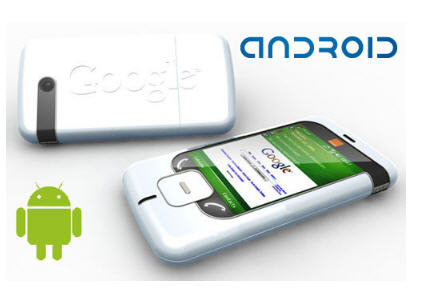
The Google Phone: Risks, rewards and wild cards

The fabled Google Phone made an appearance over the weekend and it’s another iPhone killer, grand experiment for the search giant or a way to rewrite the wireless pecking order. Here’s a look at the risks, rewards and wild card associated with Google’s phone, dubbed Nexus One.

First, a little background (Techmeme). Google on Saturday said on its mobile blog that is handing out a snazzy phone loaded with an uncompromised version of its Android operating system. The move was all about Google eating is own Android dogfood. The device combines “innovative hardware from a partner with software that runs on Android to experiment with new mobile features and capabilities.”

It didn’t take long for pictures of this Google phone to hit Twitter. The Wall Street Journal then followed up with a few more tidbits.

Among them:

> Google’s Nexus One will up the ante vs. Apple;

> HTC will make the device;

> The device won’t be tethered to any carrier and Google will sell it online;

> Google wanted to control the hardware, software and user experience completely.

So what is Google up to with Nexus One? The answers are a little fuzzy, but here’s a crack at Google’s calculus behind launching a phone that could alienate partners, drive wireless innovation and alter the competitive landscape among other things.

Read more about the Google phone at: http://blogs.zdnet.com/BTL/?p=28432&tag=nl.e539

Thursday, October 30, 2008

Google’s PDF Search Throws Some Light on the Dark Web

Google said on its official blog that it has developed optical character recognition technology to the point that its search engine can read any scanned document in Adobe’s PDF format, effectively turning scanned images into words that are searchable and indexable.

It’s no secret that Google has been looking into OCR; the Mountain View, Calif.-based company’s efforts to make books and newspapers digitally searchable are also related to its broader efforts to expand the parameters of search.

Tuesday, October 2, 2007

September 2007

>>> Simpler-Webb partners with EVault
Simpler-Webb, Inc. announced its partnership with EVault to provide customer data protection software and Software as a Service (SaaS) solutions from EVault, Inc., a wholly-owned subsidiary of Seagate Technology. EVault offers a suite of data protection software and SaaS solutions that are easy-to-use, reliable, and flexible. This allows Simpler-Webb’s credit union customers to conform to industry-specific compliance and security regulations by addressing their backup, recovery, archiving, business continuity and e-discovery needs.
http://www.creditunions.com/resources/press/pressreleases/41565/EVault%20release%20CU.doc
http://tinyurl.com/39ss9y

>>> Sixty members caught in repeated phish nets
Financial accounts of more than 60 members at a credit union in Indiana may have been compromised due to an unusual multi-part e-mail phishing scam discovered Friday.

Fraudulent e-mails posing to be from the $391 million-asset Notre Dame FCU in South Bend rerouted users to a counterfeit credit union website in the Netherlands that asked members for personal information, such as debit card numbers and security codes.
http://www.cuna.org/newsnow/07/system090607-6.html?ref=hed
http://tinyurl.com/2o9grw


>>> Everyone's hacking the net, says Check Point founder
Governments, criminal gangs, and gifted amateurs are seeding cyberspace with Trojans, viruses and other malware to monitor activity and benefit economically, according to the founder of Check Point.

"Every day we are seeing attacks, and I am not sure if this is just the tip of the iceberg," said Gil Schwed, the founder and chief executive of the security software and appliance firm. Schwed was referring to recent media reports that the Pentagon, the German government, and Western corporate sites had been attacked from China.
http://www.infosecurity-magazine.com/news/070906_checkpoint_cw.html
http://tinyurl.com/2mawwc

>>> The Biggest Problem with VISTA
The biggest problem with Vista is the one that Microsoft can least fix - driver support. Even after all this time, there's still a lot of (even brand new) hardware I own that doesn't support Windows Vista. Maybe Microsoft could bribe (or offer "incentives") to manufacturers to release Vista drivers for all of their hardware less than 3 years old. And make sure the drivers actually work properly. Other than that, I think the "Ultimate" edition should actually be the only version on sale. Price it at the same as Home Premium and then at install time give the option of installing a "basic", "regular" or "expert" version of the OS. It would save a lot of shelf space and confuse consumers less.

>>> Help users create complex passwords that are easy to remember
While most end users understand the importance of using passwords to secure corporate systems and data, they don't always know how to create a strong password. That's why it's just as important to create a strong password policy in your organization. Remember: Passwords are only as good as the policy that enforces their use. For example, if your company's password policy only requires a minimum of six characters and doesn't require complexity (i.e., a combination of uppercase and lowercase characters, digits, and/or nonalphanumeric characters), then you've got a pretty weak policy. That means most users will use passwords that are easy to crack through either brute force or social engineering.
http://articles.techrepublic.com.com/5100-1009_11-6028857.html?tag=nl.e036
http://tinyurl.com/2dr36b

>>> FBI May Seek No Hats Legislation in Washington State
The FBI in Washington State may seek legislation that would forbid financial institutions from doing business with member/customers wearing hats and sunglasses and hooded sweatshirts while inside the institution. Special Agent Larry Carr, who heads the bank robbery division in Seattle, plans to work with state lawmakers on the legislation, said The Seattle Times (Sept. 14). Robbers often use the clothing to disguise themselves and thwart surveillance cameras.
http://www.cuna.org/newsnow/07/system091407-5.html?ref=hed
http://tinyurl.com/2kx7t4

>>> CU Members Value More Online Security
When it comes to a positive credit union online experience, improving online security and communicating security policy are key according to a recent Solavista survey. Results from 1,809 credit union respondents showed that online security is the overwhelming feature members are seeking from their credit union’s Web site. In fact, three of the top four Web site improvement factors desired by members involved security enhancements. Some 81% said they want greater assurance that their information won’t be sold or distributed to others. Protecting against hackers (73% of all respondents) and protecting against phishing attacks (64%) ranked two and four respectively.

>>> Google Presents Power Point Alternative
The rumored arrival of a Google option for creating and viewing slide-based presentations became fact with the debut of its newest feature on Google Docs. You'll see something different when clicking New in Google Docs. The option to create a presentation with Google's online suite has been on the radar since Google disclosed it in April 2007, confirming an earlier rumor about it posted to Google Operating System. People have the option of creating new presentations with the slide editor in Google Docs. The technology comes from a blend of companies Google acquired for their slide-based innovations. As noted on the official Google blog, presentations and collaboration go hand in hand with this new product: “When it's time to present, participants can simply click a link to follow along as the presenter takes the audience through the slideshow. Participants are connected through Google Talk and can chat about the presentation as they're watching.”

The debut of presentations gives Google another point on which they and Capgemini can compete with Microsoft for certain segments of enterprise workers. Google's deal with Capgemini gives it access to a lot of people working for units managed by the IT outsourcer.