Saturday, February 19, 2011

Tuesday, February 15, 2011
Leadership 101
Posted by Charles Bruen
http://www.cbruen.com/blog/
The February 9th Credit Union Times editor's column written by Sarah Snell Cooke is worth reading. Cooke covers several topics but this one in particular caught my attention:
"... during a webinar recently hosted by our Credit Union Leadership Forum, 77% of attendees responded that the NCUA's requlation definitely will help or will help some to the question, "Do you think that the latest NCUA regulations on FCU directors will help credit unions to function more effectively in the future.?"
"Beam me up Scotty!" Are you serious? These credit unions (77%) were just waiting around for the NCUA to mandate what they should do next. Is this great credit union leadership.
If this training requirement was so important to this group of credit unions, then why didn't they just implement it long ago. It is a sad state of affairs when credit leadership amounts to sitting back and waiting for the regulator tell us what the next step is to become "more effective in the future."
http://www.cbruen.com/blog/
The February 9th Credit Union Times editor's column written by Sarah Snell Cooke is worth reading. Cooke covers several topics but this one in particular caught my attention:
"... during a webinar recently hosted by our Credit Union Leadership Forum, 77% of attendees responded that the NCUA's requlation definitely will help or will help some to the question, "Do you think that the latest NCUA regulations on FCU directors will help credit unions to function more effectively in the future.?"
"Beam me up Scotty!" Are you serious? These credit unions (77%) were just waiting around for the NCUA to mandate what they should do next. Is this great credit union leadership.
If this training requirement was so important to this group of credit unions, then why didn't they just implement it long ago. It is a sad state of affairs when credit leadership amounts to sitting back and waiting for the regulator tell us what the next step is to become "more effective in the future."
Monday, February 14, 2011
PayPal and Attorney Team Up to Rip off Baseball Historic Society
PayPal Refuses to Help Identify Card Clearing Bank, Partners With Bank to Cheat Historic Society
St. Louis, MO, February 15, 2011 - The 27 year old St. Louis Browns Historic Society says they’ve been ripped off by a Skokie, Illinois attorney using his credit card through PayPal. The attorney, Irving Funk, purchased a St. Louis Browns replica baseball jersey from the Society. He paid for the merchandise and turned around and canceled the transaction with his bank about a month later. Now three months later, the Society is still trying to have its merchandised returned.
Society President, Bill Rogers, says the baseball jersey was exactly as pictured at their blog site at http://brownsmerchandise.blogspot.com/ . “The cost of the sale does not warrant filing a lawsuit, but it does warrant spreading the word about the ethics of Mr. Funk. We have sent numerous e-mails, made numerous phone calls, and also sent post office mail but all go unanswered. All we’re asking for is either payment of the Jersey ($72) or return of the merchandise. It’s that simple. We have no idea why Mr. Funk changed his mind.”
Mr. Funk advised his bank to stop payment of the purchase. His bank notified PayPal who refunded the money back to Mr. Funk. A call for help to PayPal has fallen on deaf ears. Rogers said, “I have talked to PayPal several times requesting they advise us as to Mr. Funk’s bank name and/or the credit card number used for this fraudulent transaction. PayPal refuses to co-operate citing privacy reasons. PayPal has become a party to this fraud.”
A Google search on “PayPal Problems” turned up over 97,000 websites. Rogers said he noted comments at http://headkeys.com/screw-paypal.com that provides help to those who got ripped off by PayPal.
One person commented, “Had an email off PayPal this morning. The buyer has filed an 'item not as described’ dispute, even though it was exactly as described and the lovely people at PayPal have now seized the money involved and frozen my account! I am going to have to go through all this dispute bovine excrement now, not knowing whether I will even get MY money back from them at the end of it all. Not sure what’s going on. Have I been the victim of a scam? Do you think?”
Rogers said, "If you have a PayPal account, be aware they are not a bank and have a completely different set of rules. While we may continue with PayPal, we're withdrawing our funds to work off a near-zero balance account."
About St. Louis Browns Historical Society
The mission of the St. Louis Browns Historical Society is to preserve the history and memory of the St. Louis Browns baseball team. The Browns played in St. Louis from 1902 through the 1953 season. The fan club was organized in 1984 and has more than 315 members today.
To learn more about the Browns, visit their Internet sites at:
http://www.thestlbrowns.com/
http://thestlbrowns.blogspot.com
http://brownsmuseum.blogspot.com/
http://brownsmerchandise.blogspot.com/
http://stlbrowns.qbstores.com/
Contact
Bill Rogers, President/COO
St. Louis Browns Fan Club
P.O. Box 510047
St. Louis, MO 63151-0047
Telephone: 314-892-8632
E – mail: STLBrowns@SWbell.net
St. Louis, MO, February 15, 2011 - The 27 year old St. Louis Browns Historic Society says they’ve been ripped off by a Skokie, Illinois attorney using his credit card through PayPal. The attorney, Irving Funk, purchased a St. Louis Browns replica baseball jersey from the Society. He paid for the merchandise and turned around and canceled the transaction with his bank about a month later. Now three months later, the Society is still trying to have its merchandised returned.
Society President, Bill Rogers, says the baseball jersey was exactly as pictured at their blog site at http://brownsmerchandise.blogspot.com/ . “The cost of the sale does not warrant filing a lawsuit, but it does warrant spreading the word about the ethics of Mr. Funk. We have sent numerous e-mails, made numerous phone calls, and also sent post office mail but all go unanswered. All we’re asking for is either payment of the Jersey ($72) or return of the merchandise. It’s that simple. We have no idea why Mr. Funk changed his mind.”
Mr. Funk advised his bank to stop payment of the purchase. His bank notified PayPal who refunded the money back to Mr. Funk. A call for help to PayPal has fallen on deaf ears. Rogers said, “I have talked to PayPal several times requesting they advise us as to Mr. Funk’s bank name and/or the credit card number used for this fraudulent transaction. PayPal refuses to co-operate citing privacy reasons. PayPal has become a party to this fraud.”
A Google search on “PayPal Problems” turned up over 97,000 websites. Rogers said he noted comments at http://headkeys.com/screw-paypal.com that provides help to those who got ripped off by PayPal.
One person commented, “Had an email off PayPal this morning. The buyer has filed an 'item not as described’ dispute, even though it was exactly as described and the lovely people at PayPal have now seized the money involved and frozen my account! I am going to have to go through all this dispute bovine excrement now, not knowing whether I will even get MY money back from them at the end of it all. Not sure what’s going on. Have I been the victim of a scam? Do you think?”
Rogers said, "If you have a PayPal account, be aware they are not a bank and have a completely different set of rules. While we may continue with PayPal, we're withdrawing our funds to work off a near-zero balance account."
About St. Louis Browns Historical Society
The mission of the St. Louis Browns Historical Society is to preserve the history and memory of the St. Louis Browns baseball team. The Browns played in St. Louis from 1902 through the 1953 season. The fan club was organized in 1984 and has more than 315 members today.
To learn more about the Browns, visit their Internet sites at:
http://www.thestlbrowns.com/
http://thestlbrowns.blogspot.com
http://brownsmuseum.blogspot.com/
http://brownsmerchandise.blogspot.com/
http://stlbrowns.qbstores.com/
Contact
Bill Rogers, President/COO
St. Louis Browns Fan Club
P.O. Box 510047
St. Louis, MO 63151-0047
Telephone: 314-892-8632
E – mail: STLBrowns@SWbell.net
It's Just Getting Too Complicated
The world is just getting too complex for me. They even mess me up every time I go to the grocery store. You would think they could settle on something themselves but this sudden "Paper or Plastic?" every time I check out just knocks me for a loop. I bought some of those cloth reusable bags to avoid looking confused, but I never remember to take them in with me.
 Now I toss it back to them. When they ask me, "Paper or Plastic?" I just say, "Doesn't matter to me. I am bi-sacksual." Then it's their turn to stare at me with a blank look. I was recently asked if I tweet. I answered, No, but I do toot a lot."
 Wednesday, February 9, 2011
Identity fraud dropped 28% during 2010
Credit unions that have applied more stringent criteria to authenticate users and determine credit risk will be happy to learn their efforts work. The number of identity fraud victims in 2010 dropped by 28% to 8.1 million U.S. adults--the largest single-year decrease since 2003. And the total amount decreased to $37 billion--the smallest amount in eight years. However, consumers out-of-pocket expenses rose significantly--63%, said a new study.
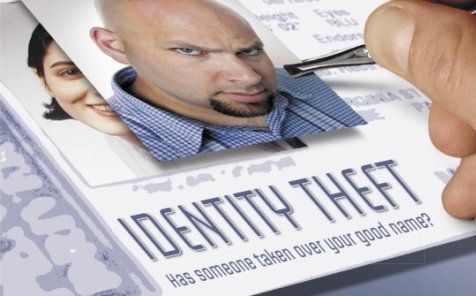 The survey, independently produced by San Francisco-based Javelin Strategy & Research and whose results were released Tuesday, is the nation's longest-running study of identity fraud. It was sponsored by Fiserv, Intersections Inc., and Wells Fargo & Co. (Business Wire Feb. 8), and is based on 5,004 telephone interviews. Intersections Inc. is a CUNA Strategic Services provider.
The 8.1 million fraud victims were three million fewer than in 2009, and the total amount decreased from 2009's $56 billion to $37 billion. Javelin said consumers' costs rose significantly due to the types of fraud that were successfully perpetrated and an increase in "friendly fraud."
The study defined identity fraud as unauthorized use of another person's personal information to achieve illicit financial gain.
"Identity fraud underwent a marked decline and shift over the past year. This great news is a testament to the significant efforts businesses, the financial services industry and government agencies are making to educate consumers, protect data, and prevent and resolve identity fraud," said James Van Dyke, Javelin's president and founder. "Economic conditions also appear to have contributed to this year-over-year decline, as well as increased security measures and some significant law enforcement successes."
He noted the increase in out-of-pocket costs "carries a warning: Consumers cannot put their finances on autopilot or ignore important safeguards. Simple safeguards may dramatically reduce fraud risk, such as frequently monitoring banking, credit and other financial activities, securing computers and paper records, and activating electronic alerts to help prevent fraud and address the situation quickly when it occurs."
More on this subject at: http://www.cuna.org/newsnow/11/system020811-10.html
Tuesday, February 8, 2011
NCUA Outlines Board Financial Education Requirements for FCUs
Board members of federal credit unions must be able to examine a credit union balance sheet and explain its meaning and importance and must learn how to do that within six months of joining a board, according to a letter to credit unions sent today by NCUA Chairman Debbie Matz.
She wrote that the director should understand if the value of a line item is changing over time and what is the significance of that change. The director must also understand the credit union’s activities and both the potential risks and benefits.
In the letter, she emphasized that the agency’s goal is not to “increase examiner scrutiny of the financial skills of particular directors. Rather, examiners will evaluate whether the credit union has a policy in place to make available the appropriate training to enhance the financial knowledge of the directors.’’
She wrote that the FCU’s policy for financial education must include options for training for board members, including funding information and a summary of the timetable required.
The letter implements the regulation that the NCUA Board approved last year.
She wrote that the director should understand if the value of a line item is changing over time and what is the significance of that change. The director must also understand the credit union’s activities and both the potential risks and benefits.
In the letter, she emphasized that the agency’s goal is not to “increase examiner scrutiny of the financial skills of particular directors. Rather, examiners will evaluate whether the credit union has a policy in place to make available the appropriate training to enhance the financial knowledge of the directors.’’
She wrote that the FCU’s policy for financial education must include options for training for board members, including funding information and a summary of the timetable required.
The letter implements the regulation that the NCUA Board approved last year.
Monday, February 7, 2011
Social media gets new focus at NCUA
The National Credit Union Administration (NCUA), known already to "tweet" on Twitter, is enhancing its outreach through social media and has brought on a new employee to lead the charge.
The NCUA says it wishes to ensure a "vibrant and active presence in the social media sphere," which includes a presence, not only on Twitter, but Facebook, YouTube and other forms of electronic communications as well.
Kenzie Snowden is the NCUA's new social media and outreach specialist. She started in that position a week ago.
NCUA Chairman Debbie Matz said of the development, "The Social Media and Outreach Specialist position is about the future. NCUA is continuing to explore all avenues to enhance communication with consumers, the credit union industry, and other audiences. I look forward to NCUA reaching new audiences, and new levels of transparency, through the outreach that will be initiated by our Social Media program."
Prior to joining the NCUA, Snowden did a stint in social media development with the public affairs office at the U.S. Patent and Trademark Office.
The NCUA says it wishes to ensure a "vibrant and active presence in the social media sphere," which includes a presence, not only on Twitter, but Facebook, YouTube and other forms of electronic communications as well.
Kenzie Snowden is the NCUA's new social media and outreach specialist. She started in that position a week ago.
NCUA Chairman Debbie Matz said of the development, "The Social Media and Outreach Specialist position is about the future. NCUA is continuing to explore all avenues to enhance communication with consumers, the credit union industry, and other audiences. I look forward to NCUA reaching new audiences, and new levels of transparency, through the outreach that will be initiated by our Social Media program."
Prior to joining the NCUA, Snowden did a stint in social media development with the public affairs office at the U.S. Patent and Trademark Office.
Thursday, February 3, 2011
Did you dream about cards replacing cash? You dreamed too small.
by Ron Daly
Maybe we've aimed a little low...
Granted, most of us didn't see the change coming - "Smartphone? What the heck is a smartphone?!?" we said in disbelief. Sure, we had Blackberries, but the iPhone surfaced and struck a mighty blow to the way we think about our cell phones. Maybe the phone wasn't the important part. Maybe the smart is where the new money is.
And boy, is there ever money in smartphones. Not only in the app market, mind you, but in the transfer of money between a buyer and a seller. There are mobile banking apps, of course. There are PFM apps. There's even a device from Square that allows a person to swipe a credit card on their phone. That's pretty mind-blowing. But Starbucks - that's right, Starbucks - has just invented their own way to pay for things via smartphone.
From the Transaction Directory:
"Today, one in five Starbucks transactions is made using a Starbucks Card and mobile payment will extend the way our customers experience and use their Starbucks Card," said. Brady Brewer, vice president of Starbucks Card and Brand Loyalty.
Last year, Starbucks customers loaded $1.5 billion onto their cards, a 21 percent increase from 2008.
In a related story, CNN Money reports on the growing popularity of “mobile currency,” whereby customers use their mobile phones in place of cash or credit cards.
“There’s a lot of money at stake if it’s done right,” said Omar Green, director of strategic mobile initiatives at Intuit.;
For years, we've talked as an industry and as a society about the end of cash, the next wave of finance, and what the future had in store for our money. And maybe we were dreaming small - we just figured debit use would increase and cash would start to drop off as a form of payment. We weren't counting on smartphones to be the next step. Were we?
Well, as recently as a year ago, Newsweek was predicting that the cell phone would edge its way in as a payment method, as did creditcards.com. And here we are, seeing one of America's most interesting businesses jump in and get wet.
While we are fighting the Interchange battle, who's watching this critical shift in the payment system? No more checks, no more Visa, no more MasterCard OR Interchange income...
Maybe we've aimed a little low...
Granted, most of us didn't see the change coming - "Smartphone? What the heck is a smartphone?!?" we said in disbelief. Sure, we had Blackberries, but the iPhone surfaced and struck a mighty blow to the way we think about our cell phones. Maybe the phone wasn't the important part. Maybe the smart is where the new money is.
And boy, is there ever money in smartphones. Not only in the app market, mind you, but in the transfer of money between a buyer and a seller. There are mobile banking apps, of course. There are PFM apps. There's even a device from Square that allows a person to swipe a credit card on their phone. That's pretty mind-blowing. But Starbucks - that's right, Starbucks - has just invented their own way to pay for things via smartphone.
From the Transaction Directory:
"Today, one in five Starbucks transactions is made using a Starbucks Card and mobile payment will extend the way our customers experience and use their Starbucks Card," said. Brady Brewer, vice president of Starbucks Card and Brand Loyalty.
Last year, Starbucks customers loaded $1.5 billion onto their cards, a 21 percent increase from 2008.
In a related story, CNN Money reports on the growing popularity of “mobile currency,” whereby customers use their mobile phones in place of cash or credit cards.
“There’s a lot of money at stake if it’s done right,” said Omar Green, director of strategic mobile initiatives at Intuit.;
For years, we've talked as an industry and as a society about the end of cash, the next wave of finance, and what the future had in store for our money. And maybe we were dreaming small - we just figured debit use would increase and cash would start to drop off as a form of payment. We weren't counting on smartphones to be the next step. Were we?
Well, as recently as a year ago, Newsweek was predicting that the cell phone would edge its way in as a payment method, as did creditcards.com. And here we are, seeing one of America's most interesting businesses jump in and get wet.
While we are fighting the Interchange battle, who's watching this critical shift in the payment system? No more checks, no more Visa, no more MasterCard OR Interchange income...
Wednesday, February 2, 2011
January News and Views Published Below

CU SECURITY & TECHNOLOGY News - Providing a brief summary of news and information related to security and technology issues for credit unions - Plus some interestingand fun web sites . . .
(Click on photo to enlarge)
Monday, January 31, 2011
Changes Are Coming: Things We'll Be Saying Goodbye To
Whether these changes are good or bad depends in part on how we adapt to them. But, ready or not, here they come.
1. The Post Office. Get ready to imagine a world without the post office. They are so deeply in financial trouble that there is probably no way to sustain it long term. Email, Fed Ex, and UPS have just about wiped out the minimum revenue needed to keep the post office alive. Most of your mail every day is junk mail and bills.
2. The Check. Britain is already laying the groundwork to do away with checks by 2018. It costs the financial system billions of dollars a year to process checks. Plastic cards and online transactions will lead to the eventual demise of the check. This plays right into the death of the post office. If you never paid your bills by mail and never received them by mail, the post office would absolutely go out of business.
3. The Newspaper. The younger generation simply doesn't read the newspaper. They certainly don't subscribe to a daily delivered print edition. That may go the way of the milkman and the laundry man. As for reading the paper online, get ready to pay for it. The rise in mobile Internet devices and e-readers has caused all the newspaper and magazine publishers to form an alliance. They have met with Apple, Amazon, and the major cell phone companies to develop a model for paid subscription services.
4. The Book. You say you will never give up the physical book that you hold in your hand and turn the literal pages. I said the same thing about downloading music from iTunes. I wanted my hard copy CD. But I quickly changed my mind when I discovered that I could get albums for half the price without ever leaving home to get the latest music. The same thing will happen with books. You can browse a bookstore online and even read a preview chapter before you buy. And the price is less than half that of a real book. And think of the convenience! Once you start flicking your fingers on the screen instead of the book, you find that you are lost in the story, can't wait to see what happens next, and you forget that you're holding a gadget instead of a book.
5. The Land Line Telephone. Unless you have a large family and make a lot of local calls, you don't need it anymore. Most people keep it simply because they've always had it. But you are paying double charges for that extra service. All the cell phone companies will let you call customers using the same cell provider for no charge against your minutes.
6. Music. This is one of the saddest parts of the change story. The music industry is dying a slow death. Not just because of illegal downloading. It's the lack of innovative new music being given a chance to get to the people who would like to hear it. Greed and corruption is the problem. The record labels and the radio conglomerates are simply self-destructing. Over 40% of the music purchased today is "catalog items," meaning traditional music that the public is familiar with. Older established artists. This is also true on the live concert circuit. To explore this fascinating and disturbing topic further, check out the book, "Appetite for Self-Destruction" by Steve Knopper, and the video documentary, "Before the Music Dies."
7. Television. Revenues to the networks are down dramatically. Not just because of the economy. People are watching TV and movies streamed from their computers. And they're playing games and doing lots of other things that take up the time that used to be spent watching TV. Prime time shows have degenerated down to lower than the lowest common denominator. Cable rates are skyrocketing and commercials run about every 4 minutes and 30 seconds. I say good riddance to most of it. It's time for the cable companies to be put out of our misery. Let the people choose what they want to watch online and through Netflix.
8. The "Things" That You Own. Many of the very possessions that we used to own are still in our lives, but we may not actually own them in the future. They may simply reside in "the cloud." Today your computer has a hard drive and you store your pictures, music, movies, and documents. Your software is on a CD or DVD, and you can always re-install it if need be. But all of that is changing. Apple, Microsoft, and Google are all finishing up their latest "cloud services." That means that when you turn on a computer, the Internet will be built into the operating system. So, Windows, Google, and the Mac OS will be tied straight into the Internet. If you click an icon, it will open something in the Internet cloud. If you save something, it will be saved to the cloud. And you may pay a monthly subscription fee to the cloud provider.
In this virtual world, you can access your music or your books, or your whatever from any laptop or handheld device. That's the good news. But, will you actually own any of this "stuff" or will it all be able to disappear at any moment in a big "Poof?" Will most of the things in our lives be disposable and whimsical? It makes you want to run to the closet and pull out that photo album, grab a book from the shelf, or open up a CD case and pull out the insert.
9. Privacy. If there ever was a concept that we can look back on nostalgically, it would be privacy. That's gone. It's been gone for a long time anyway. There are cameras on the street, in most of the buildings, and even built into your computer and cell phone. But you can be sure that 24/7, "They" know who you are and where you are, right down to the GPS coordinates, and the Google Street View. If you buy something, your habit is put into a zillion profiles, and your ads will change to reflect those habits. And "They" will try to get you to buy something else. Again and again. All we will have that can't be changed are memories.
1. The Post Office. Get ready to imagine a world without the post office. They are so deeply in financial trouble that there is probably no way to sustain it long term. Email, Fed Ex, and UPS have just about wiped out the minimum revenue needed to keep the post office alive. Most of your mail every day is junk mail and bills.
2. The Check. Britain is already laying the groundwork to do away with checks by 2018. It costs the financial system billions of dollars a year to process checks. Plastic cards and online transactions will lead to the eventual demise of the check. This plays right into the death of the post office. If you never paid your bills by mail and never received them by mail, the post office would absolutely go out of business.
3. The Newspaper. The younger generation simply doesn't read the newspaper. They certainly don't subscribe to a daily delivered print edition. That may go the way of the milkman and the laundry man. As for reading the paper online, get ready to pay for it. The rise in mobile Internet devices and e-readers has caused all the newspaper and magazine publishers to form an alliance. They have met with Apple, Amazon, and the major cell phone companies to develop a model for paid subscription services.
4. The Book. You say you will never give up the physical book that you hold in your hand and turn the literal pages. I said the same thing about downloading music from iTunes. I wanted my hard copy CD. But I quickly changed my mind when I discovered that I could get albums for half the price without ever leaving home to get the latest music. The same thing will happen with books. You can browse a bookstore online and even read a preview chapter before you buy. And the price is less than half that of a real book. And think of the convenience! Once you start flicking your fingers on the screen instead of the book, you find that you are lost in the story, can't wait to see what happens next, and you forget that you're holding a gadget instead of a book.
5. The Land Line Telephone. Unless you have a large family and make a lot of local calls, you don't need it anymore. Most people keep it simply because they've always had it. But you are paying double charges for that extra service. All the cell phone companies will let you call customers using the same cell provider for no charge against your minutes.
6. Music. This is one of the saddest parts of the change story. The music industry is dying a slow death. Not just because of illegal downloading. It's the lack of innovative new music being given a chance to get to the people who would like to hear it. Greed and corruption is the problem. The record labels and the radio conglomerates are simply self-destructing. Over 40% of the music purchased today is "catalog items," meaning traditional music that the public is familiar with. Older established artists. This is also true on the live concert circuit. To explore this fascinating and disturbing topic further, check out the book, "Appetite for Self-Destruction" by Steve Knopper, and the video documentary, "Before the Music Dies."
7. Television. Revenues to the networks are down dramatically. Not just because of the economy. People are watching TV and movies streamed from their computers. And they're playing games and doing lots of other things that take up the time that used to be spent watching TV. Prime time shows have degenerated down to lower than the lowest common denominator. Cable rates are skyrocketing and commercials run about every 4 minutes and 30 seconds. I say good riddance to most of it. It's time for the cable companies to be put out of our misery. Let the people choose what they want to watch online and through Netflix.
8. The "Things" That You Own. Many of the very possessions that we used to own are still in our lives, but we may not actually own them in the future. They may simply reside in "the cloud." Today your computer has a hard drive and you store your pictures, music, movies, and documents. Your software is on a CD or DVD, and you can always re-install it if need be. But all of that is changing. Apple, Microsoft, and Google are all finishing up their latest "cloud services." That means that when you turn on a computer, the Internet will be built into the operating system. So, Windows, Google, and the Mac OS will be tied straight into the Internet. If you click an icon, it will open something in the Internet cloud. If you save something, it will be saved to the cloud. And you may pay a monthly subscription fee to the cloud provider.
In this virtual world, you can access your music or your books, or your whatever from any laptop or handheld device. That's the good news. But, will you actually own any of this "stuff" or will it all be able to disappear at any moment in a big "Poof?" Will most of the things in our lives be disposable and whimsical? It makes you want to run to the closet and pull out that photo album, grab a book from the shelf, or open up a CD case and pull out the insert.
9. Privacy. If there ever was a concept that we can look back on nostalgically, it would be privacy. That's gone. It's been gone for a long time anyway. There are cameras on the street, in most of the buildings, and even built into your computer and cell phone. But you can be sure that 24/7, "They" know who you are and where you are, right down to the GPS coordinates, and the Google Street View. If you buy something, your habit is put into a zillion profiles, and your ads will change to reflect those habits. And "They" will try to get you to buy something else. Again and again. All we will have that can't be changed are memories.
Friday, January 28, 2011
Four Unusual Dates this Year
This year we will experience 4 unusual dates.... 1/1/11, 1/11/11, 11/1/11, 11/11/11 .... Now, if you take the last 2 digits of the year you were born, and add the age you will be this year, it
WILL EQUAL TO 111...
Just think about it. Never before and never again.
WILL EQUAL TO 111...
Just think about it. Never before and never again.
Thursday, January 27, 2011
CU Times Parent Company Files for Bankruptcy
Summit Business Media, parent company to Credit Union Times, said this morning it filed a pre-packaged bankruptcy with an existing plan with its creditors to restructure its debt.
Summit Business Media has joined the ranks of publishers seeking to reorganize and slash debt through a voluntary Chapter 11 bankruptcy.
The reorganization plan, which received approval from 83 percent of Summit's lenders (less than 100 percent approval forced Summit to go through the courts), will cut outstanding debt obligations by half, or $135 million. Summit expects to emerge from Chapter 11 in the first half of 2011.
If the plan is approved, Summit will use its bank balances (currently more than $10 million in cash) and cash flow from its existing operations to meet working capital needs. The company says any pre-filing advertising, subscription and event contracts will be honored. Lenders have also agreed to offer a debt-in-possession credit facility of $5 million to support the company's additional working capital needs.
Summit Business Media has joined the ranks of publishers seeking to reorganize and slash debt through a voluntary Chapter 11 bankruptcy.
The reorganization plan, which received approval from 83 percent of Summit's lenders (less than 100 percent approval forced Summit to go through the courts), will cut outstanding debt obligations by half, or $135 million. Summit expects to emerge from Chapter 11 in the first half of 2011.
If the plan is approved, Summit will use its bank balances (currently more than $10 million in cash) and cash flow from its existing operations to meet working capital needs. The company says any pre-filing advertising, subscription and event contracts will be honored. Lenders have also agreed to offer a debt-in-possession credit facility of $5 million to support the company's additional working capital needs.
Sunday, January 23, 2011
At School, Children are Rarely Taught About Finances
Do you value your child's education? Do you want your children to have a financial head start in life? Are you willing to take an active role to make that happen? At school, your children learn many valuable concepts, yet they are rarely taught anything about finances. Imagine if you had been taught about money and, more specifically, about what the rich know about money - that the way to wealth is through cash flowing assets. How would your life be different today if you'd learned these concepts at an early age?
You can give your children the financial head start you missed out on. The Rich Kid Smart Kid website provides games and resources that provide young people with an introduction to the financial concepts that place them on the right financial footing for a secure future.
You can give your children the financial head start you missed out on. The Rich Kid Smart Kid website provides games and resources that provide young people with an introduction to the financial concepts that place them on the right financial footing for a secure future.
Here's an excellent web site for children of all ages that teaches them how to handle money. Please check it out and try it for yourself.
Thursday, January 13, 2011
What should you REALLY be afraid of?
Fear, as Franklin Roosevelt noted in 1933, paralyzes those who succumb to it. And much of what we worry about today is based on hype rather than reality. Yes, media headlines are partially to blame. But some things (sharks) are just downright scary. Using the most recent U.S. data available, we hereby present a list of unsettling threats and their far riskier counterparts.
Murders (2008) – 14,180
Suicides (2006) – 33,289
Children Abducted by Strangers (1999) – 115
Children who drown in pools (2006) – 288
Burglaries (2007) – 2.2 million
Identity Thefts (2005) – 8.3 million
Shark Attacks (2009) – 28
Dog Bites (annual averages & estimates) – 4.5 million
Americans Killed by Terrorist Attacks Around the World (2008) – 33
Americans Who Die from the Seasonal Flu – 36,171
(annual averages & estimates)
Deaths by Allergic Reaction to Peanuts – 50-100
(annual averages & estimates)
Deaths by Unintentional Poisoning (2006) – 27,531
Women Who Die From Breast Cancer (2009) – 40,170
Women Who Die From Cardiovascular Disease (2006) – 432,709
Fatal Airline Accidents (2005) – 321
Fatal Car Crashes (2008) – 34,017
American Audited by their IRS (2009) – 1.4 million
U.S. Deaths (2007) – 2.4 million
Murders (2008) – 14,180
Suicides (2006) – 33,289
Children Abducted by Strangers (1999) – 115
Children who drown in pools (2006) – 288
Burglaries (2007) – 2.2 million
Identity Thefts (2005) – 8.3 million
Shark Attacks (2009) – 28
Dog Bites (annual averages & estimates) – 4.5 million
Americans Killed by Terrorist Attacks Around the World (2008) – 33
Americans Who Die from the Seasonal Flu – 36,171
(annual averages & estimates)
Deaths by Allergic Reaction to Peanuts – 50-100
(annual averages & estimates)
Deaths by Unintentional Poisoning (2006) – 27,531
Women Who Die From Breast Cancer (2009) – 40,170
Women Who Die From Cardiovascular Disease (2006) – 432,709
Fatal Airline Accidents (2005) – 321
Fatal Car Crashes (2008) – 34,017
American Audited by their IRS (2009) – 1.4 million
U.S. Deaths (2007) – 2.4 million
Wednesday, January 12, 2011
Volunteer Techies Give Free Support
Volunteer techies give free advice on common computer problems at http://fixya.com/. Can't beat the price.
Save on Printer Ink
Save on printer ink by using the Century Gothic font, which a recent study showed consumes about a third less ink than industry-standard Arial. That saves about $20 a year for a home user printing 25 pages a week.
Tuesday, January 4, 2011
A Simple Swipe on a Phone, and You’re Paid
It’s always thrilling when somebody looks at the Way Things Have Always Been Done, and then asks: Why?
And then goes on to change the world forever.
1967: Why is it necessary to wait in line for a human teller if all you want to do is withdraw cash?
1974: Why shouldn’t your document on the computer screen look the same way it will when it’s printed?
1991: If shampoo always settles to the bottom of the bottle, why is the cap on top?
Recently, a San Francisco company has been asking an equally groundshaking question: Why can’t everyone accept credit cards?
Look, credit cards are great. There’s a paper trail, there’s fraud protection, there’s incredible convenience — just swipe and go. But why is it that only companies accept them?

Why can’t we use them to pay the piano teacher, the baby sitter, the lawn-mowing teenager, even first graders at their lemonade stand? Why aren’t credit cards accepted at garage sales, food carts and PTA bake sales? Heck, when your tipsy buddy wants to borrow $20 for a cab home, why can’t you eliminate the awkwardness and future conflict by just running his Visa card on the spot?
“Well,” you’re surely spluttering, “because — well, just because! That’s just how it is. Only actual companies take credit cards, everyone knows that!”
Yeah, but why?
The company asking that question is called Square. Its chief executive is Jack Dorsey, who co-founded Twitter — heard of it? Square is not only asking why, it’s proposing to change that rule for good.
There are actually some good reasons individuals don’t accept credit cards; the whole system is a nightmare of fees and red tape.
To become a credit card merchant, you have to buy the card-reading equipment, which costs several hundred dollars. You generally pay a setup fee, and you commit to a one- or two-year contract with the processing company. You pay $15 to $25 a month, and minimum transaction fees of $25 a month, even if you had no sales at all.
The Square Up system, on the other hand, eliminates that stuff. All of it. It makes the barrier to entry into the credit card world so low, there’s virtually nothing to stop you, the little guy, from taking the leap.
First, the equipment: you need an iPhone, iPad, iPod Touch or an Android phone. Why buy a fancy authorizing machine, when you already have a computer in your pocket?
Unfortunately, Apple steadfastly refuses to add a card-swiping slot to the iPhone. So Square provides you with a tiny half-inch reader attachment that snaps into, of all things, your phone’s headphone jack. The reader has a slot where you can swipe a credit card.
(The name Square, of course, refers both to the shape of the little reader and to what it does — as in, “are we square?” Cute.)
The Square plug is free. In other words, not only are you spared the contracts, the minimums and the monthly fees, but your equipment cost is zero. For all Square cares, you can keep your reader in a drawer somewhere and use it once a year.
For each transaction, Square charges you 2.75 percent of the total, plus 15 cents. That’s a lot simpler, and usually cheaper, than actual merchant accounts, where you might pay 3 or 4 percent, depending on the kind of card, plus 30 cents a transaction.
So let’s say someone from Craigslist comes over to buy your old junk. You snap the Square reader into your phone or tablet. You tap in the amount of the purchase; it could be $1 for a yo-yo, $25 for a box of old records or $12,000 for a used car (there’s no maximum amount). You type a description if you like, and maybe even take a photo of what you’re selling.
Now you swipe the customer’s card, which may take you a couple of tries. Your happy customer signs the phone’s touch screen with a finger (a coming software revision will make this step optional). If you like, you can tap in the customer’s e-mail address; the receipt is then sent automatically, complete with a little map showing exactly where the transaction took place.
The software is beautiful and dog-simple. To sign your name, you scrawl with your finger where it says “sign here.” Think you can handle this?
Monday, January 3, 2011
What the TSA Scanners Have Found so Far....
New insights - what the TSA scanners have found so far....
Terrorist Plots Discovered 0
Transvestites 133
Hernias 1,485
Hemorrhoid Cases 3,172
Enlarged Prostates 8,249
Breast Implants 59,350
Natural Blondes. 3
Terrorist Plots Discovered 0
Transvestites 133
Hernias 1,485
Hemorrhoid Cases 3,172
Enlarged Prostates 8,249
Breast Implants 59,350
Natural Blondes. 3
A Hilarious Overview of Technology
Definitions: Blackberry: a line of smartphones developed and designed by Canadian company Research In Motion (RIM).
Apple: a corporation that designs and markets the Macintosh line of computers, the iPod, the iPhone and the iPad.
Dongle: a small hardware device that plugs into the serial or USB port of a computer.
Booting: a self-sustaining process that proceeds without external help.
Xbox 360: a video game console produced by Microsoft.
Orange: a mobile network operator and internet service provider in the United Kingdom.
Apple: a corporation that designs and markets the Macintosh line of computers, the iPod, the iPhone and the iPad.
Dongle: a small hardware device that plugs into the serial or USB port of a computer.
Booting: a self-sustaining process that proceeds without external help.
Xbox 360: a video game console produced by Microsoft.
Saturday, January 1, 2011
What does it mean to give MORE than 100%?
What Makes 100%? What does it mean to give MORE than 100%? Ever wonder about those people who say they are giving more than 100%? We have all been to those meetings where someone wants you to give over 100%. How about achieving 103%? What makes up 100% in life?
Here's a little mathematical formula that might help you answer these questions:
If: A B C D E F G H I J K L M N O P Q R S T U V W X Y Z
Is represented as:
1 2 3 4 5 6 7 8 9 10 11 12 13 14 15 16 17 18 19 20 21 22 23 24 25 26.
Then:
H-A-R-D-W-O-R-K
8+1+18+4+23+15+18+11 = 98%
And
K-N-O-W-L-E-D-G-E
11+14+15+23+12+5+4+7+5 = 96%
But ,
A-T-T-I-T-U-D-E
1+20+20+9+20+21+4+5 = 100%
And,
B-U-L-L-S-H-I-T
2+21+12+12+19+8+9+20 = 103%
AND, look how far ass kissing will take you.
A-S-S-K-I-S-S-I-N-G
1+19+19+11+9+19+19+9+14+7 = 118%
So, one can conclude with mathematical certainty, that While Hard work and Knowledge will get you close, and Attitude will get you there, its the Bullshit and Ass kissing that will put you over the top.
Here's a little mathematical formula that might help you answer these questions:
If: A B C D E F G H I J K L M N O P Q R S T U V W X Y Z
Is represented as:
1 2 3 4 5 6 7 8 9 10 11 12 13 14 15 16 17 18 19 20 21 22 23 24 25 26.
Then:
H-A-R-D-W-O-R-K
8+1+18+4+23+15+18+11 = 98%
And
K-N-O-W-L-E-D-G-E
11+14+15+23+12+5+4+7+5 = 96%
But ,
A-T-T-I-T-U-D-E
1+20+20+9+20+21+4+5 = 100%
And,
B-U-L-L-S-H-I-T
2+21+12+12+19+8+9+20 = 103%
AND, look how far ass kissing will take you.
A-S-S-K-I-S-S-I-N-G
1+19+19+11+9+19+19+9+14+7 = 118%
So, one can conclude with mathematical certainty, that While Hard work and Knowledge will get you close, and Attitude will get you there, its the Bullshit and Ass kissing that will put you over the top.
Subscribe to:
Posts (Atom)


