We all fall at some point in our lives. A new business or product that we thought would be the next winner, turns out to be a disaster. Failure happens.
If we don't fail, we're probably not trying hard enough.
But what separates the great business leaders from the "also-rans" is how they respond to the times when they fall flat on their face.
Nick Vujicic is someone who constantly falls. And it should be impossible for him to get back up. But he does. It's an incredible story that you've got to see for yourself, especially in this tough economy. You'll be glad you did.
An incredible story.
http://www.yourbusinessgps.com/main.asp?column=1115&page=1342
Friday, April 24, 2009

Survey of Experts Finds Increase in Fraud During Economic Crisis
Intense financial pressure during the economic crisis has led to an increase of fraud, according to a survey of fraud experts conducted by the Association of Certified Fraud Examiners (ACFE). Results of the survey, published in the new ACFE report "Occupational Fraud: A Study of the Impact of an Economic Recession," also found that layoffs are pervasive and are leaving holes in organizations' internal control systems.
The survey responses of more than 500 randomly selected Certified Fraud Examiners (CFEs) were compiled by the Austin, Texas–based ACFE, the world’s largest anti-fraud organization and premier provider of anti-fraud training and education. CFEs are experts in fraud detection, prevention and deterrence, and must pass a rigorous exam as well as meet high professional, educational and ethical standards.
Read more at: http://www.earthtimes.org/articles/show/acfe-survey-of-experts-finds-increase-in-fraud-during-economic-crisis,788078.shtml
The survey responses of more than 500 randomly selected Certified Fraud Examiners (CFEs) were compiled by the Austin, Texas–based ACFE, the world’s largest anti-fraud organization and premier provider of anti-fraud training and education. CFEs are experts in fraud detection, prevention and deterrence, and must pass a rigorous exam as well as meet high professional, educational and ethical standards.
Read more at: http://www.earthtimes.org/articles/show/acfe-survey-of-experts-finds-increase-in-fraud-during-economic-crisis,788078.shtml
Wednesday, April 22, 2009
Dash ATM Expands Product Line to Better Serve U.S. Credit Unions
Recognizing the need to provide credit unions and other financial institutions with a single source for safe secure and reliable ATM products and services, Dash ATM, the nation’s leading manufacturer of high security environmentally controlled drive-up and walk-up ATM enclosures and kiosks, announced that the  company will begin marketing state-of-the-art ATMs manufactured by Triton and Hyosung, two of the world’s largest and most respected ATM manufacturers.
Dash ATM will be the only kiosk manufacturing company in the US that can provide financial institutions with a full turn-key operation for a new ATM, a safe/secure enclosure and even take care of installation and first and second line maintenance service.
Established nearly 10 years ago, DASH ATM manufactures environmentally controlled drive-up and walk-up ATM enclosures for machines which are not equipped with level 1 safes. To date, no criminal has ever gained entry into a DASH manufactured enclosure. For more information on Dash ATM visit http://www.dashatm.com/.
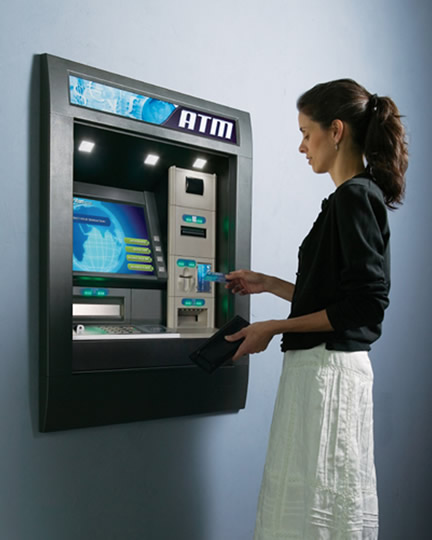 company will begin marketing state-of-the-art ATMs manufactured by Triton and Hyosung, two of the world’s largest and most respected ATM manufacturers.
Dash ATM will be the only kiosk manufacturing company in the US that can provide financial institutions with a full turn-key operation for a new ATM, a safe/secure enclosure and even take care of installation and first and second line maintenance service.
Established nearly 10 years ago, DASH ATM manufactures environmentally controlled drive-up and walk-up ATM enclosures for machines which are not equipped with level 1 safes. To date, no criminal has ever gained entry into a DASH manufactured enclosure. For more information on Dash ATM visit http://www.dashatm.com/.
Tuesday, April 21, 2009
Vendor partnerships key to fighting fraud
Credit unions plan to increase their efforts to fight fraud, and vendors should work on creating strategic partnerships to present more complete solutions, according to a recent study.
Fraud is a serious concern for financial institutions, and credit unions spend millions of dollars each year on solutions to prevent attacks, Boston-based Aite said in its new report, "Fraud Management at Retail Banks and Credit Unions: The Vendor Landscape."
"The sheer number of fraud management vendors used by financial institutions speaks to a lack of ability for any one vendor to address the gamut of fraud management needs," said Nick Holland, senior analyst with Aite Group and author of the report.
"Vendors looking at the fraud management landscape for financial institutions should realize that institutions are likely to gravitate to vendors that can provide fewer touchpoints to the overall fraud picture. Vendors should explore strategic partnerships in order to present a more complete offering," he added.
The report is based on a November 2008 survey of executives at 23 of the top 150 U.S. financial institutions. It reveals financial institutions' perceptions of fraud management technology vendors and ranks vendors in four areas: new account opening fraud detection, ID verification, authentication and ID fraud monitoring; fraud database; enterprise fraud case management; and check fraud detection.
Fraud is a serious concern for financial institutions, and credit unions spend millions of dollars each year on solutions to prevent attacks, Boston-based Aite said in its new report, "Fraud Management at Retail Banks and Credit Unions: The Vendor Landscape."
"The sheer number of fraud management vendors used by financial institutions speaks to a lack of ability for any one vendor to address the gamut of fraud management needs," said Nick Holland, senior analyst with Aite Group and author of the report.
"Vendors looking at the fraud management landscape for financial institutions should realize that institutions are likely to gravitate to vendors that can provide fewer touchpoints to the overall fraud picture. Vendors should explore strategic partnerships in order to present a more complete offering," he added.
The report is based on a November 2008 survey of executives at 23 of the top 150 U.S. financial institutions. It reveals financial institutions' perceptions of fraud management technology vendors and ranks vendors in four areas: new account opening fraud detection, ID verification, authentication and ID fraud monitoring; fraud database; enterprise fraud case management; and check fraud detection.
Friday, April 17, 2009
Warn members about skimmers, 'Grandma, it's me' scams
Credit unions may want to warn their members about two types of scams circulating recently: ATM skimmers and scammers preying  on older consumers by posing as a grandchild in trouble.
ATM skimmers, which are attached to ATMs or terminals to read unsuspecting consumers' card data as they use the machines, have seen attention the past two weeks.
 on older consumers by posing as a grandchild in trouble.
ATM skimmers, which are attached to ATMs or terminals to read unsuspecting consumers' card data as they use the machines, have seen attention the past two weeks.
Skimmers at three JPMorgan Chase & Co. ATMs--two Chase-branded ones in New York and a Washington Mutual-banded one in West Hollywood, Calif.--were discovered and reported by consumers using the machines (American Banker April 15).
The Chase-branded skimmers mimicked the translucent green material used to make the card slot in the NCR Corp. machines. The one in the WaMu machine was made from opaque gray plastic.
Since the cardholder's data personal identification number (PIN) isn't stored in the card's magnetic stripe, the skimmer must be paired with a camera on or near the ATM to record the numbers the consumer types on the keypad. One consumer, who didn't spot the skimmer until his card snagged on it, found a camera behind a mirror stuck on the ATM (Bank Technology News April 13).
The latest scam circulating in Ohio is the "Grandma, it's me" scam, says the Ohio Credit Union League (eLumination Newsletter April 15.
Scammers call unsuspecting seniors and in a highly excited or anxious voice say, "Hi Grandma/Grandpa, it's me." The senior will reply with the name of their grandchild (for example, "Oh, Johnny, what's wrong?") The scammers pick up on whatever name the victim uses and pretend to be a grandson. The "grandson" claims to be in trouble and needs money wired immediately to bail him out of jail or for a hospital bill.
"This is a financially and emotionally devastating scam and has occurred throughout Ohio," said the league. "Routinely educate your staff and members about circulating scams to avoid others falling victim."
Thursday, April 16, 2009
Palm Scan May Replace Log-on Passwords
Be patient. Large file is loading.
Forget your password? Don't worry about it. A scan of your hand, palm, fingerprint or face will someday replace it. Hundreds of credit unions across the country are using biometric identifcation technology to identify employees. Here's an example of one of these technologies.
Monday, April 13, 2009
Fake CU also prompts alerts in Pennsylvania
HARRISBURG, Pa. (4/13/09)--The Pennsylvania Department of Banking has issued a consumer scam alert about an entity calling itself "First Star Lending Services" and "First Star Credit Union," believed to be the same entity that received a cease-and-desist order from a Michigan regulator last week.
The Pennsylvania department warned about an apparent advance fee loan scam using the names at www.firststarlendingservices.com.
Two consumers said they applied to the company for loans ranging from $7,000 to $10,000. When they were asked to pay several hundred dollars in upfront fees to receive their loans, they became suspicious and did not send any funds.
The companies claim to be located at 1800 Loucks Rd., Suite 850, York, Pa. However, no such address exists there. First Star Lending Services claims to offer first and second mortgages, consumer loans and other financial products, but it is not licensed by the Pennsylvania Department of Banking. There is no First Star CU chartered by state or federal regulators said the department.
News Now reported that the Michigan Office of Financial and Insurance Regulation issued a cease-and-desist order against a fake credit union, "Firststar CU," claiming to be a Pennsylvania-based credit union. OFIR said the institution is a fraudulent financial institution (News Now April 10).
Sunday, April 5, 2009
US banks sign up for biometric project
The US-based Financial Services Technology Consortium has launched a project to investigate the use of biometrics for verifying customer IDs. The FSTC says over 20 banks have expressed an interest in the project, including the American Bankers Association which has signed on as a sponsor.
Dan Schutzer, executive director FSTC says the programm will endeavour to develop a methodology for banks to better select, specify, evaluate and deploy biometric applications with greater customer acceptance.
"We also hope to identify and validate at least one or two of them that will make an immediate impact in the fight against identity theft and insider fraud," he adds.
The initiative grew out of a panel discussion at a joint FSTC/Bits summit in early March. A follow-up meeting is planned for later this month at Wells Fargo Bank in San Francisco.
A global survey conducted by Unisys last year found that 72% of US citizens would be willing to undergo fingerprint scans to verify their identities when dealing with banks and government organisations.
Dan Schutzer, executive director FSTC says the programm will endeavour to develop a methodology for banks to better select, specify, evaluate and deploy biometric applications with greater customer acceptance.
"We also hope to identify and validate at least one or two of them that will make an immediate impact in the fight against identity theft and insider fraud," he adds.
The initiative grew out of a panel discussion at a joint FSTC/Bits summit in early March. A follow-up meeting is planned for later this month at Wells Fargo Bank in San Francisco.
A global survey conducted by Unisys last year found that 72% of US citizens would be willing to undergo fingerprint scans to verify their identities when dealing with banks and government organisations.
Tuesday, March 31, 2009
March News & Views Published Below
CU SECURITY & TECHNOLOGY News - Providing a brief summary of news and information related to security and technology issues for credit unions - Plus some interesting and fun web sites. Join us for our annual security conference in June. Here's the location.
..

Stolen ID: 20 tips to protect yourself
You can take steps to protect yourself from identity fraud:
Keep your confidential information private. Your bank or credit card company won't call or e-mail to ask for your account information. They already have it.
Keep an inventory of everything in your wallet and your PDA, including account numbers. Don't keep your Social Security card or any card with your Social Security number, such as an insurance card, in your wallet.
Stop getting banking and credit card information in the mail. (See "Go paperless for safer banking.")
Monitor your bank and credit card transactions for unauthorized use. Crooks with your account numbers usually start small to see if you'll notice.
Keep your vehicle registration and insurance forms in a sealed envelope in your glove box and lock it and your car when at home or away.
If you conduct business online, use your own computer. A public computer is less secure, as is wireless Internet.
Look for suspicious devices and don't let anyone stand nearby when you use an ATM. Take your card and receipt with you. Keep your PIN in your head, not in your wallet.
Don't store credit card numbers and other financial information on your cell phone. (See "Is your cell phone spilling your secrets?")
If you're job hunting using resume Web sites, don't apply unless the employer has a verifiable address.
Protect your computer from vulnerability:
Keep system and browser software up to date and set to the highest security level you can tolerate. Install anti-virus, anti-spyware and firewall protection, and keep them up to date as well. When possible use hardware firewalls, often available through your broadband connection router.
If you use wireless Internet access, make sure that you get help from someone who understands wireless security when you set up your access point or router.
Back up your data and store it way from your computer.
Don't open e-mails from strangers. Malware can be hidden in embedded attachments and graphics files.
Don't open attachments unless you know who sent them and what they contain. Never open executable attachments. Configure Windows so that the file extensions of known file types are not hidden.
Don't click on pop-ups. Configure Windows or your Web browser to block them.
Don't provide your credit card number online unless you are making a purchase from a Web site you trust. Reputable sites will always direct you to a secure page with an URL starting with https:// whenever you actually make purchases or are asked to provide confidential information.
Use strong passwords: at least six characters, including at least one symbol and number, and no reference to your name or other personal information. Use a different password for every site that requires one, and change passwords regularly.
Never send a user name, password or other confidential information via e-mail.
Consider turning off your computer when you're not using it or at least putting it in standby mode.
Don't keep passwords, tax returns or other financial information on your hard drive.
Keep your confidential information private. Your bank or credit card company won't call or e-mail to ask for your account information. They already have it.
Keep an inventory of everything in your wallet and your PDA, including account numbers. Don't keep your Social Security card or any card with your Social Security number, such as an insurance card, in your wallet.
Stop getting banking and credit card information in the mail. (See "Go paperless for safer banking.")
Monitor your bank and credit card transactions for unauthorized use. Crooks with your account numbers usually start small to see if you'll notice.
Keep your vehicle registration and insurance forms in a sealed envelope in your glove box and lock it and your car when at home or away.
If you conduct business online, use your own computer. A public computer is less secure, as is wireless Internet.
Look for suspicious devices and don't let anyone stand nearby when you use an ATM. Take your card and receipt with you. Keep your PIN in your head, not in your wallet.
Don't store credit card numbers and other financial information on your cell phone. (See "Is your cell phone spilling your secrets?")
If you're job hunting using resume Web sites, don't apply unless the employer has a verifiable address.
Protect your computer from vulnerability:
Keep system and browser software up to date and set to the highest security level you can tolerate. Install anti-virus, anti-spyware and firewall protection, and keep them up to date as well. When possible use hardware firewalls, often available through your broadband connection router.
If you use wireless Internet access, make sure that you get help from someone who understands wireless security when you set up your access point or router.
Back up your data and store it way from your computer.
Don't open e-mails from strangers. Malware can be hidden in embedded attachments and graphics files.
Don't open attachments unless you know who sent them and what they contain. Never open executable attachments. Configure Windows so that the file extensions of known file types are not hidden.
Don't click on pop-ups. Configure Windows or your Web browser to block them.
Don't provide your credit card number online unless you are making a purchase from a Web site you trust. Reputable sites will always direct you to a secure page with an URL starting with https:// whenever you actually make purchases or are asked to provide confidential information.
Use strong passwords: at least six characters, including at least one symbol and number, and no reference to your name or other personal information. Use a different password for every site that requires one, and change passwords regularly.
Never send a user name, password or other confidential information via e-mail.
Consider turning off your computer when you're not using it or at least putting it in standby mode.
Don't keep passwords, tax returns or other financial information on your hard drive.
Wednesday, March 25, 2009
Welcome to 419BAITER.COM, the land of extreme B.S.
Scamming the Scammers . . . http://419baiter.com/
To jump right in and see what this site is all about, click "The Games". Aside from some obfuscation of personal info (e-mail addresses and telephone numbers) and some text reformatting to improve readability, the e-mails depicted in these games are real and unedited in any way. Any spelling mistakes, bad grammar and  adult language have been left intact.
 adult language have been left intact.
 A CAUTIONARY NOTE: Within the pages on this site, you are bound to run across some nasty language, photos, and voice/sound recordings which may be considered vulgar or offensive by some. While you certainly won't find any pornography on this site, some material on this site may offend some people.
Most of you have, at one time or another, received "Urgent Business Transaction" e-mails from someone asking for assistance in retrieving huge amounts of money in return for a good-sized percentage of the take. Maybe it's an e-mail informing you that you've won a lottery that you've never bought a ticket for. Maybe it's a job offer cashing checks in return for a commission.
These are known as Nigerian 419 e-mails. 419 scam baiting involves responding to these e-mails posing as a potential victim of their scam and getting them to trust you to the extent that they waste a lot of their time and hopefully some money trying to bilk you out of your hard-earned cash. With luck, the scammers also provide for a few laughs along the way.
This site is dedicated to this little-known but growing Internet sport.
These scams are named after section 419 of the Nigerian penal code which deals with this type of scam. However, Nigeria is certainly not the only country from which these e-mails originate. I have had these e-mails come from virtually every part of the world - Europe, Asia, Africa, Australia, UK, Canada, etc. This site will consider dealing with any type of advance fee fraud proposal that arrives by e-mail, regardless of its origin.
And it's not only poor and/or uneducated street criminals that perpetrate these scams. Many of these scammers are very well educated. Often bureaucrats are involved, either acting on their own or with the blessing (and even the support) of their corrupt government bosses, as demonstrated by these scam e-mails sent from a Malaysian government computer or this one sent from a Brazilian government computer.
You can find plenty of examples of some of the most popular formats along with explanations on the 419 Scam Examples page.
Thursday, March 19, 2009
CUs warn of rash of automated phishing calls
Several credit unions nationwide are reporting an uptick in the number of automated phishing calls seeking to obtain personal information from members.
Some recent incidents:
1. Several Wisconsin credit unions report scam artists are using automated phone calls with recordings that ask members to divulge personal financial information, according to the Wisconsin Credit Union League. Phishing calls reported Tuesday claimed the member's credit and/or debit card had been locked and asked for the card number to unlock it. The Credit Union National Association also noted variations on scam tactics and said unsolicited requests for personal information have circulated under the subjects: "Account Deactivation," "Account Status Alert," "Changes to Terms and Conditions," and "Irregular Activity."
Click here to read about 9 other credit unions hit by phishers.
http://www.cuna.org/newsnow/09/system031809-6.html?ref=hed
Some recent incidents:
1. Several Wisconsin credit unions report scam artists are using automated phone calls with recordings that ask members to divulge personal financial information, according to the Wisconsin Credit Union League. Phishing calls reported Tuesday claimed the member's credit and/or debit card had been locked and asked for the card number to unlock it. The Credit Union National Association also noted variations on scam tactics and said unsolicited requests for personal information have circulated under the subjects: "Account Deactivation," "Account Status Alert," "Changes to Terms and Conditions," and "Irregular Activity."
Click here to read about 9 other credit unions hit by phishers.
http://www.cuna.org/newsnow/09/system031809-6.html?ref=hed
Wednesday, March 18, 2009
Weight-Revealing Billboard Shames Fatties into Joining Gym
 (Click on photo to see full picture)
Here we see the results of an ad campaign for the gym chain Fitness First. The bus stop seat has a scale inside, hooked up to a readout on the billboard. The idea is to shame overweight bus-goers into signing up, and we love it. The campaign was designed by Amsterdam based agency N=5, and ran in the Netherlands.
That last part is probably the most relevant. Can you imagine something like this running in the US? The company responsible would be sued out of existence in about five seconds, a class action lawsuit citing "psychological damage" or some such nonsense.
Worse, though, would be the result if this ad were to run in England. I can (quite seriously) imagine children (who should be in school) lying in wait with bags of cream cakes, ready to throw them at anyone over 200lbs who has the naivete to sit on the scale.
Fitness First "Bus Stop" [
That last part is probably the most relevant. Can you imagine something like this running in the US? The company responsible would be sued out of existence in about five seconds, a class action lawsuit citing "psychological damage" or some such nonsense.
Worse, though, would be the result if this ad were to run in England. I can (quite seriously) imagine children (who should be in school) lying in wait with bags of cream cakes, ready to throw them at anyone over 200lbs who has the naivete to sit on the scale.
Fitness First "Bus Stop" [
Navy Federal Tweaks Anti-Robbery Policy
The biggest credit union in the U.S. has modified its policy on head coverings in branches to move the emphasis away from whether a member's head is covered to whether the member's full face can be seen.
The $36 billion Navy Federal's previous policy which required credit union members to remove head coverings when they entered credit union branches had led to complaints from a muslim female member who had been asked to conduct her transaction in a another room at the branch because she wore a head covering for religious reasons.
“The policy is that head coverings for religious reasons, cultural reasons, economic reasons are all acceptable, as long as we can see the members full face,” explained Tom Lyons, senior vice president for security for the Vienna, Virginia based federal credit union. “Our emphasis is on safety of our members and on preventing robberies and identity theft,” he said.
Lyons said the credit union had begun to implement the policy of asking members to remove head coverings and sun glasses when entering the branch as the economic downturn had begun to make robberies more likely.
The $36 billion Navy Federal's previous policy which required credit union members to remove head coverings when they entered credit union branches had led to complaints from a muslim female member who had been asked to conduct her transaction in a another room at the branch because she wore a head covering for religious reasons.
“The policy is that head coverings for religious reasons, cultural reasons, economic reasons are all acceptable, as long as we can see the members full face,” explained Tom Lyons, senior vice president for security for the Vienna, Virginia based federal credit union. “Our emphasis is on safety of our members and on preventing robberies and identity theft,” he said.
Lyons said the credit union had begun to implement the policy of asking members to remove head coverings and sun glasses when entering the branch as the economic downturn had begun to make robberies more likely.
Monday, March 16, 2009
The Starbucks Economic Indicator
The economic indiacator I monitor is the Starbucks at 290 & Spring Cypress Rd.
I pass there every Sunday @ 1:00 pm.Last Spring there would be 8-10 cars in line, now I usually see no more than two and sometimes none.
Another indicator is the advancing age of the workers at Starbucks, Papa Johns or other retail stores. 2009 is going to be a TOUGH year.
I pass there every Sunday @ 1:00 pm.Last Spring there would be 8-10 cars in line, now I usually see no more than two and sometimes none.
Another indicator is the advancing age of the workers at Starbucks, Papa Johns or other retail stores. 2009 is going to be a TOUGH year.
Saturday, March 7, 2009
TOP TECHNOLOGY BREAKTHROUGHS
1) Wireless world
2) Defense technology
3) Alternative fuel vehicles
4) Biotechnology
5) Computers
6) Lasers
7) Genomics
8) Global finance
9) Processors
10) Digital storage
11) Space
12) Fiber optics
13) Satellite TV & radio
14) DNA testing
15) Video games
16) Biometrics
17) Energy and water savers
18) Scanning tunneling microscopes
19) Batteries
20) E-baggage
21) Remote controls
22) Animal cloning
23) Manufacturing technology
24) The big picture
25) Weather technology
2) Defense technology
3) Alternative fuel vehicles
4) Biotechnology
5) Computers
6) Lasers
7) Genomics
8) Global finance
9) Processors
10) Digital storage
11) Space
12) Fiber optics
13) Satellite TV & radio
14) DNA testing
15) Video games
16) Biometrics
17) Energy and water savers
18) Scanning tunneling microscopes
19) Batteries
20) E-baggage
21) Remote controls
22) Animal cloning
23) Manufacturing technology
24) The big picture
25) Weather technology
Friday, March 6, 2009
Hoax Busters - the BIG LIST of Internet Hoaxes
An alphabetical list of Internet hoaxes, scams and chain letters. If it's on the list, it's a hoax. Please, if any doubt, check it out. - http://www.hoaxbusters.org.
Thursday, March 5, 2009
Harland Announces UltraData, Cavion Signings
Harland Financial Solutions said several more credit unions are now using its UltraData Enterprise core processing solutions.
That includes $1.2 million Genisys CU of Auburn Hills, Mich., which is the result of a recent merger between T&C FCU and USA CU. T&C already was an UltraData user.
The Lake Mary, Fla., company also said $103 million Bull Dog FCU will go live with an in-house UltraData platform on March 1. The Hagerstown, Md., credit union now is an Open Solutions customer, according to its 5300 Call Report. Meanwhile, $14 million Syracuse Cooperative FCU in New York will convert to a service bureau core processing relationship with UltraData. It currently is a CompuSource Systems client, according to NCUA records.
Two Huron, S.D., credit unions–$13 million Huron Area FCU and $3 million HB Telco FCU–will be converting from HFS’ CuServ platform to UltraData enterprise in a service bureau environment, the company said.
More than 550 credit unions now run UltraData, including more than 200 through the company’s service center in West Des Moines, Iowa.
The company also said it has signed 119 new users of its Cavion Internet Banking service in 2008 and 42 users of its Cavion Mobile Banking Professional service since it was launched several months ago.
That includes $1.2 million Genisys CU of Auburn Hills, Mich., which is the result of a recent merger between T&C FCU and USA CU. T&C already was an UltraData user.
The Lake Mary, Fla., company also said $103 million Bull Dog FCU will go live with an in-house UltraData platform on March 1. The Hagerstown, Md., credit union now is an Open Solutions customer, according to its 5300 Call Report. Meanwhile, $14 million Syracuse Cooperative FCU in New York will convert to a service bureau core processing relationship with UltraData. It currently is a CompuSource Systems client, according to NCUA records.
Two Huron, S.D., credit unions–$13 million Huron Area FCU and $3 million HB Telco FCU–will be converting from HFS’ CuServ platform to UltraData enterprise in a service bureau environment, the company said.
More than 550 credit unions now run UltraData, including more than 200 through the company’s service center in West Des Moines, Iowa.
The company also said it has signed 119 new users of its Cavion Internet Banking service in 2008 and 42 users of its Cavion Mobile Banking Professional service since it was launched several months ago.
Tuesday, March 3, 2009
Register 1 and Send More At No Cost
St. Louis, January 30, 2009 – William Rogers & Associates, sponsor of the CU InfoSECURITY Conference, announced that they are reducing their previously announced conference fee from $895 to $795. The reduction was brought about in discussion with the conference host site, MonteLago Village Resort at Lake Las Vegas, and as way to help credit unions receive much needed security information during these difficult economic times.
We have also announced a special registration. Register 1 person at the regular rate of $795 and send others from your credit union at no extra cost. The extra persons will be responsible for their lodging. That's it. The dates are June 4-5, 2009.
..

Conference Manager Bill Rogers said, “We’re pleased to pass this savings on to our conference attendees. This makes the conference even more valuable and affordable.” Rogers adds that “the conference registration fee includes two free nights lodging at a beautiful 5 star resort – a unique feature that only we offer to further help credit unions afford this one of a kind conference.” The CU InfoSECURITY Conference is the only conference in the credit union movement offering two nights lodging as part of their low conference fee.
Rogers added, “This is our 8th annual conference focusing on security issues facing credit unions. Security continues to be a top of mind issue for credit unions of all sizes. With over a dozen security expert speakers, a security tour of a Las Vegas credit union for pre-conference attendees, vendor exhibits and two nights free lodging, this makes for an outstanding program. It’s the best value in the credit union movement.”
The conference agenda, registration and more information is available at: https://www.cunews.com/infosec.htm.
We have also announced a special registration. Register 1 person at the regular rate of $795 and send others from your credit union at no extra cost. The extra persons will be responsible for their lodging. That's it. The dates are June 4-5, 2009.
..
Conference Manager Bill Rogers said, “We’re pleased to pass this savings on to our conference attendees. This makes the conference even more valuable and affordable.” Rogers adds that “the conference registration fee includes two free nights lodging at a beautiful 5 star resort – a unique feature that only we offer to further help credit unions afford this one of a kind conference.” The CU InfoSECURITY Conference is the only conference in the credit union movement offering two nights lodging as part of their low conference fee.
Rogers added, “This is our 8th annual conference focusing on security issues facing credit unions. Security continues to be a top of mind issue for credit unions of all sizes. With over a dozen security expert speakers, a security tour of a Las Vegas credit union for pre-conference attendees, vendor exhibits and two nights free lodging, this makes for an outstanding program. It’s the best value in the credit union movement.”
The conference agenda, registration and more information is available at: https://www.cunews.com/infosec.htm.
February News & Views Shown Below
 CU SECURITY & TECHNOLOGY News - Providing a brief summary of news and information related to security and technology issues for credit unions - Plus some interesting and fun web sites.
(Click on all photos to enlarge)
Subscribe to:
Posts (Atom)


