
Thursday, September 30, 2010
September News & Views Published Below

Wednesday, September 29, 2010
7% of Robberies Were at CUs
During second quarter of 2010, roughly 1,146 robberies and incidental crimes affecting financial institutions were reported to the Federal Bureau of Investigation (FBI). Of those, 85 or 7% were at credit unions.
Commercial banks were hit by 1,013 instances, said the FBI's report, released last week. Credit unions were second highest with the 85, followed by savings and loan associations with 26 robberies, then mutual savings banks, with 11.
 The figures are not a complete statistical picture of the nation's robberies of financial institutions because not all are reported to the FBI.
The agency noted that in 91% of the incidents, suspects stole more than $8.4 million, mostly in cash but about $4,130 in checks, including traveler's checks. Of that amount, 21% --more than $1.3 million--was recovered.
Bank crimes continued the trend of occurring most frequently on Friday, traditionally pay day. Monday was the second-most popular day for the crimes. Regardless of the day, the most popular time of day for bank crimes occurred from 9 a.m. to 11 a.m.
Five percent of the robberies included acts of violence, resulting in 23 injuries, five deaths and nine persons taken hostage.
Oral demands and demand notes were the most common method used by the culprits.
The most crimes occurred in the Western U.S., which reported 403 incidents. The South had 348 robberies. North Central and Northeast regions had 212 and 163 incidents, respectively.
Among states, Pennsylvania financial institutions reported the most robberies--62, followed by Illinois with 56, Ohio with 49, New York with 48, and Georgia with 42 incidents.
Commercial banks were hit by 1,013 instances, said the FBI's report, released last week. Credit unions were second highest with the 85, followed by savings and loan associations with 26 robberies, then mutual savings banks, with 11.

The agency noted that in 91% of the incidents, suspects stole more than $8.4 million, mostly in cash but about $4,130 in checks, including traveler's checks. Of that amount, 21% --more than $1.3 million--was recovered.
Bank crimes continued the trend of occurring most frequently on Friday, traditionally pay day. Monday was the second-most popular day for the crimes. Regardless of the day, the most popular time of day for bank crimes occurred from 9 a.m. to 11 a.m.
Five percent of the robberies included acts of violence, resulting in 23 injuries, five deaths and nine persons taken hostage.
Oral demands and demand notes were the most common method used by the culprits.
The most crimes occurred in the Western U.S., which reported 403 incidents. The South had 348 robberies. North Central and Northeast regions had 212 and 163 incidents, respectively.
Among states, Pennsylvania financial institutions reported the most robberies--62, followed by Illinois with 56, Ohio with 49, New York with 48, and Georgia with 42 incidents.
Friday, September 24, 2010
Forecasts From The Futurist Magazine
Each year since 1985, the editors of THE FUTURIST have selected the most thought-provoking ideas and forecasts appearing in the magazine to go into our annual Outlook report. Over the years, Outlook has spotlighted the emergence of such epochal developments as the Internet, virtual reality, and the end of the Cold War. The forecasts are meant as conversation starters, not absolute predications about the future.
 Below are the editors' top 10 forecasts from Outlook 2011.
1. Physicists could become tomorrow’s leading economic forecasters. Unlike mainstream economists, who rely on averages, econophysicists study complex systems, feedback loops, cascading effects, irrational decision making, and other destabilizing influences, which may help them to foresee economic upheavals.
2. Environmentalists may embrace genetically modified crops as a carbon-reduction technology. Like nuclear power, genetically modified crops have long been the bane of environmentalists, but Stewart Brand, author of Whole Earth Discipline, argues that there are myriad benefits to them as C02 sinks.
3. Search engines will soon include spoken results, not just text. Television broadcasts and other recordings could be compiled and converted using programs developed by the Fraunhofer Institute for Intelligent Analysis.
4. Will there be garbage wars in the future? Trash producers in the developed world will ship much more of their debris to repositories in developing countries. This will inspire protests in the receiving lands. Beyond 2025 or so, the developing countries will close their repositories to foreign waste, forcing producers to develop more waste-to-energy and recycling technologies.
5. The notion of class time as separate from non-class time will vanish. The Net generation uses technologies both for socializing and for working and learning, so their approach to tasks is less about competing and more about working as teams. In this way, social networking is already facilitating collaborative forms of learning outside of classrooms and beyond formal class schedules.
6. The future is crowded with PhDs. The number of doctorate degrees awarded in the United States has risen for six straight years, reaching record 48,802 in 2008, according to the National Science Foundation's Survey of Earned Doctorates. One-third of these degrees (33.1%) went to temporary visa holders, up from 23.3% in 1998.
7. Cities in developed countries could learn sustainability from so-called slums in the developing world. Dwellers of "slums," favelas, and ghettos have learned to use and reuse resources and commodities more efficiently than their wealthier counterparts. The neighborhoods are high-density and walkable, mixing commercial and residential areas rather than segregating these functions. In many of these informal cities, participants play a role in communal commercial endeavors such as growing food or raising livestock.
8. Cooperatively owned smart cars and roads will replace dumb, individual gas guzzlers. With 800 million cars on the planet to serve 7.8 billion people, personal transportation is a dominant force in our lives. But the emergence of car-sharing and bike-sharing schemes in urban areas in both the United States and Europe have established alternative models and markets for fractional or on-demand mobility, says MIT's Ryan C.C. Chin. He and his fellow engineers with the MIT Media Lab have designed a car system that could serve as a model for future cities.
9. Fighting the global threat of climate change could unite countries—or inflame rivalries. Nations with more sophisticated environmental monitoring systems could use data to their advantage, perhaps weakening an enemy by failing to warn it of an oncoming storm or other catastrophe. They could also fudge their own, or their rivals', carbon output numbers to manipulate International legislation says forecaster Roger Howard.
10. We may not be able to move mountains with our minds, but robots will await our mental commands. Brain-based control of conventional keyboards, allowing individuals to type without physically touching the keys, has been demonstrated at the universities of Wisconsin and Michigan. In the near future, brain e-mailing and tweeting will become far more common, say experts. A group of undergraduates at Northeastern University demonstrated in June that they could steer a robot via thought.
All of these forecasts plus dozens more are included in the annual report that scans the best writing and research from THE FUTURIST magazine over the course of the previous year. The Society hopes this report, covering developments in business and economics, demography, energy, the environment, health and medicine, resources, society and values, and technology, will assist its readers in preparing for the challenges and opportunities in 2011 and beyond.
Read more future projections at: http://www.wfs.org/Forecasts_From_The_Futurist_Magazine
1. Physicists could become tomorrow’s leading economic forecasters. Unlike mainstream economists, who rely on averages, econophysicists study complex systems, feedback loops, cascading effects, irrational decision making, and other destabilizing influences, which may help them to foresee economic upheavals.
2. Environmentalists may embrace genetically modified crops as a carbon-reduction technology. Like nuclear power, genetically modified crops have long been the bane of environmentalists, but Stewart Brand, author of Whole Earth Discipline, argues that there are myriad benefits to them as C02 sinks.
3. Search engines will soon include spoken results, not just text. Television broadcasts and other recordings could be compiled and converted using programs developed by the Fraunhofer Institute for Intelligent Analysis.
4. Will there be garbage wars in the future? Trash producers in the developed world will ship much more of their debris to repositories in developing countries. This will inspire protests in the receiving lands. Beyond 2025 or so, the developing countries will close their repositories to foreign waste, forcing producers to develop more waste-to-energy and recycling technologies.
5. The notion of class time as separate from non-class time will vanish. The Net generation uses technologies both for socializing and for working and learning, so their approach to tasks is less about competing and more about working as teams. In this way, social networking is already facilitating collaborative forms of learning outside of classrooms and beyond formal class schedules.
6. The future is crowded with PhDs. The number of doctorate degrees awarded in the United States has risen for six straight years, reaching record 48,802 in 2008, according to the National Science Foundation's Survey of Earned Doctorates. One-third of these degrees (33.1%) went to temporary visa holders, up from 23.3% in 1998.
7. Cities in developed countries could learn sustainability from so-called slums in the developing world. Dwellers of "slums," favelas, and ghettos have learned to use and reuse resources and commodities more efficiently than their wealthier counterparts. The neighborhoods are high-density and walkable, mixing commercial and residential areas rather than segregating these functions. In many of these informal cities, participants play a role in communal commercial endeavors such as growing food or raising livestock.
8. Cooperatively owned smart cars and roads will replace dumb, individual gas guzzlers. With 800 million cars on the planet to serve 7.8 billion people, personal transportation is a dominant force in our lives. But the emergence of car-sharing and bike-sharing schemes in urban areas in both the United States and Europe have established alternative models and markets for fractional or on-demand mobility, says MIT's Ryan C.C. Chin. He and his fellow engineers with the MIT Media Lab have designed a car system that could serve as a model for future cities.
9. Fighting the global threat of climate change could unite countries—or inflame rivalries. Nations with more sophisticated environmental monitoring systems could use data to their advantage, perhaps weakening an enemy by failing to warn it of an oncoming storm or other catastrophe. They could also fudge their own, or their rivals', carbon output numbers to manipulate International legislation says forecaster Roger Howard.
10. We may not be able to move mountains with our minds, but robots will await our mental commands. Brain-based control of conventional keyboards, allowing individuals to type without physically touching the keys, has been demonstrated at the universities of Wisconsin and Michigan. In the near future, brain e-mailing and tweeting will become far more common, say experts. A group of undergraduates at Northeastern University demonstrated in June that they could steer a robot via thought.
All of these forecasts plus dozens more are included in the annual report that scans the best writing and research from THE FUTURIST magazine over the course of the previous year. The Society hopes this report, covering developments in business and economics, demography, energy, the environment, health and medicine, resources, society and values, and technology, will assist its readers in preparing for the challenges and opportunities in 2011 and beyond.
Read more future projections at: http://www.wfs.org/Forecasts_From_The_Futurist_Magazine
Thursday, September 23, 2010
What Did Presidents Hoover, Truman and Eisenhower Have in Common
Back during The Great Depression, President Herbert Hoover ordered the deportation of ALL illegal aliens in order to make jobs available to American citizens that desperately needed work..
Harry Truman deported over two million illegal after WWII to create jobs for returning veterans.
And then again in 1954, President Dwight Eisenhower deported 13 million Mexican Nationals! The program was called 'Operation Wetback'. It was done so WWII and Korean Veterans would have a better chance at jobs.
It took 2 Years, but they deported them!
Now....if they could deport the illegal's back then - they could sure do it today.
Please note. The key word here is "illegal."
Harry Truman deported over two million illegal after WWII to create jobs for returning veterans.
And then again in 1954, President Dwight Eisenhower deported 13 million Mexican Nationals! The program was called 'Operation Wetback'. It was done so WWII and Korean Veterans would have a better chance at jobs.
It took 2 Years, but they deported them!
Now....if they could deport the illegal's back then - they could sure do it today.
Please note. The key word here is "illegal."
12 Dangers Airport Security Still Doesn’t Check For
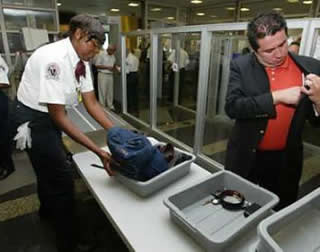
We all know what can happen when flights go wrong, making airport security a must. But as security rules and regulations change, so to do the individuals and groups that try to circumvent them. With liquids, shoes, and even underwear being used in the attempt to destroy the lives of civilians, it can be confusing as to what is and is not allowed on a national or international flight.
To help, we have gathered twelve dangers airport security still doesn’t check for. They include items that should be banned but are still allowed through, items that shouldn’t be allowed but are, and everything in between that will have you rethinking that next airport security fee.
1. An Actual Gun
Run all the bans you like, apparently weapons are still making it through airport security. In January of 2010 a flight attendant was able to sneak an actual hand gun through the usual processes. Although guns are allowed as checked baggage, this one made it onto the flight and she was eventually charged. It is still unclear what her purpose was in taking a handgun onto a plane.

2. Plastic Knife
As we have all seen in prison movies, knives made out of plastic can be just as dangerous as the real thing. Travel Q and A’s has a simple list of things you can and cannot bring on an airplane, and it seems a plastic knife is allowed. Whether or not it can be a standard picnic variety plastic knife or an actual “shiv” is still unclear.
3. Explosives
We’ve all heard of the Christmas Day or Panty Bomber who tried to detonate a bomb during the last leg of a flight to the U.S. But did you ever wonder how airport security didn’t check for or find the explosive devices he was carrying? Still a mum with the media. They do confirm however that Abdulmutallab passed a security check in Amsterdam that included a hand baggage scan and metal detector. Whatever the cause, he was still able to board a flight headed for the United States with a highly explosive chemical.
4. Dynamite
You read that correctly. According to this entry from “USA Today,” 32 of the nation’s largest airports failed to detect fake weapons including guns, bombs, and even dynamite. Undercover agents who went to no great lengths to conceal their contraband sailed right through airport security. In 25 to 50 percent of the tests, screeners failed to detect potentially fatal items. Even after scoring positive hits on metal detectors, screeners failed to catch the contraband.
5. What About Marshals?
Although the Fed does hire marshals to provide a last line of defense against terrorists on planes, how effective are they? According to this article, many have taken naps during the job, literally putting them asleep at the switch. Others have tested positive for alcohol or drugs on duty or have even lost their weapons in a Barney Fife-like attempt to maintain order. Some federal marshals have also provided falsified information.
6. Strollers
Not the kind you push a baby in but the kind who just stroll on through airport security. In this entry from Schneier on Security, he tells the true story of a man who was pulled aside for an extra security check and just strolled on through anyway. After realizing their error, TSA wisely or unwisely - depending on your viewpoint - shut down the entire terminal in LaGuardia airport. It turned out to be a false positive on the man, but the security expert blogs that the delays probably rippled for days.
7. Lazy Employees
Who among us hasn’t taken a second to browse the internet or get on Facebook during work hours? But in contrast, how many of us have the lives of a whole airplane full of passengers in our hands, not to mention the buildings these planes may or may not fly into? This blog has an actual photograph of an airport security worker playing solitaire on company time with a line of passengers waiting.
8. But Wait, There’s More!
What’s worse than playing solitaire on the job? A sure fire answer is sleeping on the job. In this YouTube video, an official TSA agent working for Amtrak in Chicago is literally filmed sleeping on the job. The fact that he tried to hide it behind sunglasses adds a bit a humor to the outrage.
9. But a Bonus is in Order
Despite all the failures of airport security and everyone involved in it, employees of the Transportation Security Administration can still expect bonuses on par with all the other employees of the government. According to this article from Government Executive, 76 percent of employees under the agency’s Performance Accountability and Standards System will receive a pay increase, bonuses, or both. Keep in mind that this is during a time when unemployment is up, pay is down, and taxes on everything from soda to tanning beds are in the works. This announcement also came at about the same time of the Christmas Day bombing, which was allowed by airport security but stopped by private citizens.
10. Explosives
Although no airport in the world allows explosives, it still happens. In the most famous case, Richard Reid would attempt to light an explosive in December 2001. He tried to light the fuse in his shoe to the explosive more than one time before being subdued by passengers and crew. Again it is unclear how Reid managed to sneak explosives onto an airplane, but we have him to thank for being forced to take off shoes for airport security.
11. Cigarettes
Although TSA prohibits any flammable devices, cigarettes are still allowed. Even matchbooks and lighters meeting a certain size and flammability are also allowed. However, few airlines allow you to light a cigarette inside or outside the plane, no matter how long the flight is.
12. But Toys Are Still Banned
In this blog entry, a child recounts how what was clearly a toy gun was able to bring airport security to a halt. Bonus points for explaining the entire ordeal with the honesty of a child. Also good if you are a fan of the “Transformers.”
Be wary that the twelve dangers airport security still doesn’t check for is only as up to date as the most current TSA regulations. To see the most current list click here for updates. The TSA lists what you can take as a carry on and/or checked baggage. There is also a blog entry from Gadling with useful suggestions on items you should bring with you on a flight.
================
For more information, visit: http://www.criminaljusticedegree.com/12-dangers-airport-security-still-doesnt-check-for/
To help, we have gathered twelve dangers airport security still doesn’t check for. They include items that should be banned but are still allowed through, items that shouldn’t be allowed but are, and everything in between that will have you rethinking that next airport security fee.
1. An Actual Gun
Run all the bans you like, apparently weapons are still making it through airport security. In January of 2010 a flight attendant was able to sneak an actual hand gun through the usual processes. Although guns are allowed as checked baggage, this one made it onto the flight and she was eventually charged. It is still unclear what her purpose was in taking a handgun onto a plane.
2. Plastic Knife
As we have all seen in prison movies, knives made out of plastic can be just as dangerous as the real thing. Travel Q and A’s has a simple list of things you can and cannot bring on an airplane, and it seems a plastic knife is allowed. Whether or not it can be a standard picnic variety plastic knife or an actual “shiv” is still unclear.
3. Explosives
We’ve all heard of the Christmas Day or Panty Bomber who tried to detonate a bomb during the last leg of a flight to the U.S. But did you ever wonder how airport security didn’t check for or find the explosive devices he was carrying? Still a mum with the media. They do confirm however that Abdulmutallab passed a security check in Amsterdam that included a hand baggage scan and metal detector. Whatever the cause, he was still able to board a flight headed for the United States with a highly explosive chemical.
4. Dynamite
You read that correctly. According to this entry from “USA Today,” 32 of the nation’s largest airports failed to detect fake weapons including guns, bombs, and even dynamite. Undercover agents who went to no great lengths to conceal their contraband sailed right through airport security. In 25 to 50 percent of the tests, screeners failed to detect potentially fatal items. Even after scoring positive hits on metal detectors, screeners failed to catch the contraband.
5. What About Marshals?
Although the Fed does hire marshals to provide a last line of defense against terrorists on planes, how effective are they? According to this article, many have taken naps during the job, literally putting them asleep at the switch. Others have tested positive for alcohol or drugs on duty or have even lost their weapons in a Barney Fife-like attempt to maintain order. Some federal marshals have also provided falsified information.
6. Strollers
Not the kind you push a baby in but the kind who just stroll on through airport security. In this entry from Schneier on Security, he tells the true story of a man who was pulled aside for an extra security check and just strolled on through anyway. After realizing their error, TSA wisely or unwisely - depending on your viewpoint - shut down the entire terminal in LaGuardia airport. It turned out to be a false positive on the man, but the security expert blogs that the delays probably rippled for days.
7. Lazy Employees
Who among us hasn’t taken a second to browse the internet or get on Facebook during work hours? But in contrast, how many of us have the lives of a whole airplane full of passengers in our hands, not to mention the buildings these planes may or may not fly into? This blog has an actual photograph of an airport security worker playing solitaire on company time with a line of passengers waiting.
8. But Wait, There’s More!
What’s worse than playing solitaire on the job? A sure fire answer is sleeping on the job. In this YouTube video, an official TSA agent working for Amtrak in Chicago is literally filmed sleeping on the job. The fact that he tried to hide it behind sunglasses adds a bit a humor to the outrage.
9. But a Bonus is in Order
Despite all the failures of airport security and everyone involved in it, employees of the Transportation Security Administration can still expect bonuses on par with all the other employees of the government. According to this article from Government Executive, 76 percent of employees under the agency’s Performance Accountability and Standards System will receive a pay increase, bonuses, or both. Keep in mind that this is during a time when unemployment is up, pay is down, and taxes on everything from soda to tanning beds are in the works. This announcement also came at about the same time of the Christmas Day bombing, which was allowed by airport security but stopped by private citizens.
10. Explosives
Although no airport in the world allows explosives, it still happens. In the most famous case, Richard Reid would attempt to light an explosive in December 2001. He tried to light the fuse in his shoe to the explosive more than one time before being subdued by passengers and crew. Again it is unclear how Reid managed to sneak explosives onto an airplane, but we have him to thank for being forced to take off shoes for airport security.
11. Cigarettes
Although TSA prohibits any flammable devices, cigarettes are still allowed. Even matchbooks and lighters meeting a certain size and flammability are also allowed. However, few airlines allow you to light a cigarette inside or outside the plane, no matter how long the flight is.
12. But Toys Are Still Banned
In this blog entry, a child recounts how what was clearly a toy gun was able to bring airport security to a halt. Bonus points for explaining the entire ordeal with the honesty of a child. Also good if you are a fan of the “Transformers.”
Be wary that the twelve dangers airport security still doesn’t check for is only as up to date as the most current TSA regulations. To see the most current list click here for updates. The TSA lists what you can take as a carry on and/or checked baggage. There is also a blog entry from Gadling with useful suggestions on items you should bring with you on a flight.
================
For more information, visit: http://www.criminaljusticedegree.com/12-dangers-airport-security-still-doesnt-check-for/
Thursday, September 9, 2010
Google Instant Coming Your Way
From Google . . .
 The most obvious change is that you get to the right content much faster than before because you don’t have to finish typing your full search term, or even press “search.” Another shift is that seeing results as you type helps you formulate a better search term by providing instant feedback. You can now adapt your search on the fly until the results match exactly what you want. In time, we may wonder how search ever worked in any other way.
Did you know:
Google Instant is a new search enhancement that shows results as you type. We are pushing the limits of our technology and infrastructure to help you get better search results, faster. Our key technical insight was that people type slowly, but read quickly, typically taking 300 milliseconds between keystrokes, but only 30 milliseconds (a tenth of the time!) to glance at another part of the page. This means that you can scan a results page while you type.

Did you know:
- Before Google Instant, the typical searcher took more than 9 seconds to enter a search term, and we saw many examples of searches that took 30-90 seconds to type.
- Using Google Instant can save 2-5 seconds per search.
- If everyone uses Google Instant globally, we estimate this will save more than 3.5 billion seconds a day. That’s 11 hours saved every second.
- 15 new technologies contribute to Google Instant functionality.
Wednesday, September 1, 2010
August News and Views Published Below

CU SECURITY & TECHNOLOGY News - Providing a brief summary of news and information related to security and technology issues for credit unions - Plus some interesting and fun web sites . . .
Saturday, August 28, 2010
Desktop Search Engine (A Must)
From Bill Rogers, Editor . . . "I have been using X1 Search for over 5 years now and I can't live without it. The biggest benefit is "time." I save literally hours each day in searching for files. A search takes about 2 second. It runs circles around Google, Yahoo land others. Got mountains of e-mail? X1 can find it.
Don't take my word for it, here's what a professional organization had to say about X1."
--------------------------------------------
 Recently, Network World published that X1 Search, v6.7 has won the prestigious Network World Clear Choice Test for Desktop Search Tools!
X1 was rated the top product of six tested in Network World's head-to-head comparative review and was lauded for its intuitive user interface and excellent search speed, among many other features.
"We tested six desktop search products – Copernic Desktop Search, dtSearch Desktop, Exalead Desktop, Google Desktop, ISYS Search, and X1 Professional Client," wrote Mike Heck, reviewer for Network World. "We also looked at the latest Microsoft Search, so we could evaluate the differences between third-party tools and what comes standard with Windows."
"Our Clear Choice Test winner is X1 Professional Client," continued Heck. "In every test scenario it proved superior – from the most documents types indexed and previewed, to type-ahead showing of results. It was also the only product to play well with Microsoft Office 2010."
Don't take my word for it, here's what a professional organization had to say about X1."
--------------------------------------------

X1 was rated the top product of six tested in Network World's head-to-head comparative review and was lauded for its intuitive user interface and excellent search speed, among many other features.
"We tested six desktop search products – Copernic Desktop Search, dtSearch Desktop, Exalead Desktop, Google Desktop, ISYS Search, and X1 Professional Client," wrote Mike Heck, reviewer for Network World. "We also looked at the latest Microsoft Search, so we could evaluate the differences between third-party tools and what comes standard with Windows."
"Our Clear Choice Test winner is X1 Professional Client," continued Heck. "In every test scenario it proved superior – from the most documents types indexed and previewed, to type-ahead showing of results. It was also the only product to play well with Microsoft Office 2010."
Computer bloopers and blunders from the technically clueless

Is your PC dirty?
(Click on Photos to Enlarge)

I have plenty of room for more.

Three shortcuts to My Computer???

VISA - It's just everywhere! Trying to buy something on-line, I suppose. No wonder it didn't work - note the card hasn't even been activated yet.

Here's a variation on the multiple shortcuts idea. I guess this is in case they get confused?
There's a lot more of these at:
Wednesday, August 25, 2010
Slip-and-Fall Cases Are On the Rise
http://www.claimsmag.com/News/2010/8/Pages/SlipandFall-Cases-Are-On-the-Rise.aspx
 “While many people have legitimate accidents in stores and businesses across the country, we’ve seen a growing number of cases that have some indication of potential fraud,” said Joe Wehrle, NICB president and chief executive officer.
So what do these cases of slip-and-fall fraud entail? Wehrle explains that, “A typical slip-and-fall case may involve two people going into a big box store or retailer, and splitting up. The first person goes down an aisle while the other keeps a lookout. When the coast is clear, he or she pulls out a small bottle of liquid, pours it on the floor, and then pretends to fall on the floor. The partner runs to assist and tells everyone that he witnessed the fall.
“They come into an area and hit several retailers, grocers, or other businesses with sophisticated schemes and professional execution. They hope to collect a quick payout and move on before anyone realizes what’s going on.” New York, Los Angeles, Philadelphia, Las Vegas and Chicago were the five cities with the most questionable claims for slip-and-falls, and California, Florida, New York, Illinois and Texas were the top five states.
Wehrle said the NICB has increased its focus on commercial fraud, and slip and falls and workers’ compensation fraud are priorities for many of its member companies who write commercial policies. The attention is warranted, considering that the number of slip and fall questionable claims submitted to NICB went from 325 in the first quarter of 2008 to a high of 565 in the fourth quarter of 2009. Just in the first half of 2010, there were 997 slip-and-fall claims referred to NICB for further analysis.
 “Fortunately, we’ve worked with insurers to raise the awareness level and urged companies to analyze claims before they pay,” Wehrle continued. “The bad news is, many retailers are self-insured and they look at this as a cost of doing business; they’ll write a check without investigating. Based on what companies have told us, we think that adds up to millions of dollars in unwarranted payouts. We’re reaching out to these companies and urging them to join us in fighting commercial fraud.”
The National Insurance Crime Bureau (NICB) announced that "slip-and-fall” claims targeting businesses are being investigated more carefully for potential fraud after more than 4,600 questionable claims were received in 2008, 2009, and the first half of 2010. An analysis of the questionable claims submitted by NICB member companies showed a 57-percent increase in the number of referrals over the past two and a half years.

So what do these cases of slip-and-fall fraud entail? Wehrle explains that, “A typical slip-and-fall case may involve two people going into a big box store or retailer, and splitting up. The first person goes down an aisle while the other keeps a lookout. When the coast is clear, he or she pulls out a small bottle of liquid, pours it on the floor, and then pretends to fall on the floor. The partner runs to assist and tells everyone that he witnessed the fall.
“They come into an area and hit several retailers, grocers, or other businesses with sophisticated schemes and professional execution. They hope to collect a quick payout and move on before anyone realizes what’s going on.” New York, Los Angeles, Philadelphia, Las Vegas and Chicago were the five cities with the most questionable claims for slip-and-falls, and California, Florida, New York, Illinois and Texas were the top five states.
Wehrle said the NICB has increased its focus on commercial fraud, and slip and falls and workers’ compensation fraud are priorities for many of its member companies who write commercial policies. The attention is warranted, considering that the number of slip and fall questionable claims submitted to NICB went from 325 in the first quarter of 2008 to a high of 565 in the fourth quarter of 2009. Just in the first half of 2010, there were 997 slip-and-fall claims referred to NICB for further analysis.

Friday, August 20, 2010
What Another Credit Union Did to Help Cut Expenses
Some more ideas for lowering costs
• Employees now clean our buildings (including myself) – saved $1,200/yr
• Employees converted our high maintenance landscaping to low maintenance – saved $500/yr
• Changed debit card processors – not easy or enjoyable, but save several thousand per year.
• Dumped our leased postage meters and went to using stamps – saved approx $2,600 /y
• Eliminated company cell phones for myself and the Branch Manager (didn’t like the damn thing anyway) – saved $960/yr
• Integrating deposit documents into core processing software – will save approx $4,500/yr
• Dropped employee short term disability ins and shortened the waiting period on our long term disability ins – saves $870 /yr
• Eliminated our Equipment Maintenance policy – saved $14,000 /yr
• Switched to a high deductible HRA for employees - $WOW!!!!!!!! (and we even reimburse part of the deductible)
• Went from a quarterly newsletter to semi-annual - $chump change – but every little bit helps.
• Eliminated NSF/overdraft notices - $(no idea – but based on our fee income, I’ll but the postage alone was worth it)
• Employees now clean our buildings (including myself) – saved $1,200/yr
• Employees converted our high maintenance landscaping to low maintenance – saved $500/yr
• Changed debit card processors – not easy or enjoyable, but save several thousand per year.
• Dumped our leased postage meters and went to using stamps – saved approx $2,600 /y
• Eliminated company cell phones for myself and the Branch Manager (didn’t like the damn thing anyway) – saved $960/yr
• Integrating deposit documents into core processing software – will save approx $4,500/yr
• Dropped employee short term disability ins and shortened the waiting period on our long term disability ins – saves $870 /yr
• Eliminated our Equipment Maintenance policy – saved $14,000 /yr
• Switched to a high deductible HRA for employees - $WOW!!!!!!!! (and we even reimburse part of the deductible)
• Went from a quarterly newsletter to semi-annual - $chump change – but every little bit helps.
• Eliminated NSF/overdraft notices - $(no idea – but based on our fee income, I’ll but the postage alone was worth it)
ATM Manufacturer Issues Strong Security Warning
http://www.cutimes.com/news/2010/8/Pages/ATM-Manufacturer-Issues-Strong-Security-Warning.aspx?utm_source=cutimes&utm_medium=email&utm_campaign=traffic&cmpid=cutimes
The manufacturer, which specializes in building stand-alone, primarily cash-dispensing ATMs, issued the warning after a researcher at a security firm found a way to make ATMs manufactured by Triton and another firm disgorge all the case in their vaults.
Barnaby Jack, the director of Security Research at IOActive Labs, demonstrated how he was able to walk up to an ATM and upload software that made the ATM spit out all its cash.
In an Aug. 6 interview with CNN, Jack said he was also able to successfully attack the ATMs remotely and to use the machine to gather card data from users.
Triton and Jack said that IOActive made the manufacturers aware of the weakness prior to making it public, enabling the companies to distribute security fixes to prevent those attacks.
The Triton security warning carried a picture of a revolver along with the question “are you playing Russian Roulette with your ATM?” In bullet points marked with pictures of bullets, the firm asked questions about security concerns including whether patches have been uploaded and passwords changed.
Triton Systems, a leading manufacturer of ATMs, has issued a security warning to ATM deployers, including credit unions, to keep their ATM security systems up to date.
The manufacturer, which specializes in building stand-alone, primarily cash-dispensing ATMs, issued the warning after a researcher at a security firm found a way to make ATMs manufactured by Triton and another firm disgorge all the case in their vaults.
Barnaby Jack, the director of Security Research at IOActive Labs, demonstrated how he was able to walk up to an ATM and upload software that made the ATM spit out all its cash.
In an Aug. 6 interview with CNN, Jack said he was also able to successfully attack the ATMs remotely and to use the machine to gather card data from users.
Triton and Jack said that IOActive made the manufacturers aware of the weakness prior to making it public, enabling the companies to distribute security fixes to prevent those attacks.
The Triton security warning carried a picture of a revolver along with the question “are you playing Russian Roulette with your ATM?” In bullet points marked with pictures of bullets, the firm asked questions about security concerns including whether patches have been uploaded and passwords changed.
Thursday, August 19, 2010
President Obama Signs into Law Ban on Cell Phones in Federal Prisons
A law signed by President Obama bans cell phone use by federal prisoners. The Federal Bureau of Prisons confiscated more than 2,600 cell phones from minimum security facilities and 600 from secure federal institutions last year. Inmates have been known to direct crimes from behind bars using cell phones, including gang activity, drug distribution and credit card fraud.
Financial Institutions Identify Fraud as Top Debit Concern
About 71% of financial institutions in the electronic payments industry identified fraud as their main concern related to debit cards, according to a recent SWACHA study
.
SWACHA, an electronic payments resource, commissioned a study among its members, which includes credit unions, to identify concerns associated with debit card use (Transactiondirectory.com Aug. 17).
Nearly 43% of those surveyed said they spent up to 40 or more hours in 2009 dealing with fraud--specifically, with fraud from skimmers and data breaches. More than 19.2% of respondents spent up to $50,000 with the cases.
SWACHA said it plans to offer additional educational resources to help its member financial institutions mitigate fraud risks.
http://www.cuna.org/newsnow/10/system081810-1.html?ref=hed
.
SWACHA, an electronic payments resource, commissioned a study among its members, which includes credit unions, to identify concerns associated with debit card use (Transactiondirectory.com Aug. 17).
Nearly 43% of those surveyed said they spent up to 40 or more hours in 2009 dealing with fraud--specifically, with fraud from skimmers and data breaches. More than 19.2% of respondents spent up to $50,000 with the cases.
SWACHA said it plans to offer additional educational resources to help its member financial institutions mitigate fraud risks.
http://www.cuna.org/newsnow/10/system081810-1.html?ref=hed
Wednesday, August 18, 2010

13 Things and Identity Thief Won't Tell You
1. My least-favorite credit card? American Express, because it likes to ask me for your zip code.
2. Your unlocked mailbox is a gold mine. I can steal your account numbers, use the convenience checks that come with your credit card statement, and send in pre-approved credit offers to get a card in your name. Stealing mail is easy. Sometimes, I act like I’m delivering flyers. Other times, I just stand there and riffle through it. If I don’t look suspicious, your neighbors just think I’m a friend picking up your mail.
3. Even with all the new technology, most of us still steal your information the old-fashioned way: by swiping your wallet or purse, going through your mail, or Dumpster diving.
4. I dig through Dumpsters in broad daylight. If anyone asks (and no one does), I just say my girlfriend lost her ring, or that I may have thrown my keys away by mistake.
5. One time I was on the run and needed a new identity so I went through a hospital Dumpster and found a statement with a Puerto Rican Social Security number for a Manuel Rivera. For a good two years after that, I was Manuel Rivera. I had his name on my apartment, on my paychecks and, of course, on my credit cards.
6. Is your Social Security number on your driver’s license or your checks, or is it your account number for your health insurance? Dumb move.
7. When I send out e-mails “phishing” for personal information by posing as a bank or online merchant, I often target AOL customers. They just seem less computer literate—and more likely (I hope) to fall for my schemes.
8. I never use my home computer to buy something with a credit card that’s not mine. That’s why you can often find me at the public library.
9. If you use the same ATM every time, you’re a lot more likely to notice if something changes on the machine, like the skimmer I installed.
10. Sometimes I pose as a salesman and go into a small office. After I make my pitch, I ask the secretary to make me a copy. Since most women leave their purses on the floor by their chairs, as soon as they leave the room, I grab their wallet. I also check the top and bottom right-hand drawers of their desks, where I often find company checks.
11. How much is your information worth? I can buy stolen account information—your name, address, credit card number, and more—for $10 to $50 per account from hackers who advertise on more than a dozen black market web sites.
12. Hey, thanks for writing your PIN number on that little slip of paper in your wallet. I feel like I just won the lottery.
13. Sure, it may be nice not to have to put in your password when you use an unsecured Wi-Fi connection. But know this: We have software that can scoop up all the data your computer transmits, including your passwords and other sensitive information.
(Readers Digest http://www.readersdigest.com/identity
2. Your unlocked mailbox is a gold mine. I can steal your account numbers, use the convenience checks that come with your credit card statement, and send in pre-approved credit offers to get a card in your name. Stealing mail is easy. Sometimes, I act like I’m delivering flyers. Other times, I just stand there and riffle through it. If I don’t look suspicious, your neighbors just think I’m a friend picking up your mail.
3. Even with all the new technology, most of us still steal your information the old-fashioned way: by swiping your wallet or purse, going through your mail, or Dumpster diving.
4. I dig through Dumpsters in broad daylight. If anyone asks (and no one does), I just say my girlfriend lost her ring, or that I may have thrown my keys away by mistake.
5. One time I was on the run and needed a new identity so I went through a hospital Dumpster and found a statement with a Puerto Rican Social Security number for a Manuel Rivera. For a good two years after that, I was Manuel Rivera. I had his name on my apartment, on my paychecks and, of course, on my credit cards.
6. Is your Social Security number on your driver’s license or your checks, or is it your account number for your health insurance? Dumb move.
7. When I send out e-mails “phishing” for personal information by posing as a bank or online merchant, I often target AOL customers. They just seem less computer literate—and more likely (I hope) to fall for my schemes.
8. I never use my home computer to buy something with a credit card that’s not mine. That’s why you can often find me at the public library.
9. If you use the same ATM every time, you’re a lot more likely to notice if something changes on the machine, like the skimmer I installed.
10. Sometimes I pose as a salesman and go into a small office. After I make my pitch, I ask the secretary to make me a copy. Since most women leave their purses on the floor by their chairs, as soon as they leave the room, I grab their wallet. I also check the top and bottom right-hand drawers of their desks, where I often find company checks.
11. How much is your information worth? I can buy stolen account information—your name, address, credit card number, and more—for $10 to $50 per account from hackers who advertise on more than a dozen black market web sites.
12. Hey, thanks for writing your PIN number on that little slip of paper in your wallet. I feel like I just won the lottery.
13. Sure, it may be nice not to have to put in your password when you use an unsecured Wi-Fi connection. But know this: We have software that can scoop up all the data your computer transmits, including your passwords and other sensitive information.
(Readers Digest http://www.readersdigest.com/identity
Friday, August 13, 2010
ID Insight Touts Patent Win
http://www.cutimes.com/news/2010/8/Pages/ID-Insight-Touts-Patent-Win.aspx?utm_source=cutimes&utm_medium=email&utm_campaign=traffic&cmpid=cutimes
ID Insight said it has been awarded a patent for its method of identifying differences in addresses that helps credit unions and banks identify potential identity theft.
The Northfield, Minn., company said its process can quickly spot the difference between a legitimate vs. fraudulent address change, thus thwarting a common way identity thieves obtain replacement cards and open fraudulent accounts.
The focus on address manipulation is stronger, the company added, now that the Fair and Accurate Transaction Act (FACT Act) requires financial institutions to monitor address changes for potential identity theft.
ID Insight said it now provides its market research, verification, authentication and other anti-fraud solutions to more than 600 credit unions, banks and other customers.
ID Insight said it has been awarded a patent for its method of identifying differences in addresses that helps credit unions and banks identify potential identity theft.
The Northfield, Minn., company said its process can quickly spot the difference between a legitimate vs. fraudulent address change, thus thwarting a common way identity thieves obtain replacement cards and open fraudulent accounts.
The focus on address manipulation is stronger, the company added, now that the Fair and Accurate Transaction Act (FACT Act) requires financial institutions to monitor address changes for potential identity theft.
ID Insight said it now provides its market research, verification, authentication and other anti-fraud solutions to more than 600 credit unions, banks and other customers.
Thursday, August 12, 2010

Tuesday, August 10, 2010
To Advertise or Not To Advertise: Marketing is the Answer
Have you ever heard the saying, "I know that I waste half of my advertising budget. The problem is I don't know which half!" It is this very philosophy that is prompting me to strongly inform you... advertising doesn't work!
Let me show you why:
• There is no way to track effectiveness (or ineffectiveness)
• It's impersonal
• The target audience is too large
• It's costly to redo or improve
• There is no call to action

What surprises me is the number of small business owners that save their marketing dollars just to waste them on ineffective advertising. Then, they complain because nothing is working and they don't have any customers.
I know what you're thinking, "Isn't advertising and marketing the same thing?" Well, not really. Let me explain the differences. Advertising includes: commercials, billboards, radio, and newspapers. Marketing includes: emails, letters, postcards, and fax.
So how is follow-up marketing better than advertising?
• You can track response rates
• You can quickly change campaigns that aren't working
• You can specifically target your audience
• It leads prospects to an immediate sell
If you really want to attract more customers, you will learn to market and leave the advertising to those gazillion dollar companies.
Let me show you why:
• There is no way to track effectiveness (or ineffectiveness)
• It's impersonal
• The target audience is too large
• It's costly to redo or improve
• There is no call to action

What surprises me is the number of small business owners that save their marketing dollars just to waste them on ineffective advertising. Then, they complain because nothing is working and they don't have any customers.
I know what you're thinking, "Isn't advertising and marketing the same thing?" Well, not really. Let me explain the differences. Advertising includes: commercials, billboards, radio, and newspapers. Marketing includes: emails, letters, postcards, and fax.
So how is follow-up marketing better than advertising?
• You can track response rates
• You can quickly change campaigns that aren't working
• You can specifically target your audience
• It leads prospects to an immediate sell
If you really want to attract more customers, you will learn to market and leave the advertising to those gazillion dollar companies.
Wednesday, August 4, 2010
Next Wave of ID Thefts Targeting Kids' SSNs
Identity thieves are beginning to steal Social Security numbers of children, long before they're ready for a savings or checking account or a credit score--and that could threaten the nation's credit system, said an Associated Press report.
The thefts could be a problem for credit unions and other financial institutions because they rely on credit scores from FICO, Experian, TransUnion and Equifax. But those scores could contain false information, planted by people who use stolen Social Security numbers to piggyback on the credit of someone else, according to Kansas City law enforcement agents.

Kansas City Assistant U.S. Attorney Linda Marshall and Julie Jensen, a special agent with the Federal Bureau of Investigation's office in Kansas City, said that in the fraud, online businesses use computers to locate dormant Social Security numbers, usually of children or long-term prison inmates who don't use them. The companies sell the numbers under another name to people who establish phony credit and run up huge debts without intending to pay.
The sellers skirt the law by referring to the Social Security numbers as "credit privacy numbers" or CPNs. They are also called "credit profile numbers" and "credit protection numbers."
Jensen discovered the scheme and says it is easy to create a false credit score using the CPNs, said the article.
The crooks have years to use the numbers before the child is old enough to apply for credit. That makes the fraud difficult to detect, and authorities can't estimate how prevalent the practice is.
The fraud is emerging because 25.5% of consumers have credit scores of 599 or below, which means they're poor credit risks. Many credit decisions are based on the credit scores provided by FICO and the three major credit reporting bureaus. But Jensen says those credit scores could contain false information.
FICO said it has tools for businesses to protect themselves, but the tools are expensive, the article said.
http://www.cuna.org/newsnow/10/system080310-11.html?ref=hed
The thefts could be a problem for credit unions and other financial institutions because they rely on credit scores from FICO, Experian, TransUnion and Equifax. But those scores could contain false information, planted by people who use stolen Social Security numbers to piggyback on the credit of someone else, according to Kansas City law enforcement agents.

Kansas City Assistant U.S. Attorney Linda Marshall and Julie Jensen, a special agent with the Federal Bureau of Investigation's office in Kansas City, said that in the fraud, online businesses use computers to locate dormant Social Security numbers, usually of children or long-term prison inmates who don't use them. The companies sell the numbers under another name to people who establish phony credit and run up huge debts without intending to pay.
The sellers skirt the law by referring to the Social Security numbers as "credit privacy numbers" or CPNs. They are also called "credit profile numbers" and "credit protection numbers."
Jensen discovered the scheme and says it is easy to create a false credit score using the CPNs, said the article.
The crooks have years to use the numbers before the child is old enough to apply for credit. That makes the fraud difficult to detect, and authorities can't estimate how prevalent the practice is.
The fraud is emerging because 25.5% of consumers have credit scores of 599 or below, which means they're poor credit risks. Many credit decisions are based on the credit scores provided by FICO and the three major credit reporting bureaus. But Jensen says those credit scores could contain false information.
FICO said it has tools for businesses to protect themselves, but the tools are expensive, the article said.
http://www.cuna.org/newsnow/10/system080310-11.html?ref=hed
Thursday, July 29, 2010
July News and Views Published Below
 CU SECURITY & TECHNOLOGY News - Providing a brief summary of news and information related to security and technology issues for credit unions - Plus some interesting and fun web sites . . .
(New ATM Security)
Tuesday, July 27, 2010

Monday, July 26, 2010
‘Patent Troll’ Reaches Out to Credit Unions
http://cutimes.com/Exclusives/2010/7/Pages/Patent-Troll-Reaches-Out-to-Credit-Unions.aspx?utm_source=cut_blogpromo_072610&utm_medium=email&utm_campaign=cut_blogpromo_mktgemails
Credit unions have now joined the list of financial institutions being targeted by what an industry association calls a “patent troll.” And it’s apparently no phishing trip. They’re real live lawsuits and they’re reportedly being settled for real money in some cases.
The Credit Union Information Security Professionals Association (CUISPA) said a company called Wolf Run Hollow LLC is now including credit unions in the series of complaints it’s filed in several states, charging infringement on its patent for a widely used piece of modern banking technology - message alerts.
The IT security trade group put out the following alert of its own this week:
“CUISPA has reported that several credit unions have recently received notices from patent licensing group, Wolf Run Hollow, LLC, claiming to own the rights to U.S. Patent No. 6,115,817 issued Sept. 5, 2000, for Methods and Systems for Facilitating Transmission of Secure Messages Across Insecure Networks. According to the complaints, financial institutions are infringing the patent by using secure messaging systems to communicate with members and vendors, including via their web sites.
Over the past year, Wolf Run Hollow has filed approximately 40 patent infringement suits against financial institutions in Texas, Mississippi, California, and Alabama in what appears to be a typical patent troll action. While most of the financial institutions that have been sued have been banks, CUISPA is reporting that several credit unions have recently received notices as well. Wolf Run Hollow appears to be seeking compensatory damages in the form of a lump sum license fee in an attempt to settle out of court. While some institutions have settled, others are disputing the claims. The suits appear vague in their explanation of the infringement raising questions over how and if the FI is actually infringing.”
CUISPA Executive Director Kelly Dowell said the legal threats are not to be taken lightly, although he said if it was his credit union that received such a notice, the first thing he would want to do is challenge the company to show what exactly is being infringed and how.
He said that he’s talked to a couple of credit unions that agreed with Dowell that the complaints were imprecise and that they would respond by asking for specifics. But he also said the cost of having lawyers engage in a courtroom fight, or just preparing for one, could easily exceed the $20,000 to $40,000 “at most” he said he has heard has been the price of a license fee to settle the issue.
We found what appeared to be the holder of the patent through an Internet search and left voice and e-mail messages asking about the patent, its history and the specific services that use the protected technologies, but have not heard back.
Meanwhile, an East Coast lawyer told us that none of his list of credit union clients have been contacted but noted that contracts with vendors of online services–or about any other service like that–should almost certainly contain indemnity clauses intended to protect the vendors’ customers in such cases.
But that may not necessarily be enough, pointed out a veteran staffer of a consultancy that specializes in vendor selection, among other things. She noted that increasingly tough compliance rules compelling credit unions to exercise due diligence on their vendors could muddy the waters.
Dowell said he agreed with both those points–noting that an online banking company he also works with (Jwaala LLC) provides such indemnification but that Wolf Run Hollow LLC appears to be choosing states, at least his own, where the courts tend to favor patent holders.
He said the CUISPA would like to hear from credit unions that have been contacted. He said one “very large credit union” he declined to identify has received the notice and told him they would be happy to have their legal department talk to others that also have been hit with the “patent troll.”
Credit unions have now joined the list of financial institutions being targeted by what an industry association calls a “patent troll.” And it’s apparently no phishing trip. They’re real live lawsuits and they’re reportedly being settled for real money in some cases.
The Credit Union Information Security Professionals Association (CUISPA) said a company called Wolf Run Hollow LLC is now including credit unions in the series of complaints it’s filed in several states, charging infringement on its patent for a widely used piece of modern banking technology - message alerts.
The IT security trade group put out the following alert of its own this week:
“CUISPA has reported that several credit unions have recently received notices from patent licensing group, Wolf Run Hollow, LLC, claiming to own the rights to U.S. Patent No. 6,115,817 issued Sept. 5, 2000, for Methods and Systems for Facilitating Transmission of Secure Messages Across Insecure Networks. According to the complaints, financial institutions are infringing the patent by using secure messaging systems to communicate with members and vendors, including via their web sites.
Over the past year, Wolf Run Hollow has filed approximately 40 patent infringement suits against financial institutions in Texas, Mississippi, California, and Alabama in what appears to be a typical patent troll action. While most of the financial institutions that have been sued have been banks, CUISPA is reporting that several credit unions have recently received notices as well. Wolf Run Hollow appears to be seeking compensatory damages in the form of a lump sum license fee in an attempt to settle out of court. While some institutions have settled, others are disputing the claims. The suits appear vague in their explanation of the infringement raising questions over how and if the FI is actually infringing.”
CUISPA Executive Director Kelly Dowell said the legal threats are not to be taken lightly, although he said if it was his credit union that received such a notice, the first thing he would want to do is challenge the company to show what exactly is being infringed and how.
He said that he’s talked to a couple of credit unions that agreed with Dowell that the complaints were imprecise and that they would respond by asking for specifics. But he also said the cost of having lawyers engage in a courtroom fight, or just preparing for one, could easily exceed the $20,000 to $40,000 “at most” he said he has heard has been the price of a license fee to settle the issue.
We found what appeared to be the holder of the patent through an Internet search and left voice and e-mail messages asking about the patent, its history and the specific services that use the protected technologies, but have not heard back.
Meanwhile, an East Coast lawyer told us that none of his list of credit union clients have been contacted but noted that contracts with vendors of online services–or about any other service like that–should almost certainly contain indemnity clauses intended to protect the vendors’ customers in such cases.
But that may not necessarily be enough, pointed out a veteran staffer of a consultancy that specializes in vendor selection, among other things. She noted that increasingly tough compliance rules compelling credit unions to exercise due diligence on their vendors could muddy the waters.
Dowell said he agreed with both those points–noting that an online banking company he also works with (Jwaala LLC) provides such indemnification but that Wolf Run Hollow LLC appears to be choosing states, at least his own, where the courts tend to favor patent holders.
He said the CUISPA would like to hear from credit unions that have been contacted. He said one “very large credit union” he declined to identify has received the notice and told him they would be happy to have their legal department talk to others that also have been hit with the “patent troll.”
Friday, July 23, 2010
18 Arrested in Bad-Check Scam
http://www.cuna.org/newsnow/10/system072210-3.html?ref=hed
Eighteen individuals have been arrested for involvement in a bad check scam that affected two credit unions in Iowa.
Veridian CU and Iowa Community CU, both of Waterloo, Iowa were hit with a check scam that cost the credit unions and several other financial institutions a total of $125,000, according to local media reports (Waterloo Cedar Falls Courier July 22).

Police arrested 10 individuals Monday and another group Tuesday and charged them in the scam.
According to authorities, the individuals opened accounts at several institutions to get starter checks and debit cards. Then, they swapped checks and made false deposits, inflating the value of the accounts. They also are accused of using debit cards and checks to get cash and purchase items. The money was laundered through U.S. Postal money orders.
Veridian CU has $1.6 billion in assets. Iowa Community CU has $74 million in assets.
Eighteen individuals have been arrested for involvement in a bad check scam that affected two credit unions in Iowa.
Veridian CU and Iowa Community CU, both of Waterloo, Iowa were hit with a check scam that cost the credit unions and several other financial institutions a total of $125,000, according to local media reports (Waterloo Cedar Falls Courier July 22).

Police arrested 10 individuals Monday and another group Tuesday and charged them in the scam.
According to authorities, the individuals opened accounts at several institutions to get starter checks and debit cards. Then, they swapped checks and made false deposits, inflating the value of the accounts. They also are accused of using debit cards and checks to get cash and purchase items. The money was laundered through U.S. Postal money orders.
Veridian CU has $1.6 billion in assets. Iowa Community CU has $74 million in assets.
Thursday, July 22, 2010
What Credit Unions Are Saying or Doing . . .
21% of all credit union respondents have either suffered a security breach during the past two years or don’t know
35% have been a victim of a phishing attack during the past year
61% do not test their Incident Response Plan annually
73% assess themselves as “average” to “failing” when it comes to security awareness efforts with customers
35% have been a victim of a phishing attack during the past year
61% do not test their Incident Response Plan annually
73% assess themselves as “average” to “failing” when it comes to security awareness efforts with customers
Monday, July 19, 2010
Fraudulent checks with CU's name circulating
http://www.cuna.org/newsnow/10/system071610-5.html?ref=hed
The Federal Deposit Insurance Corp. (FDIC) has issued an alert that counterfeit checks are circulating with a credit union's name on them.
The checks bear the name of Qualstar CU, Bellevue, Wash. The counterfeit items display routing number 325081966, which is assigned to Qualstar CU.
The items are similar to authentic official checks, but authentic checks are light brown with darkened top and bottom borders, said FDIC.

The Federal Deposit Insurance Corp. (FDIC) has issued an alert that counterfeit checks are circulating with a credit union's name on them.
The checks bear the name of Qualstar CU, Bellevue, Wash. The counterfeit items display routing number 325081966, which is assigned to Qualstar CU.
The items are similar to authentic official checks, but authentic checks are light brown with darkened top and bottom borders, said FDIC.
Information about counterfeit items, cyber-fraud incidents and other fraudulent activity can be reported to FDIC's Cyber-Fraud and Financial Crimes Section. They can be submitted electronically at alert@fdic.gov .

Sunday, July 18, 2010
Google Me Social Network
There has been a lot of talk about Google working on a new social network (often referred to as "Google Me"). We still don't know exactly what that's going to be all about, but when people assess the success/failure of Google's social media efforts, they often overlook that Google owns YouTube, which is essentially a giant social network (albeit one that revolves around video).
Not everyone uses YouTube as a social network, but the more people that have Google accounts, the more people Google will be able to claim as part of its broader "social network".
Not everyone uses YouTube as a social network, but the more people that have Google accounts, the more people Google will be able to claim as part of its broader "social network".
Thursday, July 15, 2010
Ten tips aim to make technology more efficient for CUs
http://www.cuna.org/newsnow/10/system071410-5.html?ref=hed
LAS VEGAS (7/15/10)—"Information technology is the third top expense—behind staffing and facilities—for credit unions. With nearly half of credit unions having negative earnings last year, 2010 should be a year of automating tasks and work processes to drive efficiency."
So says Rudy Pereira, senior vice president operations and technology at Alliant CU, Chicago, who addressed 10 tips for increasing technology and operational efficiency--best practices from the CUNA Technology Council--during a Wednesday morning breakout session at The 1 Credit Union Conference in Las Vegas.
The conference was presented by the Credit Union National Association and the World Council of Credit Unions Sunday through Wednesday.
The 10 tips are:
1.Automated work flow. Enterprise content management will drive making processes more efficient, Pereira said, noting that often a member's phone call request is forwarded on and not followed through with a single call;
2.Integration. Integration of platforms and information from departments "lets you go from technology victim to leader," he said. An integrated platform can handle 90% of calls from members.
3.Virtualization. By consolidating and lowering the number of servers, Pereira's credit union saved 60% in costs—and reduced energy used.
4.Cloud computing. Linking a large group of servers via high speed networks to create a massive data storage system is in the future. By 2012, nearly 80% of Fortune 1,000 companies will engage in cloud computing. It will bring these benefits, Pereira said: scalability, skilled vendors, reduced cost, flexibility, quality of service, security and privacy. Small companies and start ups are at the front of the trend because they haven't invested in legacy systems that would need replaced.
5.Task automation. This would include job scheduling, lock box, log reviews and allows the tech staff to work on meaningful projects.
6.Member self-service. Members making transactions themselves will increase. At Pereira's credit union, 32% of members were online in 2005 and 60% in 2009. Among the hot new self-service options: ATMs with check image catchers and phones that take photos of a check and can deposit its image instead of the check.
7.Continuous process improvement. By breaking through patterns of "the way it's always been done," credit unions can improve service, ensure quality and reduce expenses.
8.Fraud analysis tools for online banking ATM and self-service phones. In 2005, credit unions saw significant budget losses beyond their insurance deductibles, with Pereira's credit union losing $700,000 on its $208,000 deductible. Insurers have put more responsibility on credit unions to manage their fraud losses.
9.Single sign-ons. Having a single password to log into all the credit union's systems will reduce help desk calls, save employees time waiting to reset passwords, reduce risk of the password being written down, add layered security, and engage employees.
10.Collaboration. More credit unions are beginning to consider partnering with other credit unions to use the same core system and staff. "The key is standardization (among vendors). It can drive up efficiency," Pereira concluded.
LAS VEGAS (7/15/10)—"Information technology is the third top expense—behind staffing and facilities—for credit unions. With nearly half of credit unions having negative earnings last year, 2010 should be a year of automating tasks and work processes to drive efficiency."
So says Rudy Pereira, senior vice president operations and technology at Alliant CU, Chicago, who addressed 10 tips for increasing technology and operational efficiency--best practices from the CUNA Technology Council--during a Wednesday morning breakout session at The 1 Credit Union Conference in Las Vegas.
The conference was presented by the Credit Union National Association and the World Council of Credit Unions Sunday through Wednesday.
The 10 tips are:
1.Automated work flow. Enterprise content management will drive making processes more efficient, Pereira said, noting that often a member's phone call request is forwarded on and not followed through with a single call;
2.Integration. Integration of platforms and information from departments "lets you go from technology victim to leader," he said. An integrated platform can handle 90% of calls from members.
3.Virtualization. By consolidating and lowering the number of servers, Pereira's credit union saved 60% in costs—and reduced energy used.
4.Cloud computing. Linking a large group of servers via high speed networks to create a massive data storage system is in the future. By 2012, nearly 80% of Fortune 1,000 companies will engage in cloud computing. It will bring these benefits, Pereira said: scalability, skilled vendors, reduced cost, flexibility, quality of service, security and privacy. Small companies and start ups are at the front of the trend because they haven't invested in legacy systems that would need replaced.
5.Task automation. This would include job scheduling, lock box, log reviews and allows the tech staff to work on meaningful projects.
6.Member self-service. Members making transactions themselves will increase. At Pereira's credit union, 32% of members were online in 2005 and 60% in 2009. Among the hot new self-service options: ATMs with check image catchers and phones that take photos of a check and can deposit its image instead of the check.
7.Continuous process improvement. By breaking through patterns of "the way it's always been done," credit unions can improve service, ensure quality and reduce expenses.
8.Fraud analysis tools for online banking ATM and self-service phones. In 2005, credit unions saw significant budget losses beyond their insurance deductibles, with Pereira's credit union losing $700,000 on its $208,000 deductible. Insurers have put more responsibility on credit unions to manage their fraud losses.
9.Single sign-ons. Having a single password to log into all the credit union's systems will reduce help desk calls, save employees time waiting to reset passwords, reduce risk of the password being written down, add layered security, and engage employees.
10.Collaboration. More credit unions are beginning to consider partnering with other credit unions to use the same core system and staff. "The key is standardization (among vendors). It can drive up efficiency," Pereira concluded.
Saturday, July 10, 2010
Time to embrace biometric ATM scans?
By Jim Kim
Pub(http://www.fiercefinanceit.com/)
People have been talking about biometrics as a financial services security tool for a while now. At least one recent report suggests [1] that the financial sector is indeed emerging as a "potential adopter" and driving force in the global biometric market, which is set to grow at a near 20 percent average annual growth rate through 2012.
 More banks do seem to be pondering ways to develop an easy and more convenient authentication alternative to cards and PINs for a range of transactions. North America and Europe dominated the biometric market in 2009 and will do so through 2012. Asia-Pacific and Middle East and Africa will also emerge.
Biometrics can be used at all levels, at the employee and customer authentication levels and beyond. A glimpse of the future comes from Warsaw, where one bank says it is the first in Europe to install a biometric ATM, "allowing customers to withdraw cash simply with the touch of a fingertip." The digit-scanning ATM runs on a system developed by Hitachi. The company says that "an infrared light is passed through the finger to detect a unique pattern of micro-veins beneath the surface, which is then matched with a pre-registered profile." Tests have indicated a one in a million false acceptance rate.
For more on the biometric ATM in Warsaw,
http://www.fiercefinanceit.com/story/time-embrace-biometric-atm-scans/2010-07-09
Links:
[1] http://www.emailwire.com/release/42102-Demand-from-Financial-Sector-to-Drive-Global-Biometrics-Market.html
[2] http://www.cnn.com/2010/WORLD/europe/07/05/first.biometric.atm.europe/?hpt=C2
[3] http://www.fiercefinanceit.com/story/can-len-technology-thwart-atm-skimmers/2010-06-30
[4] http://www.fiercefinanceit.com/story/phone-fraud-biometrics-tool-makes-gains/2009-06-10
[5] http://www.fiercefinance.com/story/atm-dispense-gold/2010-05-13
[6] http://www.fiercefinanceit.com/story/can-jitter-prevent-atm-abuse/2010-06-27
Pub(http://www.fiercefinanceit.com/)
People have been talking about biometrics as a financial services security tool for a while now. At least one recent report suggests [1] that the financial sector is indeed emerging as a "potential adopter" and driving force in the global biometric market, which is set to grow at a near 20 percent average annual growth rate through 2012.

Biometrics can be used at all levels, at the employee and customer authentication levels and beyond. A glimpse of the future comes from Warsaw, where one bank says it is the first in Europe to install a biometric ATM, "allowing customers to withdraw cash simply with the touch of a fingertip." The digit-scanning ATM runs on a system developed by Hitachi. The company says that "an infrared light is passed through the finger to detect a unique pattern of micro-veins beneath the surface, which is then matched with a pre-registered profile." Tests have indicated a one in a million false acceptance rate.
For more on the biometric ATM in Warsaw,
http://www.fiercefinanceit.com/story/time-embrace-biometric-atm-scans/2010-07-09
Links:
[1] http://www.emailwire.com/release/42102-Demand-from-Financial-Sector-to-Drive-Global-Biometrics-Market.html
[2] http://www.cnn.com/2010/WORLD/europe/07/05/first.biometric.atm.europe/?hpt=C2
[3] http://www.fiercefinanceit.com/story/can-len-technology-thwart-atm-skimmers/2010-06-30
[4] http://www.fiercefinanceit.com/story/phone-fraud-biometrics-tool-makes-gains/2009-06-10
[5] http://www.fiercefinance.com/story/atm-dispense-gold/2010-05-13
[6] http://www.fiercefinanceit.com/story/can-jitter-prevent-atm-abuse/2010-06-27
Friday, July 9, 2010
New E-Mail Security Service Offered
By Marc Rapport
http://www.cutimes.com/news/2010/7/Pages/New-EMail-Security-Service-Offered.aspx?utm_source=cutimes&utm_medium=email&utm_campaign=traffic&cmpid=cutimes
Credit unions belonging to the Financial Services Roundtable or its affiliates or the FS-ISAC (Financial Services-Information Sharing and Analysis Center) can take advantage of a new service designed to help financial institutions protect against e-mail fraud.
The Trusted Email Registry is a partnership of BITS, the Roundtable’s technology policy division, and FS-ISAC, with security tools provided by eCert Inc. of San Francisco.
Under the basic version, financial institutions can monitor a limited number of their domains’ e-mail traffic and receive reports about phishing attacks. An enhanced service covers more domains, advanced deployment services, policy enforcement, anti-spoofing tools and other remediation and support.
 Credit unions belonging to the Financial Services Roundtable or its affiliates or the FS-ISAC (Financial Services-Information Sharing and Analysis Center) can take advantage of a new service designed to help financial institutions protect against e-mail fraud.
The Trusted Email Registry is a partnership of BITS, the Roundtable’s technology policy division, and FS-ISAC, with security tools provided by eCert Inc. of San Francisco.
Under the basic version, financial institutions can monitor a limited number of their domains’ e-mail traffic and receive reports about phishing attacks. An enhanced service covers more domains, advanced deployment services, policy enforcement, anti-spoofing tools and other remediation and support.
http://www.cutimes.com/news/2010/7/Pages/New-EMail-Security-Service-Offered.aspx?utm_source=cutimes&utm_medium=email&utm_campaign=traffic&cmpid=cutimes
Credit unions belonging to the Financial Services Roundtable or its affiliates or the FS-ISAC (Financial Services-Information Sharing and Analysis Center) can take advantage of a new service designed to help financial institutions protect against e-mail fraud.
The Trusted Email Registry is a partnership of BITS, the Roundtable’s technology policy division, and FS-ISAC, with security tools provided by eCert Inc. of San Francisco.
Under the basic version, financial institutions can monitor a limited number of their domains’ e-mail traffic and receive reports about phishing attacks. An enhanced service covers more domains, advanced deployment services, policy enforcement, anti-spoofing tools and other remediation and support.

The Trusted Email Registry is a partnership of BITS, the Roundtable’s technology policy division, and FS-ISAC, with security tools provided by eCert Inc. of San Francisco.
Under the basic version, financial institutions can monitor a limited number of their domains’ e-mail traffic and receive reports about phishing attacks. An enhanced service covers more domains, advanced deployment services, policy enforcement, anti-spoofing tools and other remediation and support.
Wednesday, July 7, 2010
Business Mobile Banking, Fraud Top of Mind in Bankers Survey
Providing businesses with mobile banking and preventing fraud were top of mind for a group of banking brass gathered for a confab in California earlier this year. Social networking, maybe not so much.

Fundtech Ltd., a provider of global payment processing and ACH solutions, said more than 100 transaction banking executives from 53 American financial institutions participated in the polling in May at its Insights Conference in Santa Monica.
Fundtech, based in Jersey City, N.J., and London, said 39% of the respondents planned to deploy mobile business banking services within the next 12 months, 53% said payments fraud monitoring is their biggest challenge and 23% “think adding social networking to business banking is a ‘ridiculous idea,’” although 36% thought there was some potential to it.

Fundtech Ltd., a provider of global payment processing and ACH solutions, said more than 100 transaction banking executives from 53 American financial institutions participated in the polling in May at its Insights Conference in Santa Monica.
Fundtech, based in Jersey City, N.J., and London, said 39% of the respondents planned to deploy mobile business banking services within the next 12 months, 53% said payments fraud monitoring is their biggest challenge and 23% “think adding social networking to business banking is a ‘ridiculous idea,’” although 36% thought there was some potential to it.
Friday, July 2, 2010

Reaching Your Members in the 21st Century
Believe me. What you did yesterday to reach your members will not work today. That's the basis of this critical conference set for November 4-7, 2010 in Phoenix. AZ.
This year we are introducing our annual Reaching Your Member In The 21st Century conference. This event is an innovative, comprehensive conference on Reaching Credit Union Members in today's ever-changing world. The conference is designed for credit union directors, CEOs, supervisory committee members, business development and marketing managers, IT managers, senior management and committee members.
Key topics for this year's program . . .
Strategic Planning...It's A Whole New Ballgame
Revitalizing Your Branch: Delivery Network Growth For The 21st Century
Reaching Your Members Through Social Media
Kick Consultative Selling Up A Notch: Tailor your sales conversations to the life stage needs of your members
Future Technology And Your Credit Union
The Millennial Are Here! Is Your Credit Union Prepared!
Take Back Your Website
Multi Channel Marketing In The New Financial World
The Millennial Are Here...Right Before Your Eyes

Hear from a 21 year old advertising and marketing student on what his generation is expecting from your credit union. You might be surprised.
Full details, resort info, cost, agenda, and more is available at:
http://cuconferences.com/10Reach/Reach10_Agenda.htm
This year we are introducing our annual Reaching Your Member In The 21st Century conference. This event is an innovative, comprehensive conference on Reaching Credit Union Members in today's ever-changing world. The conference is designed for credit union directors, CEOs, supervisory committee members, business development and marketing managers, IT managers, senior management and committee members.
Key topics for this year's program . . .
Strategic Planning...It's A Whole New Ballgame
Revitalizing Your Branch: Delivery Network Growth For The 21st Century
Reaching Your Members Through Social Media
Kick Consultative Selling Up A Notch: Tailor your sales conversations to the life stage needs of your members
Future Technology And Your Credit Union
The Millennial Are Here! Is Your Credit Union Prepared!
Take Back Your Website
Multi Channel Marketing In The New Financial World
The Millennial Are Here...Right Before Your Eyes

Hear from a 21 year old advertising and marketing student on what his generation is expecting from your credit union. You might be surprised.
Full details, resort info, cost, agenda, and more is available at:
http://cuconferences.com/10Reach/Reach10_Agenda.htm
Thursday, July 1, 2010
June News and Views Published Below

CU SECURITY & TECHNOLOGY News - Providing a brief summary of news and information related to security and technology issues for credit unions - Plus some interesting and fun web sites . . .
Monday, June 28, 2010
Auto Theft Protection Offered With New Biometric Auto Anti-Theft Device
According to the National Insurance Crime Bureau auto theft is one of the biggest problems in the United States today, with approximately 3,000 cars being stolen per day. And now a Boca Raton, Florida company, Hawk Systems, is trying to do something about it.
 They’ve developed an innovative fingerprint authentication technology that offers a proactive biometric security device. Their new device takes a preventative rather than a reactive approach to protecting the nation’s vehicles.
Most other systems, such as car alarms and GPS are reactive systems in that emit radio signals or noise when a car is being stolen. The innovative Hawk system is a multi-layer live fingerprint identification security device that will render a car, truck, or SUV inoperable for any non-authorized person who is in the process of trying to start it. Then, unless it is towed away, it won’t be going anywhere.
CEO Michael Diamant believes, “with an increase in vehicle thefts occurring, people will see the benefit to protecting their vehicle before it is stolen rather than trying to locate and recover it after the fact.”
The company believes that its technology can also be used to help secure hotel and casino operations, banks, employee time clocks, sporting events, and more.
http://www.newsaroundtheworldtoday.com/auto-theft-protection-offered-with-new-biometric-auto-anti-theft-device/1231522/

Most other systems, such as car alarms and GPS are reactive systems in that emit radio signals or noise when a car is being stolen. The innovative Hawk system is a multi-layer live fingerprint identification security device that will render a car, truck, or SUV inoperable for any non-authorized person who is in the process of trying to start it. Then, unless it is towed away, it won’t be going anywhere.
CEO Michael Diamant believes, “with an increase in vehicle thefts occurring, people will see the benefit to protecting their vehicle before it is stolen rather than trying to locate and recover it after the fact.”
The company believes that its technology can also be used to help secure hotel and casino operations, banks, employee time clocks, sporting events, and more.
http://www.newsaroundtheworldtoday.com/auto-theft-protection-offered-with-new-biometric-auto-anti-theft-device/1231522/
Hotel Credit Card Scam
This is kinda scary if only because of how simple it is!
You arrive at your hotel and check in at the front desk. When checking in, you give the front desk your credit card (for all the charges for your room). You get to your room and settle in.
 Someone calls the front desk and asked for (example) Room 620 (which happens to be your room). Your phone rings in your room.
You answer and the person on the other end says the following. 'This is the front desk. When checking in, we came cross a problem with your charge card information. Please re-read me your credit card number and verify the last 3 digits numbers at the reverse side of your charge card.'
Not thinking anything you might give this person your information, since the call seems to come from the front desk. But actually, it is a scam of someone calling from outside the hotel/front desk.
They ask for a random room number. Then, ask you for credit card information and address information. Sounding so professional that you do think you are talking to the front desk.
If you ever encounter this problem on your vacation, tell the caller that you will be down at the front desk to clear up any problems... Then, go to the front desk and ask if there was a problem. If there was none, inform the manager of the hotel that someone called to scam you of your credit card information acting like a front desk employee.
You arrive at your hotel and check in at the front desk. When checking in, you give the front desk your credit card (for all the charges for your room). You get to your room and settle in.

You answer and the person on the other end says the following. 'This is the front desk. When checking in, we came cross a problem with your charge card information. Please re-read me your credit card number and verify the last 3 digits numbers at the reverse side of your charge card.'
Not thinking anything you might give this person your information, since the call seems to come from the front desk. But actually, it is a scam of someone calling from outside the hotel/front desk.
They ask for a random room number. Then, ask you for credit card information and address information. Sounding so professional that you do think you are talking to the front desk.
If you ever encounter this problem on your vacation, tell the caller that you will be down at the front desk to clear up any problems... Then, go to the front desk and ask if there was a problem. If there was none, inform the manager of the hotel that someone called to scam you of your credit card information acting like a front desk employee.
Thursday, June 24, 2010
Car brands: Who owns what?
To help clear up some of the confusion, here is a road map to navigate who owns what brands among the major companies that sell in the U.S. car market.
BMW owns: BMW, Mini, and Rolls Royce
Fiat owns: Alfa Romeo, Ferrari, Fiat, Lancia, Maserati; Chrysler, Dodge, Jeep–20-percent stake
Ford Motor Company owns: Ford, Lincoln, Mercury, Volvo (for now), and still owns 13.4 percent of Mazda
General Motors owns: Buick, Cadillac, Chevrolet, GMC. Also owns a controlling interest in Daewoo, as well as Opel and Vauxhall in Europe and Holden in Australia. (Pontiac to be discontinued)
Honda owns: Honda, Acura
Hyundai owns: Hyundai, Kia
Tata Motors (India) owns: Jaguar and Land Rover
Mazda (partially owned by Ford)
Mitsubishi
Daimler AG owns: Mercedes-Benz and Smart
Nissan owns: Nissan and Infiniti (Nissan is owned by Renault--France)
Porsche owns: Porsche and a majority share in Volkswagen
Subaru (A controlling interest of Subaru is owned by Toyota)
Suzuki
Toyota Motor Company owns: Lexus, Toyota, Scion, Daihatsu and Hino Motors, with a stake in Fuji Industries (Subaru’s parent company) and Isuzu
Volkswagen owns: Audi, Volkswagen, Bentley, Bugatti, Lamborghini, and overseas SEAT and Skoda.
In formal negotiations to be sold:
Hummer: Tengzhong (China)
Saturn: Penske Automotive Group
Saab: Koenigsegg (Sweden)
BMW owns: BMW, Mini, and Rolls Royce
Fiat owns: Alfa Romeo, Ferrari, Fiat, Lancia, Maserati; Chrysler, Dodge, Jeep–20-percent stake
Ford Motor Company owns: Ford, Lincoln, Mercury, Volvo (for now), and still owns 13.4 percent of Mazda
General Motors owns: Buick, Cadillac, Chevrolet, GMC. Also owns a controlling interest in Daewoo, as well as Opel and Vauxhall in Europe and Holden in Australia. (Pontiac to be discontinued)
Honda owns: Honda, Acura
Hyundai owns: Hyundai, Kia
Tata Motors (India) owns: Jaguar and Land Rover
Mazda (partially owned by Ford)
Mitsubishi
Daimler AG owns: Mercedes-Benz and Smart
Nissan owns: Nissan and Infiniti (Nissan is owned by Renault--France)
Porsche owns: Porsche and a majority share in Volkswagen
Subaru (A controlling interest of Subaru is owned by Toyota)
Suzuki
Toyota Motor Company owns: Lexus, Toyota, Scion, Daihatsu and Hino Motors, with a stake in Fuji Industries (Subaru’s parent company) and Isuzu
Volkswagen owns: Audi, Volkswagen, Bentley, Bugatti, Lamborghini, and overseas SEAT and Skoda.
In formal negotiations to be sold:
Hummer: Tengzhong (China)
Saturn: Penske Automotive Group
Saab: Koenigsegg (Sweden)
Wednesday, June 16, 2010
Biometric Scans Lead to 75,000 Arrests at Airport
In 2009, more than 75,000 people travelling through Dubai International Airport were arrested following iris scans. The numbers of arrests were up by 4,000 compared to the previous year. In most cases, those arrested were people who had previously been deported from the UAE and were trying to re-enter. They were simply kicked out again.

According to figures quoted in an interview, there were only 16 complaints from the public, down from 29 in 2008.

Vigilant immigration staff also spotted 1,200 forged passports. This was among 12 million arrivals and 12 million departures of the course of 2009.
Tuesday, June 15, 2010
Top 5 Reasons Employees Quit
According to the US Bureau of Labor Statistics, turnover costs an organization 33% of an employees total compensation.
So the employee making $30,000 total annually, would cost you over $10,000 to replace. And that's just the financial impact. There is also a negative impact on overall morale and productivity.
Additionally, results from those who have utilized our W.A.V.E.S.™ (Workforce Attitude and Voicing Employee Satisfaction) Survey have revealed some shocking statistics regarding potential turnover:
> 33% say they would consider leaving their current company for a better offer;
> 20% say they are unhappy with how their bonus is determined;
> 22% say they could use more training; and
> well over 1/3 of employees say that senior management does NOT understand the obstacles faced by employees or the company!
To prevent turnover and its effects on the entire company, it is imperative for management to understand WHY employees quit. From our recent research, the top five reasons for staff to voluntarily leave their position are:
So the employee making $30,000 total annually, would cost you over $10,000 to replace. And that's just the financial impact. There is also a negative impact on overall morale and productivity.
Additionally, results from those who have utilized our W.A.V.E.S.™ (Workforce Attitude and Voicing Employee Satisfaction) Survey have revealed some shocking statistics regarding potential turnover:
> 33% say they would consider leaving their current company for a better offer;
> 20% say they are unhappy with how their bonus is determined;
> 22% say they could use more training; and
> well over 1/3 of employees say that senior management does NOT understand the obstacles faced by employees or the company!
To prevent turnover and its effects on the entire company, it is imperative for management to understand WHY employees quit. From our recent research, the top five reasons for staff to voluntarily leave their position are:
- Unhappy with compensation/benefits for work performed
- No recognition for a job performance/goals achieved
- Too little training/coaching and feedback
- Lack of communication (primarly with management)
- Loss of confidence in company leadership
If you don't know the answer to that, you should. Many companies we've interviewed about using our W.A.V.E.S.™ Survey have actually confessed that they are "scared to see the results". We encourage all organizations to find out now before it's too late, otherwise they may find that they'll be spending 10 times more in money and time to replace employees than they would have spent to avoid the turnover in the first place.
for more information.
Friday, June 11, 2010

New $100 Bill With Security Features Unveiled
Federal authorities on Wednesday joined to unveil the new hundred dollar bill, a bill that will combine the usual portrait of Ben Franklin, and some previously added security enhancements, with a pair of brand new, advanced counterfeit-deterrent security features.
The government's new design of the $100 bill combines a portrait of Benjamin Franklin and some security enhancements.
Treasury, and the U.S. Secret Service, and features a blue three-dimensional security ribbon and an interpretation of the classic liberty bell image which, when tilted, changes colors from copper to green, making the bell appear to disappear and reappear in an inkwell.
U.S. Treasurer Rosie Rios said these new security features "come after more than a decade of research and development to protect our currency from counterfeiting."
"To ensure a seamless introduction of the new $100 note into the financial system, we will continue global public education of retailers, financial institutions and industry organizations to ensure that consumers and merchants are aware of the new security features," she added.
A watermark portrait of Ben Franklin, a security thread, and a large, color-shifting "100" have been carried over from the previous design, and the new $100 bill will also includes phrases from the Declaration of Independence and a newly designed, larger image of Independence Hall.
The $100 bill "is the most widely circulated and most often counterfeited denomination outside the U.S.," according to the release.
Fed Chairman Ben Bernanke said that the 6.5 billion $100s that are currently in circulation "will remain legal tender," adding that "U.S. currency users should know they will not have to trade in their old design notes when the new notes begin circulating."
Exactly when the new notes will be circulated has not yet been determined.

The government's new design of the $100 bill combines a portrait of Benjamin Franklin and some security enhancements.
Treasury, and the U.S. Secret Service, and features a blue three-dimensional security ribbon and an interpretation of the classic liberty bell image which, when tilted, changes colors from copper to green, making the bell appear to disappear and reappear in an inkwell.
U.S. Treasurer Rosie Rios said these new security features "come after more than a decade of research and development to protect our currency from counterfeiting."
"To ensure a seamless introduction of the new $100 note into the financial system, we will continue global public education of retailers, financial institutions and industry organizations to ensure that consumers and merchants are aware of the new security features," she added.
A watermark portrait of Ben Franklin, a security thread, and a large, color-shifting "100" have been carried over from the previous design, and the new $100 bill will also includes phrases from the Declaration of Independence and a newly designed, larger image of Independence Hall.
The $100 bill "is the most widely circulated and most often counterfeited denomination outside the U.S.," according to the release.
Fed Chairman Ben Bernanke said that the 6.5 billion $100s that are currently in circulation "will remain legal tender," adding that "U.S. currency users should know they will not have to trade in their old design notes when the new notes begin circulating."
Exactly when the new notes will be circulated has not yet been determined.

Click to enlarge
Wednesday, June 9, 2010
Are We in The Novelty Phase of Social Media? Is it Coming to An End?
Most marketers would agree that social media marketing is one of the more exciting parts of our job. It's new, growing and best of all, has low costs, which offers us the potential of huge ROI.
The problem is that the novelty phase of social media is coming to an end and we're now faced with the tough questions:
• What is the goal of our social media marketing program?
• What is the ROI?

• Does our social media marketing generate quality leads?
• What metrics should we follow to measure the success of our social marketing?
• How does our social marketing integrate with other tactics like email and search?
• Why should we invest time and resources in social media marketing?
• Are we doing the right things in social media marketing?
The problem is that the novelty phase of social media is coming to an end and we're now faced with the tough questions:
• What is the goal of our social media marketing program?
• What is the ROI?

• Does our social media marketing generate quality leads?
• What metrics should we follow to measure the success of our social marketing?
• How does our social marketing integrate with other tactics like email and search?
• Why should we invest time and resources in social media marketing?
• Are we doing the right things in social media marketing?
Tuesday, June 8, 2010
The economy is so bad that …
The economy is so bad that …
• I got a pre-declined credit card in the mail.
• African television stations are now showing 'Sponsor an American Child' commercials!
• I ordered a burger at McDonald's and the kid behind the counter asked, "Can you afford fries with that?"
• CEOs are now playing miniature golf.
• Merck laid off 25 Congressmen.
• My ATM gave me an IOU!
• A stripper was killed when her audience showered her with rolls of pennies while she danced.
• I bought a toaster oven and my free gift with purchase was a bank.
• Barack Obama changed his slogan to "Maybe We Can!"
• If the bank returns your check marked "Insufficient Funds," you call them and ask if they meant you or them.
• McDonald's is selling the 1/4 ouncer.
• Angelina Jolie adopted a child from America.
• Parents in Beverly Hills fired their nannies and learned their children’s names.
• My cousin had an exorcism but couldn't afford to pay for it, and they re-possessed her!
• A truckload of Americans was caught sneaking into Mexico.
• Motel Six won't leave the light on anymore.
• A picture is now only worth 200 words.
• They renamed Wall Street "Wal-Mart Street."
• When Bill and Hillary travel together, they now have to share a room.
• The Treasure Island casino in Las Vegas is now managed by Somali pirates
• I got a pre-declined credit card in the mail.
• African television stations are now showing 'Sponsor an American Child' commercials!
• I ordered a burger at McDonald's and the kid behind the counter asked, "Can you afford fries with that?"
• CEOs are now playing miniature golf.
• Merck laid off 25 Congressmen.
• My ATM gave me an IOU!
• A stripper was killed when her audience showered her with rolls of pennies while she danced.
• I bought a toaster oven and my free gift with purchase was a bank.
• Barack Obama changed his slogan to "Maybe We Can!"
• If the bank returns your check marked "Insufficient Funds," you call them and ask if they meant you or them.
• McDonald's is selling the 1/4 ouncer.
• Angelina Jolie adopted a child from America.
• Parents in Beverly Hills fired their nannies and learned their children’s names.
• My cousin had an exorcism but couldn't afford to pay for it, and they re-possessed her!
• A truckload of Americans was caught sneaking into Mexico.
• Motel Six won't leave the light on anymore.
• A picture is now only worth 200 words.
• They renamed Wall Street "Wal-Mart Street."
• When Bill and Hillary travel together, they now have to share a room.
• The Treasure Island casino in Las Vegas is now managed by Somali pirates
Friday, June 4, 2010
Online Malware Trade Dubbed ‘Fraud-as-a-Service’
http://www.cutimes.com/news/2010/6/Pages/Online-Malware-Trade-Dubbed-FraudasaService.aspx?utm_source=cutimes&utm_medium=email&utm_campaign=traffic&cmpid=cutimes
Fraudsters have gotten so efficient at creating, selling and deploying malware that one major Internet security firm now calls it “fraud-as-a-service.”
Like legitimate software-as-a-service, the computer tools are offered through their underground industry in an increasingly commoditized fashion, according to RSA, The Security Division of EMC.
The firm–which claims to have shut down almost 300,000 phishing attacks and protects more than 300 organizations–said that its latest analysis found compromised e-mail addresses at 60% of the Fortune 500 companies and that fully 88% of the domains used by those same companies had been infected to some extent by the Zeus keystroke-logging Trojan alone.
Credit unions, however, seem to be falling out of favor a bit with phishers, drawing only 4% of attacks on U.S. financial institutions in March, down from 22% in March 2009 and compared with 57% on national banks and 39% on regional banks, RSA said.
Fraudsters have gotten so efficient at creating, selling and deploying malware that one major Internet security firm now calls it “fraud-as-a-service.”
Like legitimate software-as-a-service, the computer tools are offered through their underground industry in an increasingly commoditized fashion, according to RSA, The Security Division of EMC.
The firm–which claims to have shut down almost 300,000 phishing attacks and protects more than 300 organizations–said that its latest analysis found compromised e-mail addresses at 60% of the Fortune 500 companies and that fully 88% of the domains used by those same companies had been infected to some extent by the Zeus keystroke-logging Trojan alone.
Credit unions, however, seem to be falling out of favor a bit with phishers, drawing only 4% of attacks on U.S. financial institutions in March, down from 22% in March 2009 and compared with 57% on national banks and 39% on regional banks, RSA said.
Thursday, June 3, 2010
ATM Skimmers Coming to an ATM in Your Neighborhood
This is an excellent post on ATM skimmers, this time with a report on the state of the art in commercially available artisan-crafted skimmers that can be bought through the criminal underground (accept no imitations!):
 Generally, these custom-made devices are not cheap, and you won't find images of them plastered all over the Web. Take these pictures, for instance, which were obtained directly from an ATM skimmer maker in Russia. This custom-made skimmer kit is designed to fit on an NCR ATM model 5886, and it is sold on a few criminal forums for about 8,000 Euro -- shipping included. It consists of two main parts: The upper portion is a carefully molded device that fits over the card entry slot and is able to read and record the information stored on the card's magnetic stripe (I apologize for the poor quality of the pictures: According to the Exif data included in these images, they were taken earlier this year with a Nokia 3250 phone).
The second component is a PIN capture device that is essentially a dummy metal plate with a look-alike PIN entry pad designed to rest direct on top of the actual PIN pad, so that any keypresses will be both sent to the real ATM PIN pad and recorded by the fraudulent PIN pad overlay

The second component is a PIN capture device that is essentially a dummy metal plate with a look-alike PIN entry pad designed to rest direct on top of the actual PIN pad, so that any keypresses will be both sent to the real ATM PIN pad and recorded by the fraudulent PIN pad overlay
Meet the face of Big Brother
THE New South Wales State Government is quietly compiling a mathematical map of almost every adult's face, sharing information that allows law enforcement to track people by CCTV.
 Experts said few people realized their facial features were being recorded in an RTA database of drivers licence photos that the Government has allowed both state and federal police to access. The federal body CrimTrac has asked NSW for its database so it can be mined nationally by police using the facial recognition information contained in it.
University experts in facial recognition said the correct match rate was as low as 90 per cent, meaning the names of people with faces sharing a similar structure to criminals could be returned in searches.
Dr Carolyn Semmler from the University of Adelaide said police wanted to eventually use facial recognition in smart CCTV cameras allowing people to be tracked anywhere there was a camera.
 Experts said few people realized their facial features were being recorded in an RTA database of drivers licence photos that the Government has allowed both state and federal police to access. The federal body CrimTrac has asked NSW for its database so it can be mined nationally by police using the facial recognition information contained in it.
University experts in facial recognition said the correct match rate was as low as 90 per cent, meaning the names of people with faces sharing a similar structure to criminals could be returned in searches.
Dr Carolyn Semmler from the University of Adelaide said police wanted to eventually use facial recognition in smart CCTV cameras allowing people to be tracked anywhere there was a camera.
Wi-Fi key-cracking kits sold in China mean free Internet
Dodgy salesmen in China are making money from long-known weaknesses in a Wi-Fi encryption standard, by selling network key-cracking kits for the average user.
Wi-Fi USB adapters bundled with a Linux operating system, key-breaking software and a detailed instruction book are being sold online and at China's bustling electronics bazaars. The kits, pitched as a way for users to surf the Web for free, have drawn enough buyers and attention that one Chinese auction site, Taobao.com, had to ban their sale last year.
With one of the "network-scrounging cards," or "ceng wang ka" in Chinese, a user with little technical knowledge can easily steal passwords to get online via Wi-Fi networks owned by other people.
Chinese Internet censorship: An inside lookLenovo looks for strong finish at Beijing OlympicsSpammers leverage interest in OlympicsU.S. Congressmen accuse China of hacking their computers
View more related contentGet Daily News by EmailThe kits are also cheap. A merchant in a Beijing bazaar sold one for 165 yuan ($24), a price that included setup help from a man at the other end of the sprawling, multistory building.
The main piece of the kits, an adapter with a six-inch antenna that plugs into a USB port, comes with a CD-ROM to install its driver and a separate live CD-ROM that boots up an operating system called BackTrack. In BackTrack, the user can run applications that try to obtain keys for two protocols used to secure Wi-Fi networks, WEP (Wired Equivalent Privacy) and WPA (Wi-Fi Protected Access). After a successful attack by the applications, called Spoonwep and Spoonwpa, a user can restart Windows and use the revealed key to access its Wi-Fi network.
(Read the entire article at: http://www.networkworld.com/news/2010/050510-wi-fi-key-cracking-kits-sold-in.html)
Wi-Fi USB adapters bundled with a Linux operating system, key-breaking software and a detailed instruction book are being sold online and at China's bustling electronics bazaars. The kits, pitched as a way for users to surf the Web for free, have drawn enough buyers and attention that one Chinese auction site, Taobao.com, had to ban their sale last year.
With one of the "network-scrounging cards," or "ceng wang ka" in Chinese, a user with little technical knowledge can easily steal passwords to get online via Wi-Fi networks owned by other people.
Chinese Internet censorship: An inside lookLenovo looks for strong finish at Beijing OlympicsSpammers leverage interest in OlympicsU.S. Congressmen accuse China of hacking their computers
View more related contentGet Daily News by EmailThe kits are also cheap. A merchant in a Beijing bazaar sold one for 165 yuan ($24), a price that included setup help from a man at the other end of the sprawling, multistory building.
The main piece of the kits, an adapter with a six-inch antenna that plugs into a USB port, comes with a CD-ROM to install its driver and a separate live CD-ROM that boots up an operating system called BackTrack. In BackTrack, the user can run applications that try to obtain keys for two protocols used to secure Wi-Fi networks, WEP (Wired Equivalent Privacy) and WPA (Wi-Fi Protected Access). After a successful attack by the applications, called Spoonwep and Spoonwpa, a user can restart Windows and use the revealed key to access its Wi-Fi network.
(Read the entire article at: http://www.networkworld.com/news/2010/050510-wi-fi-key-cracking-kits-sold-in.html)
Daddy , how was I born?
A little boy goes to his father and asks 'Daddy, how was I born?'
The father answers, 'Well, son, I guess one day you will need to find out anyway! Your Mom and I first got together in a chat room on Yahoo. Then I set up a date via e-mail with your Mom and we met at a cyber-cafe. We sneaked into a secluded room, and googled each other.
There your mother agreed to a download from my hard drive. As soon as I was ready to upload, we discovered that neither one of us had used a firewall, and since it was too late to hit the delete button, nine months later a little Pop-Up appeared that said:
Scroll down...You'll love this ...

'You got Male!
The father answers, 'Well, son, I guess one day you will need to find out anyway! Your Mom and I first got together in a chat room on Yahoo. Then I set up a date via e-mail with your Mom and we met at a cyber-cafe. We sneaked into a secluded room, and googled each other.
There your mother agreed to a download from my hard drive. As soon as I was ready to upload, we discovered that neither one of us had used a firewall, and since it was too late to hit the delete button, nine months later a little Pop-Up appeared that said:
Scroll down...You'll love this ...

'You got Male!
Wednesday, June 2, 2010
BIGGER IS NOT BETTER: Kinecta and NuVision Head to $5 Billion Mega Merger
The boards of the $3.5 billion Kinecta FCU and $1.2 billion NuVision FCU have announced their intent to merge into an institution that will serve 300,000 members in two Southern California counties. What will this produce? Easy, a $5 billion institution. I'm certain many old time CU leaders are rolling over in their graves. Do these CUs feel they cannot survive unless they merge? There's a bunch of "quitters" here somewhere and it's a shame to see one (or both) throw in the towel.
The Manhattan Beach-based Kinecta will be the surviving institution. Although the two are just now beginning due diligence and have yet to file formal merger documents with NCUA, Huntington Beach-based NuVision now shares CEO Roger Ballard with Kinecta; he took executive control of both institutions yesterday.
A general strategy discussion between Ballard and Lumm evolved into “what if” brainstorming which revealed two credit unions and boards open to merger discussions. They share aerospace legacies and SEG Boeing, which has large employment facilities in both Los Angeles and Orange Counties.
Does this send a signal that all CUs under $1 billion are be in trouble? Will the day come where trillion dollar credit unions cannot survive and will need to merge? Is bigger really better?

The Manhattan Beach-based Kinecta will be the surviving institution. Although the two are just now beginning due diligence and have yet to file formal merger documents with NCUA, Huntington Beach-based NuVision now shares CEO Roger Ballard with Kinecta; he took executive control of both institutions yesterday.
Interim CEO Steve Lumm, who retired as Addison Avenue FCU’s CEO in 2007, said he was under contract with Kinecta’s board as a consultant, and wasn’t interested in the permanent position.
A general strategy discussion between Ballard and Lumm evolved into “what if” brainstorming which revealed two credit unions and boards open to merger discussions. They share aerospace legacies and SEG Boeing, which has large employment facilities in both Los Angeles and Orange Counties.
Does this send a signal that all CUs under $1 billion are be in trouble? Will the day come where trillion dollar credit unions cannot survive and will need to merge? Is bigger really better?

Subscribe to:
Posts (Atom)


